Peregraf- A day after Iraq and Turkey signed their first-ever official agreement to regulate shared water resources, the special mechanism for implementing the cooperation framework was released on Monday, according to the Iraqi News Agency (INA).
The document details how both countries intend to move forward on water-sector coordination, major joint projects, and long-term governance measures. Officials say the mechanism represents a critical step toward managing one of the Middle East’s most threatened resources.
According to the text published by INA, the mechanism builds on several previous agreements and memoranda of understanding signed between Baghdad and Ankara — most recently a 2014 MoU between Iraq’s Ministry of Water Resources and Turkey’s Ministry of Forests and Water Affairs. Although the MoU entered into force in 2021, most of its provisions were not implemented due to unresolved challenges. These issues were reviewed with the Turkish side, paving the way for a new framework agreement signed during Turkish President Recep Tayyip Erdoğan’s visit to Baghdad on April 22, 2024 — described as a major turning point in bilateral water relations.
INA reported that technical consultations continued for more than a year before producing the finalized implementation mechanism signed on November 2, 2025. The plan outlines a practical pathway to develop Iraq’s water sector amid deepening scarcity and climate stress. Priority projects include:
-
Improving water quality and reducing river pollution
-
Developing modern irrigation systems
-
Reclaiming agricultural land
-
Enhancing water governance and rationalizing water use
Five Key Principles
The mechanism, as published by INA, highlights five main principles:
1 — Joint Advisory Team
A joint advisory body will identify priority water projects based on Iraqi requests.
2 — Competitive Contracting
Qualified Turkish companies may compete to implement projects alongside local Iraqi firms. Oversight will be carried out by committees from the Ministries of Finance, Planning, and Water Resources, which will submit periodic reports to the Ministry of Foreign Affairs’ Joint Planning Group.
3 — Oil-Based Financing
Funding will come from a special account generated from sales of Iraqi crude oil at international bulletin prices to a Turkish company approved by the Iraqi Oil Marketing Company (SOMO).
4 — Profit-Sharing Formula
If the Turkish company resells Iraqi oil in Europe at prices higher than the international benchmark, Iraq will receive 65% of the profit margin.
5 — Sales Mechanisms
All oil sales to Turkish companies will follow SOMO procedures, and the mechanism will remain valid throughout the duration of the broader water agreement.
Agreement Signed in Baghdad
The broader water cooperation agreement was signed Sunday in Baghdad by the foreign ministers of both countries under the supervision of Prime Minister Mohammed Shia’ al-Sudani. Officials hailed it as a “historic” milestone — the first official document regulating bilateral water relations.
Al-Sudani said the deal would support “a package of major joint water projects” that could help ease Iraq’s severe water shortages, which have fueled agricultural collapse and desertification across the country, including the Kurdistan Region.
Turkish Foreign Minister Hakan Fidan, who met earlier with Iraqi Foreign Minister Fuad Hussein, described the agreement as “very important” and the result of two-and-a-half years of negotiations. He said the roadmap focuses on improving cross-border water use and modernizing internal water management systems in Iraq.
Six Priority Projects
According to Iraq’s Ministry of Water Resources, the agreement includes six major water projects. Three involve the construction of small dams capable of storing 5–10 million cubic meters each, intended to capture runoff, prevent flash flooding, and support livestock and farming communities. The remaining projects target land reclamation.
Ministry spokesperson Khalid Shamal said Baghdad has formally requested that Turkey increase water releases from both the Tigris and Euphrates to 500 cubic meters per second each, with potential increases up to one billion cubic meters. He added that water has now become a “sovereign priority” for Iraq.
Iraq in Deepening Water Crisis
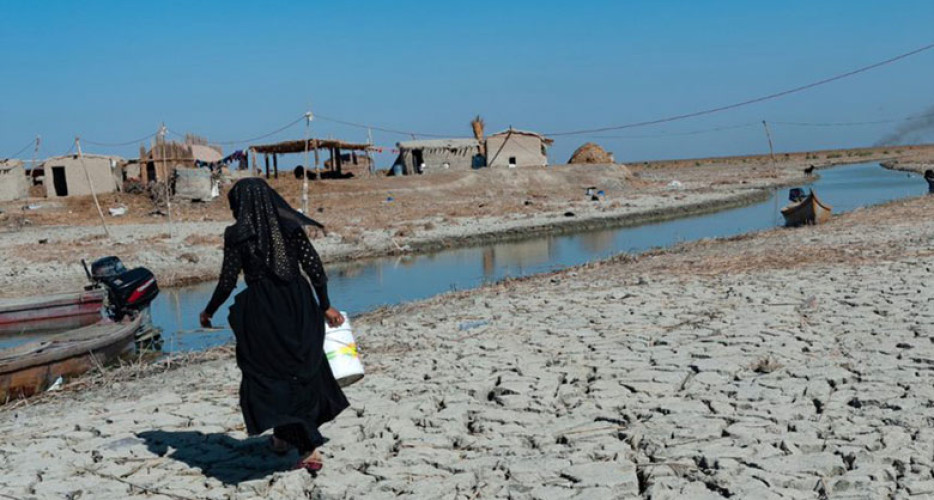
Iraq is experiencing one of its most severe water shortages in nearly a century. The crisis — fueled by upstream damming, climate change, and poor internal management — has devastated agriculture and water levels from the south to the Kurdistan Region.
A recent Peregraf investigation highlighted the scale of the crisis in the Kurdistan Region, reporting that more than 1,650 natural springs have dried up, groundwater in Erbil has fallen by up to 500 meters since the 1990s, and water levels at Dukan and Darbandikhan dams are at record lows.
Water expert Dr. Abdullah Botani warned: “If no action is taken, both surface and groundwater are at risk.”
Analyst Sarmad Latif cautioned that Iraq now ranks “among the lowest globally in water security,” calling for urgent strategic planning.
Regional Cooperation Needed
With most of Iraq’s surface water originating in neighboring Turkey and Iran, regional agreements are crucial. Officials say further technical negotiations will clarify implementation timelines and project scopes.
For millions of Iraqis facing shrinking rivers, collapsing agriculture, and accelerating desertification, the stakes are immense. While challenges remain, the new agreement — and its implementation mechanism outlined by INA — may offer the most credible path yet toward safeguarding Iraq’s water future.