Kurdish Divisions Deepen Political Isolation as Shia and Sunni Rivals Present Rare Unity in Baghdad
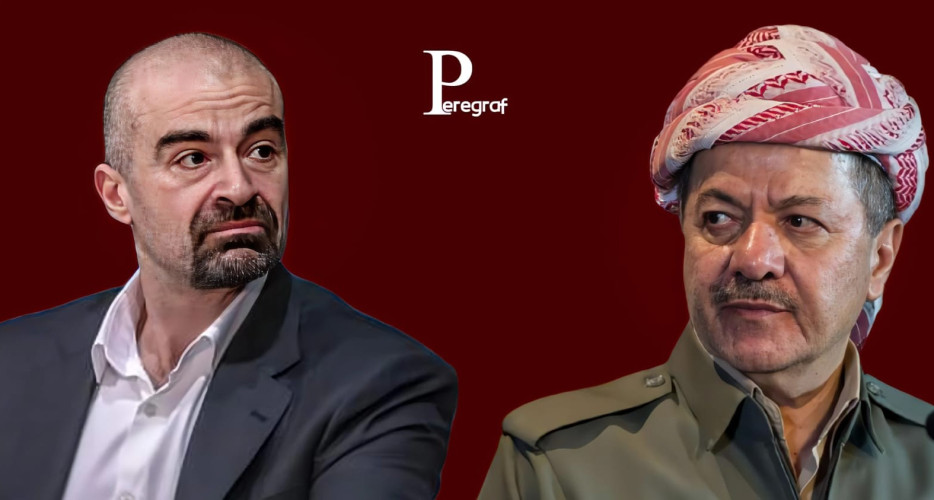
Peregraf- More than a year after voters in the Kurdistan Region cast their ballots, the political parties that dominate the Kurdistan Region remain locked in an increasingly bitter internal standoff—one so severe that it has not only stalled the formation of a new cabinet of the Kurdistan Regional Government (KRG) but now threatens to sideline the Kurds in Baghdad’s unfolding negotiations to form the next Iraqi federal cabinet.
While Iraq’s Shia and Sunni blocs enter this phase with unusual cohesion, the Kurdish parties—traditionally kingmakers in post-2003 governments—arrive fractured, embattled, and politically diminished.
Kurdistan, A Region Divided Against Itself
The Kurdish parties secured a combined 58 seats in the 329-member Iraqi Parliament, plus five quota seats guaranteed to the Kurdistan Democratic Party (KDP). The distribution appears strong on paper:
- KDP: 27 + 5 quota seats
- PUK: 18
- Halwest: 5
- Yakgirtu: 4
- New Generation: 3
- Komal: 1
But the numbers mask a deteriorating political environment in the Kurdistan Region, where the rivalry between the KDP and the Patriotic Union of Kurdistan (PUK)—the two parties that have dominated Kurdish politics for three decades—has reached its most confrontational point since the civil war era of the 1990s.
This feud has paralyzed the formation of the KRG new cabinet and the Kurdistan Parliament for more than a year. Disputes over election results, constitutional authority, security control, and the balance of power between Erbil and Sulaimaniyah have blocked every attempt at forming a novel cabinet of KRG. Even basic administrative coordination has broken down, with rival ministries and security agencies operating under competing loyalties.
The consequences are no longer confined to the Kurdistan Region. Kurdish infighting has now spilled decisively into Baghdad.
With Shia and Sunni blocs already moving in synchronized steps, the Kurds risk becoming an afterthought. Leaders in Baghdad increasingly believe that the KDP and PUK will attempt to negotiate separately-an approach that may further weaken Kurdish bargaining power and allow other blocs to exploit their divisions.
The cost of Kurdish fragmentation is rising fast. And unlike previous moments of crisis, the political incentives for unity appear weaker than ever.
Shia Coordination Framework Moves Swiftly to Consolidate Power
While the Kurdish parties falter, Iraq’s Shia political forces have moved quickly to assert control over the next government of Iraq.
The Coordination Framework, which includes multiple Shia lists and controls more than 170 seats, announced on November 20 that it had officially registered as the largest parliamentary bloc. This step, required under Iraqi law, grants the Shia alliance the right to nominate the next prime minister—a position it intends to secure without delay.
The Framework’s leaders convened at the Baghdad office of former Prime Minister Haider al-Abadi for meeting No. 250. Their statement emphasized constitutional timelines, political stability, and the need to form committees to interview prime ministerial candidates and craft a unified national vision.
The message was unmistakable: the Shia bloc wants a rapid and orderly transition, projecting coherence and discipline that contrast sharply with the Kurdish disarray.
Sunni Forces Present a Coordinated Front
If the Shia bloc’s unity was expected, the Sunni parties delivered the true surprise of this electoral cycle.
Winning more than 70 seats, the Sunni parties quickly set aside their longstanding rivalry to form the National Political Council, announced on November 23. Leaders from the Taqaddum Party, Azm Alliance, Siyada Alliance, Al-Hasm National Alliance, and Jamaheer Party met at the residence of Siyada leader Khamis al-Khanjar in Baghdad and agreed to operate under a single political umbrella.
The council cast itself as a platform to coordinate positions, unify visions, and manage negotiations collectively throughout the next four years. In a rare show of discipline, Sunni leaders pledged regular meetings and a commitment to shared decision-making—an approach that could make their bloc a decisive partner in the formation of the next cabinet.
Their message to Baghdad’s political class was clear: the Sunnis intend to negotiate from strength, not fragmentation.
The Kurdish Question: Influence Lost by Inertia
The contrast now shaping Iraqi politics is stark:
- In Baghdad, Shia and Sunni forces have consolidated power with surprising speed.
- In Erbil, infighting has immobilized political institutions, weakened negotiation positions, and undermined Kurdish representation at the national level.
Iraq’s Shia and Sunni blocs are advancing into negotiations with unified platforms, clear demands, and an unmistakable sense of political momentum. Kurdish leaders, meanwhile, are still arguing over who represents whom.
For a political movement that once prided itself on cohesion and leverage, the moment is sobering. Iraq is moving on. The Kurds are standing still.