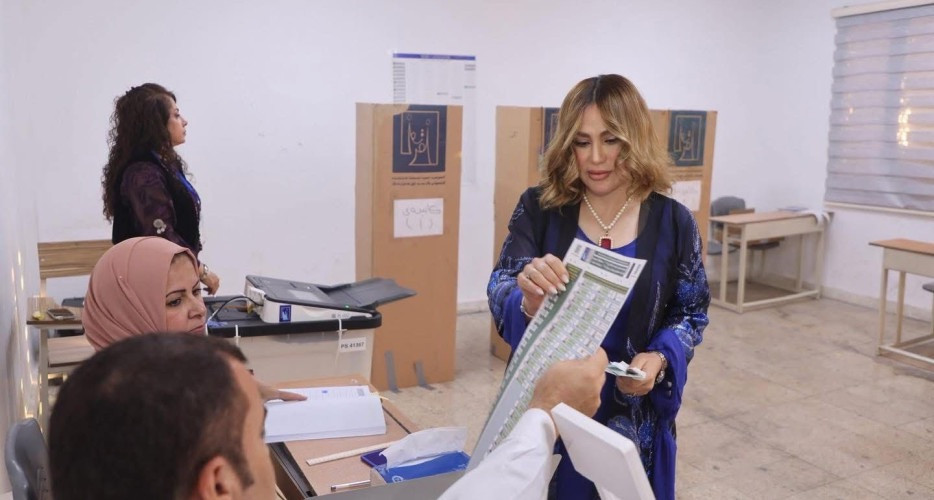
Peregraf - The Independent High Electoral Commission (IHEC) announced on Monday that it has completed all procedures related to appeals against the results of Iraq’s parliamentary elections and has formally forwarded them to the Judicial Panel for consideration. The Commission also confirmed the timeline for sending the final results to the Federal Supreme Court for ratification.
Imad Jamil, head of IHEC’s media team, told the Iraqi News Agency (INA) that the “complete election results will be sent to the Federal Supreme Court for endorsement after the Judicial Panel concludes its review of all appeals.”
Jamil explained that the Commission has “finalized all appeals and submitted its recommendations,” adding that “the work is now with the Judicial Panel, which is not bound by a strict ten-day period in cases involving technical or legal complexities that require returning files to the Commission for further inquiry or completion of procedural requirements.”
He noted that the Judicial Panel will be obligated to complete its work within ten days only after receiving the final appeal from the Commission. “The Panel continues its work, and several appeals that were forwarded with recommendations for rejection have already been upheld,” he said.
IHEC previously announced the final results of both general and special voting on November 17, opening the appeal period immediately afterwards.
According to the finalized results, the Construction and Development Coalition, led by Prime Minister Mohammed Shia al-Sudani, topped the election with 46 of Parliament’s 329 seats. The State of Law Coalition, headed by Nouri al-Maliki, secured 29 seats, followed by Taqaddum with 27 seats. The Kurdistan Democratic Party (KDP) won 27 seats, and the Patriotic Union of Kurdistan (PUK) obtained 18. National voter turnout stood at 56.11%.
Following the announcement, the Coordination Framework declared itself the largest parliamentary bloc and said it would proceed with nominating the next prime minister. In a meeting attended by all its leaders, including Sudani, the Framework emphasized the need for national cooperation and adherence to constitutional timelines to ensure a smooth transition that reflects the will of voters.
Kurdistan Region Results
Of the 46 seats allocated to the Kurdistan Region—44 from general voting and 2 minority quota seats—the distribution was as follows:
Erbil (15 seats)
• KDP: 9
• PUK: 3
• Halwest: 2
• New Generation: 1
Sulaymaniyah (18 seats)
• PUK: 8
• Halwest: 3
• New Generation: 2
• KDP: 2
• Yakgirtu: 2
• Komal: 1
Duhok (11 seats)
• KDP: 9
• Yakgirtu: 2
Kurdistan Region Total (44 general + 2 quota seats)
• KDP: 20
• PUK: 10
• Halwest: 5
• Yakgirtu: 4
• New Generation: 3
• Komal: 1
Kurdish Bloc in Baghdad
Altogether, Kurdish parties will hold 58 seats in the incoming Iraqi Parliament:
• KDP: 27 (including 5 quota seats)
• PUK: 18
• Halwest: 5
• Yakgirtu: 4
• New Generation: 3
• Komal: 1