Peregraf – Iraq’s Independent High Electoral Commission (IHEC) has officially activated the application form required to initiate legal procedures for the establishment of the Basra Region, marking a significant development in long-standing efforts to grant the southern province regional status within Iraq’s federal system.
The move comes more than a decade after members of parliament and civil society groups in Basra began mobilizing around the idea, arguing that transforming the governorate into a region would improve public services, strengthen local governance, and ensure a fairer share of national revenues. Despite being Iraq’s wealthiest oil-producing province and the country’s main source of income, Basra continues to suffer from chronic service shortages and weak infrastructure.
Under Iraq’s Law of Regions, one or more governorates may form a region through a public referendum as part of the country’s federal decentralization framework. Although the law and constitution guarantee this right, repeated political, legal, and administrative obstacles have hindered its implementation.
According to the law, a request to form a region can be submitted to IHEC either by one-third of the provincial council members or by at least 2 percent of registered voters in the concerned governorate. Once these conditions are met, the Commission is required to begin the legal procedures that could ultimately lead to a referendum.
The decision to release the application form for the Basra Region followed a request submitted by members of the civil society organization "Basriatha for Federal Culture," which advocates federal awareness and decentralization in the province.
Haider Mohammed, Director of IHEC’s Office in Basra, told the official Iraqi News Agency that civil society organizations cannot submit such requests as legal entities. However, he clarified that their members may submit applications in their capacity as individual voters.
"Legally, the right to submit the request belongs to voters," Mohammed said. "If 2 percent of eligible voters submit the application, the Commission is obliged to proceed with the legal steps stipulated by law."
He explained that the application period for forming the Basra Region will last one month. During this period, other residents of the governorate may fill out the form in support of the initiative. If the number of applicants reaches 10 percent of registered voters, the process advances to the next stage, which involves preparing for a referendum.
Following that step, the Council of Ministers must approve holding the referendum, after which voters in Basra would decide whether or not to establish the region.
If successful, Basra would become Iraq’s second officially recognized region under the federal system, joining the Kurdistan Region, which has been constitutionally recognized since the adoption of the 2005 constitution.
Previous attempts to establish new regions in Iraq have largely failed. Over the past years, Sunni-majority governorates in central Iraq submitted similar requests, citing marginalization and weak local governance. Most of those initiatives were rejected or stalled due to political opposition and legal complications.
Basra: Iraq’s Richest Governorate
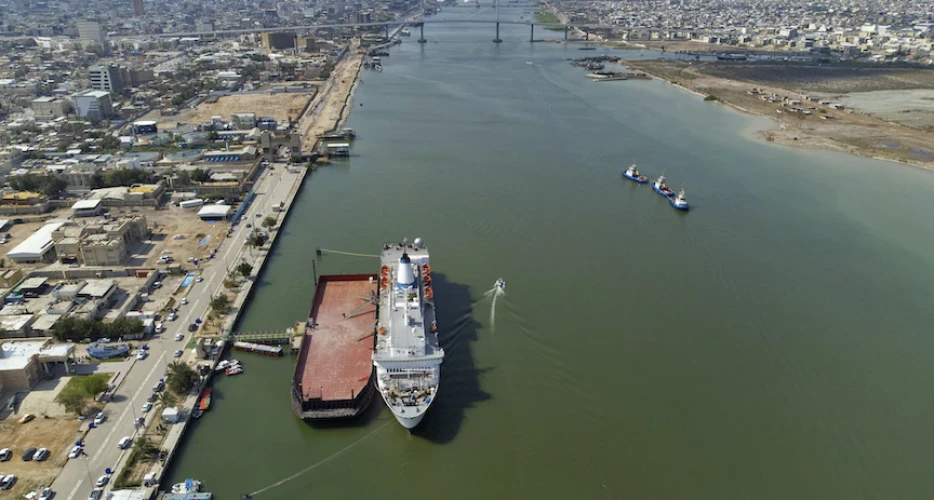
Basra Governorate, located in southern Iraq, is the country’s most economically significant province, with a population exceeding 3.664 million people and vast natural resources that underpin the national economy.
The governorate contains 15 oil fields, producing more than 3 million barrels of crude oil per day—around 70 percent of Iraq’s total oil output. Despite this immense wealth, Basra continues to struggle with unemployment, water shortages, electricity cuts, and environmental pollution, fueling public frustration and repeated protests.
Geographically, Basra is Iraq’s third-largest governorate, covering an area of 19,730 square kilometers. Administratively, it consists of seven districts and 16 sub-districts and hosts Iraq’s only coastline, along with key ports vital to national trade.
The push to convert Basra into a region is part of a broader debate over federalism, resource distribution, and governance in Iraq. Supporters argue that regional status would grant Basra greater administrative and financial autonomy, enabling local authorities to better manage oil revenues and address long-standing service deficits. Critics, however, warn that such a move could deepen political fragmentation and reshape Iraq’s balance of power.
If the formation of the Basra Region proceeds, it would mark a major shift in Iraq’s political and economic landscape, given the province’s central role in the country’s oil production and revenue generation.