Iraq Lays Out Near-Future Energy Roadmap as Al-Sudani Opens Iraq Energy Conference 2026
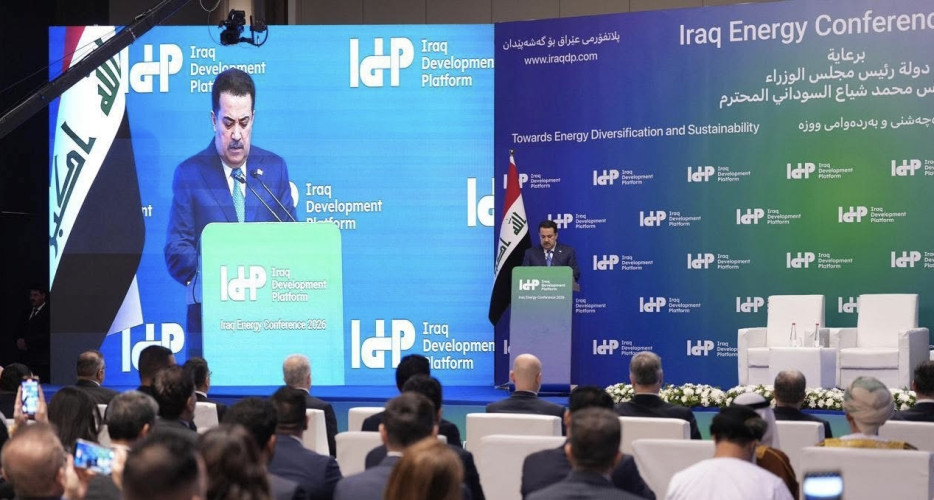
Peregraf — Prime Minister Mohammed Shia Al-Sudani on Wednesday outlined Iraq’s near-future energy strategy, signaling a major shift toward value-added production, gas self-sufficiency, and renewable power, as he inaugurated the Iraq Energy Conference 2026 in Baghdad.
Speaking before senior officials and international energy companies, Al-Sudani said his government is prioritizing rapid development of the energy sector by mobilizing Iraq’s industrial, investment, and development capacities, describing energy as the foundation of economic growth and national stability.
Looking ahead to the next few years, the Prime Minister announced that by 2030 Iraq plans to export 40 percent of its oil output as refined and high-value derivatives, a move aimed at reducing reliance on crude exports and boosting revenues. He said refinery expansion, carried out in partnership with the private sector, is already helping Iraq move toward ending fuel imports entirely.
Al-Sudani emphasized that gas development will be central to Iraq’s energy future. Iraq has already achieved 74 percent utilization of its gas resources, while proven free gas reserves have risen to nearly 132 million standard cubic feet. He confirmed that associated gas investment will be accelerated, with gas flaring set to end completely by 2028, addressing both economic losses and environmental damage.
In the electricity sector, Iraq has reached record production levels of nearly 29,000 megawatts, while contracts have been finalized for new power stations totaling 57,500 megawatts, including major projects with General Electric and Siemens Energy. At the same time, Iraq is moving to diversify its energy mix, launching 15 solar projects expected to generate 7,500 megawatts in the coming period.
Al-Sudani also highlighted plans for grid modernization, digital transformation, and regional energy cooperation, warning that continued regional tensions threaten global energy markets. “There are no winners in energy disruption,” he said, stressing Iraq’s intention to play a stabilizing role in the region’s energy future.