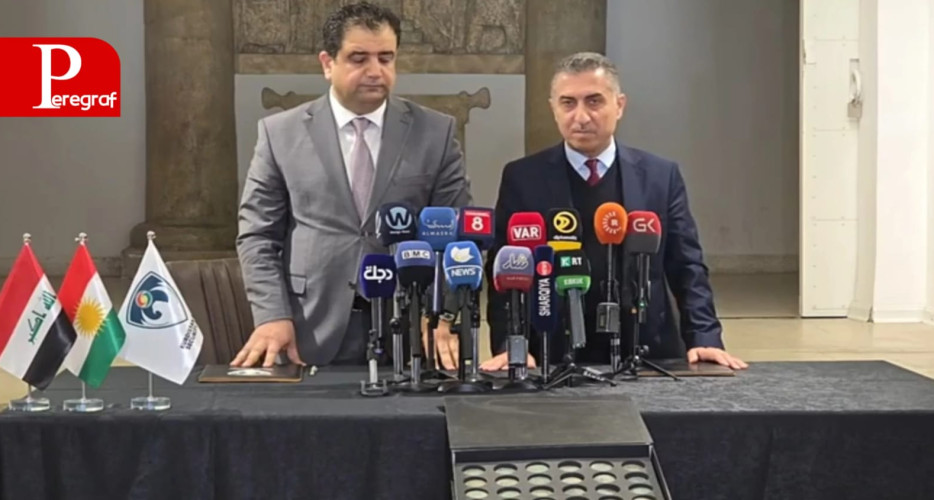
PEREGRAF — A collection of ancient coins discovered two months ago in the village of Bestansur, in the Sharazur area, has been officially handed over to the Sulaymaniyah Museum by security forces in Sulaymaniyah.
At a press conference on Sunday, Colonel Karzan Sherko, spokesperson for the Kurdistan Region Security Agency (Asayish) in Sulaymaniyah, said the coins were seized in late 2025 following an investigation into attempts to sell them on the local market.
Sherko confirmed that the cache consists of 272 historical coins dating back to the 18th century AD, adding that seven individuals have been arrested in connection with the case and that legal proceedings are underway.
Meanwhile, Hashim Hama Abdullah, director of the Sulaymaniyah Museum, described the discovery as “important from a scientific and historical perspective.” He noted that the coins will undergo detailed academic study and clarified that although they are metallic, they are not made of gold.
How the coins were discovered
Peregraf followed up the story at the time, after the discovery of the coins, which dates back to mid-December 2025, when a group of teenagers from Bestansur accidentally uncovered the cache while foraging for mushrooms. According to local accounts, rainfall had exposed a hole in the ground where the coins were buried.
Unaware of their archaeological value, the teenagers collected the coins and divided them among themselves on their way home. One relative later told Peregraf that the children, all around 10 years old, initially thought the objects were ordinary silver pieces and even used them to play “heads or tails.”
Only after the coins were taken home did families begin to suspect they might be of historical importance. Security authorities were subsequently alerted, prompting an investigation.
As part of the inquiry, Asayish forces in Arbat district summoned the fathers of the five teenagers late at night and detained them for about a week for questioning. The teenagers were also interrogated several times, while members of the village council were held briefly before all were released on bail.
Initial reports circulating at the time claimed that “600 gold coins of high material and historical value” had been found. These claims were strongly denied by families and villagers, who insisted the coins were silver and far fewer in number—an assessment later confirmed by museum officials.
Under Iraqi and Kurdistan Region law, the search for, possession of, or trade in antiquities is strictly prohibited. Any archaeological discovery must be immediately reported to the relevant authorities.
Bestansur itself is considered one of the most significant archaeological sites in the region. Recent joint excavations involving international—particularly German—research teams have shown that the area was inhabited around 11,000 years ago, making it older than the well-known Jarmo site.
Experts say the latest discovery further underscores the cultural and historical importance of the Sharazur plain and highlights the need for greater public awareness about protecting archaeological heritage.