State of Law Insists Maliki Will Not Withdraw, Dismissing U.S. Pressure as 'Political Noise'
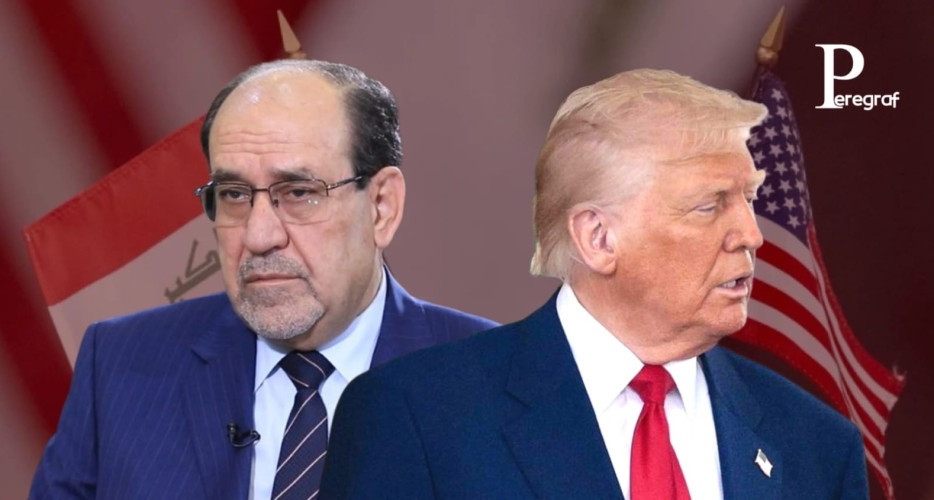
Peregraf - Iraq’s State of Law Coalition, led by former Prime Minister Nouri al-Maliki, declared on Monday that its candidate would not withdraw from the race to form the next government, brushing aside mounting international pressure and speculation regarding potential U.S. sanctions.
In an explanation delivered by spokesperson Aqeel al-Fatlawi, the coalition insisted that al-Maliki remains resolute despite warnings from Washington and unease among some Iraqi factions.
“It is impossible for Nouri al-Maliki to withdraw his candidacy,” Fatlawi said in an interview with UTV. “He is unwilling to lose face before his constituency and the Iraqi people.”
The remarks come amid intensifying political negotiations within Iraq’s powerful Shiite alliance, the Coordination Framework. Last month, the bloc formally nominated al-Maliki as its candidate for prime minister following a leadership meeting hosted by Hadi al-Amiri, where the nomination was approved by a majority vote.
Al-Maliki, who served as prime minister from 2006 to 2014, remains a polarizing figure in Iraqi politics. His tenure coincided with deep sectarian tensions and the rise of the Islamic State (ISIS), and his potential return has reignited debates over governance, sovereignty, and Iraq’s international standing.
U.S. Warning Raises Stakes
The political temperature rose sharply after U.S. President Donald Trump issued an unusually blunt warning on January 27, 2026 via Truth Social, cautioning against what he described as a “very bad choice” should Iraq reinstate al-Maliki as prime minister.
Trump wrote that Iraq had “descended into poverty and total chaos” during al-Maliki’s previous term, warning that the United States would withdraw support if he returned to office. Without American assistance, Trump added, Iraq would have “ZERO chance of success, prosperity, or freedom.”
The post concluded with the slogan: “MAKE IRAQ GREAT AGAIN!”
The statement sent shockwaves through Baghdad’s political class, sharpening an already delicate standoff. Privately, some Shiite leaders describe the situation as a choice between two bitter options: replacing al-Maliki and risking accusations of bowing to foreign pressure, or insisting on his nomination and risking a rupture with Washington.
Coalition Dismisses Sanctions Talk
Fatlawi rejected reports that the United States was preparing sanctions or other punitive measures. “All talk regarding the imposition of sanctions is unfounded,” he said. He added that Iraq’s ambassador to Washington is expected to return to Baghdad “today or tomorrow” to clarify any official messages from the U.S. administration.
“If there is a message from Washington, it will be conveyed clearly to political leaders and the government,” he noted.
According to Fatlawi, al-Maliki’s recent absence from two Coordination Framework meetings was due to “personal reasons,” rather than political maneuvering. He described the current atmosphere within the alliance as “calm” and maintained that its leaders remain committed to al-Maliki’s candidacy.
“Maliki is not one to be rattled by media hype,” Fatlawi said. “He remains steadfast and insistent on his candidacy.”
Economic Leverage and Private Warnings
Behind the public statements, however, Iraqi officials are grappling with the country’s economic exposure. Nearly all of Iraq’s oil revenues are held in U.S. dollars under American oversight, a structure that grants Washington significant leverage over Baghdad’s financial system.
Finance Minister Taif Sami has sought to reassure public employees that salaries will continue to be paid on time this year. However, Ahmed Haji Rashid, a member of parliament, stated that during a February 8 meeting, the Minister warned lawmakers that a deterioration in relations with the Trump administration could have severe consequences.
“If our relationship with Trump breaks down, our economic situation will become very dire,” she was quoted as saying.
Concern has surfaced even within the Coordination Framework. Ammar al-Hakim, leader of the National State Powers Alliance, expressed “deep regret” over Trump’s remarks while urging Iraqi leaders to adhere to constitutional timelines and avoid escalation with Washington.
Outside the Shiite bloc, criticism has been more pointed. Mohammed al-Halbousi, leader of the Sunni Taqadum Party, described backing al-Maliki against explicit U.S. opposition as “catastrophic.” Speaking on television earlier this month, he argued that Iraq is still dealing with the legacy of al-Maliki’s earlier tenure and requires a prime minister with stronger international and Arab ties.
Al-Halbousi also claimed that U.S. officials had privately warned Iraqi leaders prior to Trump’s public post, even raising the possibility of closing the American Embassy in Baghdad and relocating it to Erbil.
“Not a single Arab or Western country supports al-Maliki,” al-Halbousi said. “Iran is his only supporter.”
A Narrow Path Forward
The standoff underscores Iraq’s precarious balancing act. As negotiations to form a new government continue, the political class must weigh constitutional procedure and internal alliances against the realities of economic dependency and international diplomacy.
Whether the Coordination Framework can maintain unity behind al-Maliki—or whether it will seek a compromise candidate to ease tensions with Washington—remains uncertain.
For now, the State of Law Coalition is projecting confidence. But as Iraq navigates factional rivalries and external pressure, the question is no longer simply who will become prime minister, but how much political and economic risk the country is willing to bear in the process.