Al-Sudani Orders Probe Into AI-Generated Video Depicting Al-Jawahiri Serving Him Tea
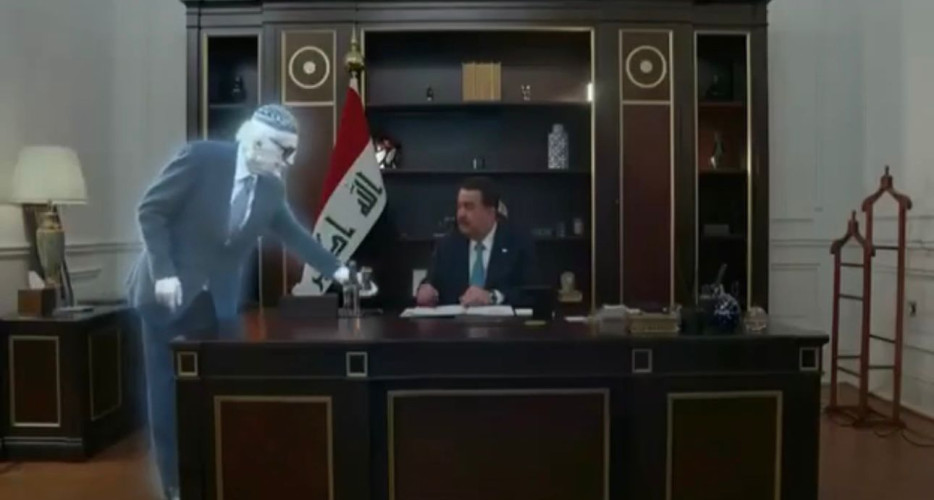
Peregraf - Iraqi Prime Minister Mohammed Shia' al-Sudani has ordered an urgent investigation into the production and circulation of a fabricated video depicting the late Iraqi poet Muhammad Mahdi al-Jawahiri serving him tea, calling the clip an affront to Iraq’s cultural and national symbols.
The video, which has circulated widely on social media platforms in recent days, appears to utilize artificial intelligence to superimpose the Prime Minister alongside the revered poet, who passed away in 1997. In the clip, Al-Jawahiri is portrayed in a manner that critics argue diminishes his stature as one of Iraq’s most prominent literary figures.
In a statement released by the Prime Minister’s Media Office, Al-Sudani voiced his rejection of the fabricated content, emphasizing that it fails to reflect "the deep respect and high esteem he holds for Al-Jawahiri’s literary stature and national legacy."
Al-Sudani directed Iraq’s Communications and Media Commission (CMC) to launch an immediate investigation to identify those responsible for creating, promoting, or distributing the material. The statement condemned the video as "an offense against cultural symbols and state institutions" and criticized the "irresponsible use of artificial intelligence in violation of professional and media standards."
The Prime Minister further declared that he reserves the legal right to pursue action against the perpetrators, characterizing the video as a transgression against Iraq and its national heritage.
Al-Jawahiri, widely regarded as one of the most influential Arab poets of the 20th century, holds a distinguished place in Iraq’s literary and political history. Often referred to as the "Poet of the Arabs," his work addressed themes of nationalism, social justice, and political struggle. Any perceived slight to his legacy often provokes a strong reaction across the country’s political and cultural spheres.
The controversy arises amid growing regional and global concerns regarding the misuse of artificial intelligence to generate realistic audio-visual content, commonly known as "deepfakes." Iraqi authorities have increasingly warned of the potential for such technology to spread misinformation, damage reputations, and undermine public trust.
It remains unclear who produced the video or their motives. The Communications and Media Commission has not yet publicly commented on the scope or timeline of the investigation.
The incident underscores the mounting challenges governments face in regulating rapidly evolving digital technologies, particularly when they intersect with political leadership and revered national figures.