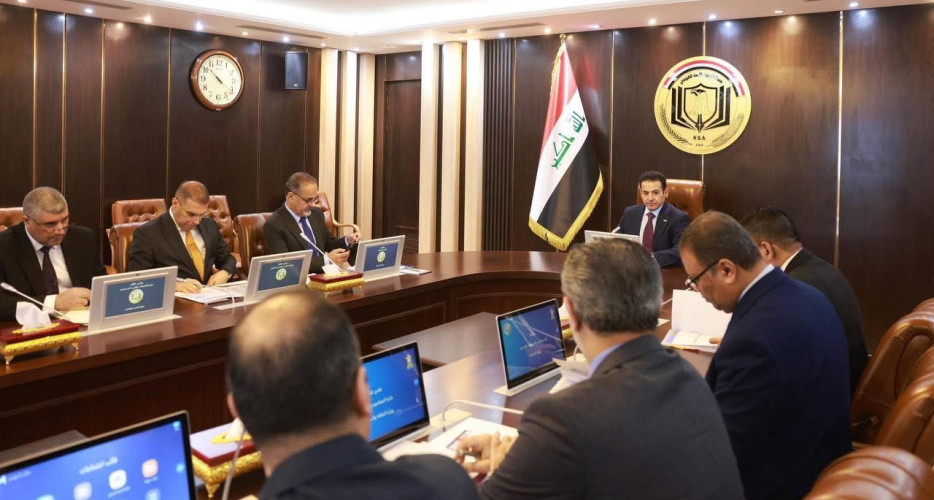
Peregraf — Iraqi National Security Advisor Qassim al-Araji chaired a high-level meeting on Wednesday to address the increasing recruitment of Iraqi citizens into the Russian military. The move comes as Baghdad seeks to tighten legal enforcement and dismantle recruitment networks operating within its borders.
The meeting was held under the framework of a "Diwani Order" committee specifically established to combat the phenomenon. It brought together representatives from Iraq’s security institutions, the Ministry of Foreign Affairs, and other relevant agencies. According to a statement from the Office of the National Security Advisor, the session focused on reviewing the committee’s agenda and adopting measures to prevent further unauthorized enlistment of Iraqis in foreign armed forces.
Legal Measures and Accountability
A key outcome of the meeting was the activation of specific provisions within the Iraqi Penal Code that criminalize joining the armed forces of a foreign country without official authorization from the state. The committee emphasized that legal action will be strictly enforced against violators.
The new measures also target travel agencies and intermediary entities found to have facilitated the transport or recruitment of Iraqi citizens into the Russian military. Authorities pledged to pursue legal proceedings against any companies or individuals involved in organizing or promoting such activities.
Furthermore, the committee committed to dismantling recruitment and financing networks operating domestically. Security agencies have been instructed to intensify investigations into the methods used to attract Iraqi nationals, with a specific focus on protecting vulnerable youth.
The recommendations from the meeting have been formally submitted to Prime Minister Mohammed Shia’ al-Sudani for final approval.
Nearly 5,000 Iraqis Reportedly Recruited
The issue has gained significant public and political traction following recent disclosures by senior officials.
Hussein Allawi, an advisor to the prime minister, revealed in late 2025 that nearly 5,000 Iraqi citizens had joined the Russian army and were deployed to combat zones in the ongoing war in Ukraine. Speaking to Al-Hadath television on December 25, 2025, Allawi stated that the Iraqi government is closely monitoring the situation.
“Fewer than 5,000 Iraqis have joined the ranks of the Russian army,” Allawi said, noting that the final figures are still being verified. He added that Baghdad has formed a high-level committee to investigate the matter and is coordinating with Russian authorities to exchange data and identify specific cases.
According to Allawi, Iraq and Russia are currently discussing joint measures to prevent further recruitment, though specific details of this bilateral coordination have not yet been made public.
Judicial Warnings
Faiq Zaidan, President of Iraq’s Supreme Judicial Council, previously warned that Iraqi law mandates prison sentences for any citizen who joins a foreign military without government approval. His remarks underscored the legal severity of the issue and signaled judicial support for stricter enforcement.
Legal experts noted that activating these penal code articles allows for the prosecution of not only the recruits but also the facilitators involved in funding, documentation, or travel logistics.
Recruitment Tactics and Economic Drivers
Reports suggest that recruitment efforts are often conducted through private companies targeting unemployed youth with promises of high salaries and, in some instances, Russian citizenship. These operations reportedly focus on economically disadvantaged areas in central and southern Iraq, where unemployment remains a persistent challenge.
Security officials believe that financial incentives, coupled with limited domestic job opportunities, have made some young Iraqis susceptible to recruitment campaigns linked to the conflict in Ukraine.
As Baghdad intensifies its efforts to curb this trend, the effectiveness of these measures will likely depend on enforcement capacity and the government's ability to address the underlying socioeconomic factors driving the phenomenon.