Iraq Clarifies U.S. Message, Confirms Sanctions Warning on Individuals and Institutions
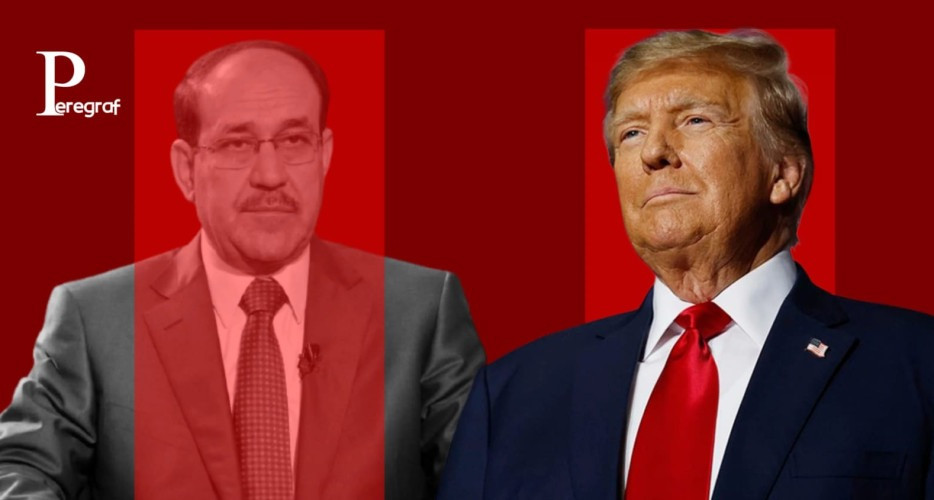
Peregraf – Iraq’s Ministry of Foreign Affairs has issued a clarification confirming that a U.S. message to Baghdad did, in fact, include a warning about potential sanctions on individuals and institutions—contradicting earlier impressions from Foreign Minister Fuad Hussein’s televised remarks.
The statement follows Hussein’s recent interview with Al-Sharqiya TV, in which he outlined U.S. demands related to financial reforms, the integration of armed groups, and the broader political framework, but did not mention any threat of punitive measures.
According to the Foreign Ministry, the oral message delivered by the American side in Washington contained two key components.
The first included “a clear and explicit hint” at the possibility of sanctions targeting specific individuals and institutions, particularly if Iraq’s largest political bloc proceeds with its current nominee for prime minister.
The second outlined criteria governing future cooperation with the United States, especially regarding the formation, structure, and operational mechanisms of Iraq’s next government.
The ministry emphasized that Hussein’s interview focused only on the second component—namely U.S. expectations for political and institutional reforms—which led to misunderstandings in some media coverage suggesting that no sanctions were under consideration.
In his interview, Hussein had stated that Washington called for restructuring Iraq’s banking system and the Central Bank, as well as integrating the Hashd al-Shaabi (Popular Mobilization Forces) under the Ministry of Defense and disarming other armed factions. He stressed at the time that the message reflected U.S. concerns and requests rather than direct punitive measures.
The newly issued clarification, however, underscores that pressure from Washington is more explicit than initially conveyed, combining both reform conditions and potential consequences.
The developments come amid ongoing political deadlock in Iraq, where rival blocs have yet to agree on a new president and government. Disputes over the premiership remain central, with divisions deepening within the Shiite Coordination Framework over candidate selection.
The U.S. position—now confirmed to include the possibility of sanctions—adds a new layer of complexity to negotiations. It signals that Washington is not only pushing for institutional reforms and security restructuring but is also prepared to escalate pressure if its concerns over governance and alignment are not addressed.
Analysts suggest the dual-track message—offering partnership while warning of penalties—reflects a broader U.S. strategy to shape Iraq’s next government at a critical moment, as internal divisions and regional tensions continue to influence the country’s political trajectory.