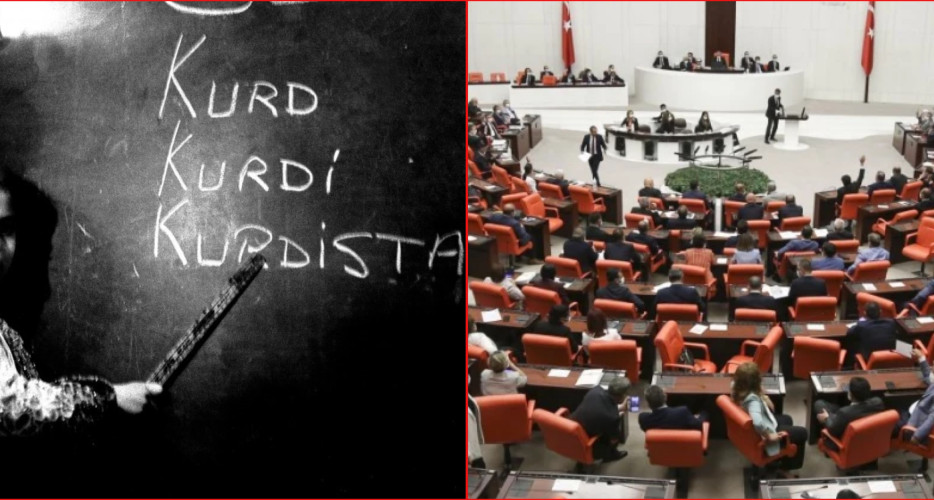
Peregraf - In a landmark development for linguistic rights in Turkey, a parliamentary inquiry proposal drafted bilingually in Turkish and the Kirmanjki (Zazaki) dialect of Kurdish has been formally processed by the Turkish Parliament for the first time in its history.
Coinciding with International Mother Language Day on February 21—a date that highlights linguistic diversity and minority language rights globally—lawmakers from the Peoples’ Equality and Democracy Party (DEM Party) submitted the research proposal to the parliament’s presidency, which accepted it without obstruction.
The initiative was spearheaded by DEM Party MPs Saliha Aydeniz, Ayten Kordu, Adalet Kaya, Cengiz Çiçek, and Ömer Faruk Hulaku. Their proposal aims to protect and promote the Kirmanjki dialect (also known as Zazaki, Dimli, or Kirdki), which the United Nations Educational, Scientific and Cultural Organization (UNESCO) currently classifies as an endangered language.
According to the draft, which was prepared with the support of the Kirmanjki (Zazaki) Language Council, safeguarding the dialect as a cultural and historical heritage is a fundamental responsibility of the state. The lawmakers highlighted that existing institutions and legal provisions are insufficient to preserve the language.
The MPs pointed out that while there are limited educational and media initiatives—such as elective courses at Munzur and Bingöl (Çewlig) universities, TRT Kurdî’s Kirmanjki broadcasts, and specific outlets or services like JINNEWS, Welat Agency, and Azadiya Welat—these measures fall significantly short of what is needed for the language's survival.
To address these shortcomings, the proposal calls for the urgent establishment of a parliamentary inquiry commission to investigate four primary areas:
* Mapping the specific regions where the Kirmanjki dialect is spoken using official data.
* Identifying why the shortage of Kirmanjki language teachers remains unresolved.
* Determining the institutional and legal obstacles preventing mother-tongue education.
* Evaluating existing laws to encourage the use of the language within official institutions.
Observers describe the acceptance of the draft as a historic moment for Turkey’s political and cultural landscape. It marks the first instance in which an official parliamentary text containing a non-Turkish language has been processed without being outright rejected or blocked.