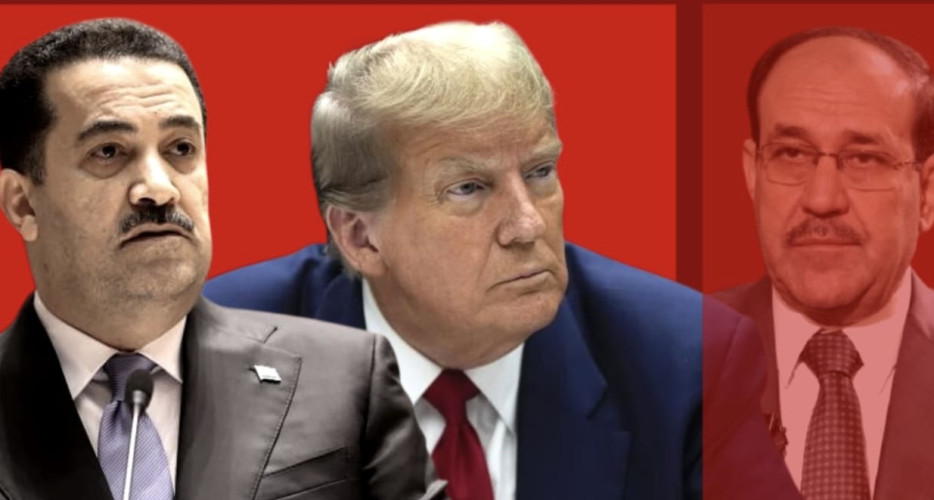
Peregraf — Iraq’s political impasse has deepened as allies of Prime Minister Mohammed Shia al-Sudani indicated a possible withdrawal of support for former Premier Nouri al-Maliki, citing mounting domestic, regional, and international opposition.
Bahaa al-Araji, head of the Reconstruction and Development Bloc (aligned with al-Sudani), stated that the Prime Minister’s initial backing of al-Maliki’s candidacy was a strategic attempt to resolve the prolonged deadlock and meet constitutional requirements.
Al-Araji characterized al-Sudani’s approach as acting as a “catalyst for solutions rather than a party to the crisis,” intended to facilitate the formation of a stable government with full executive powers. However, he acknowledged that this path has met significant resistance.
According to the statement, key factions within the Coordination Framework, as well as broader Iraqi political forces, have rejected al-Maliki’s return to the premiership. This internal opposition is compounded by regional and international reservations, prompting what al-Araji described as a necessary “re-evaluation” of political strategies.
These developments suggest growing fractures within the Shiite Coordination Framework, where disagreements over leadership candidates have intensified, further complicating the formation of a new government following the recent elections.
Al-Maliki, leader of the State of Law Coalition, has also faced significant external pressure. U.S. President Donald Trump has reportedly voiced opposition to al-Maliki’s return, citing his close ties to Tehran. Al-Maliki has dismissed these critiques as foreign interference, maintaining that the selection of Iraq’s leadership must remain a sovereign decision.
The current deadlock persists as Iraq struggles to elect a president and agree on a governing coalition, with the dispute over the premiership remaining the primary obstacle.
In a related development, Iraq’s Foreign Ministry confirmed that a recent diplomatic communication from the United States included warnings of potential sanctions against individuals and institutions, specifically regarding the selection of the next prime minister.
This clarification follows earlier comments by Foreign Minister Fuad Hussein, who had initially focused on U.S. demands for financial reform and institutional restructuring without explicitly mentioning punitive measures.
The ministry noted that the U.S. message contained two critical components: a “clear and explicit hint” of potential sanctions and a set of conditions for future cooperation, specifically concerning the structure and conduct of the incoming Iraqi government.
Hussein previously emphasized that Washington is advocating for comprehensive reforms, including the restructuring of Iraq’s banking system and the Central Bank, as well as the integration of the Popular Mobilization Forces (PMF) into state security structures and addressing the presence of non-state armed groups.
The Foreign Ministry clarified that while Hussein’s prior remarks focused on reform expectations, the possibility of sanctions remains a definitive part of the bilateral dialogue. These developments highlight an increasingly assertive U.S. posture toward Baghdad, combining demands for systemic reform with the threat of economic consequences. Despite this external pressure, Iraq’s rival political blocs remain deadlocked, with no immediate breakthrough in sight.