Öcalan Marks First Anniversary of Disarmament Call with New Message on Democratic Transition
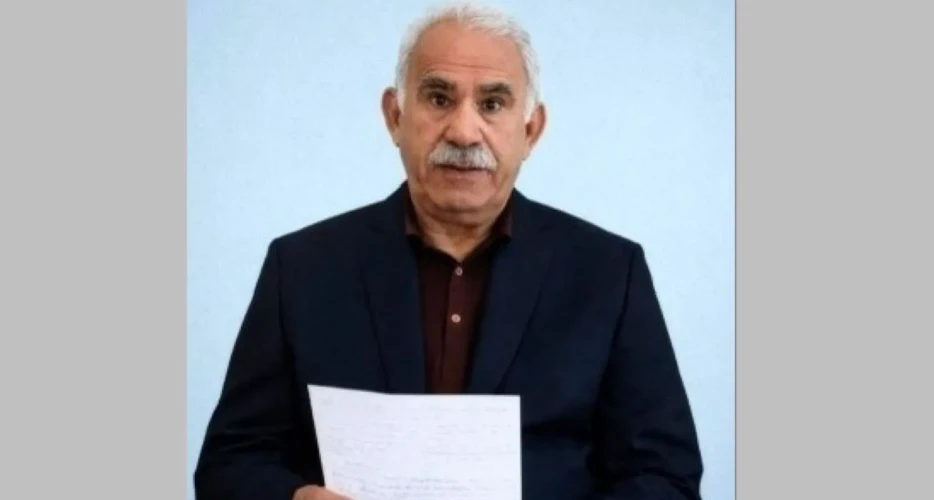
Peregraf — Abdullah Öcalan, the jailed leader of the PKK, has issued a new message marking the first anniversary of his February 27, 2025 call for the disarmament and dissolution of the Kurdistan Workers’ Party, as part of Turkey’s renewed peace process.
The statement was made public on Friday by the Peoples' Equality and Democracy Party (DEM Party) following a February 16, 2026 meeting between its Imrali delegation and Öcalan. The message was read at an event in Ankara’s Yılmaz Güney Stage.
Öcalan framed his original 2025 call as a decisive shift away from armed struggle toward democratic politics, stating that "weapons will become meaningless wherever democratic politics is implemented." He emphasized that the past year has demonstrated the movement’s "negotiating ability and power" to transition from violence and polarization toward political integration.
He said decisions to dissolve the organization and end armed struggle reflect not only practical steps but also a "mental reconciliation with the Republic."
Recognition of Political Support
Öcalan described the contributions of Turkish political leaders as "valuable," including Recep Tayyip Erdoğan, Devlet Bahçeli, and Özgür Özel, highlighting what he characterized as a broader alignment in support of the peace process.
He also paid tribute to Sırrı Süreyya Önder, recalling him "with great respect and longing."
Call for Kurdish-Turkish Unity
In one of the central themes of the message, Öcalan stressed the interdependence of Kurds and Turks, stating: "There can be no Turk without the Kurd, and no Kurd without the Turk." He described the initiative as an effort to revive what he called the founding spirit of unity within the republic and to advance a "Democratic Republic" model.
He warned that short-term political calculations and continued cycles of denial and rebellion could undermine long-term stability, urging a renewed focus on coexistence and shared political life.
From Conflict to "Positive Construction"
Öcalan called for a transition from what he described as a "negative phase" defined by conflict to a "positive construction phase" based on democratic society and legal frameworks. He emphasized that the next stage should exclude violence entirely and instead focus on inclusive social and political development.
"The goal is to build together with society," he said, adding that all groups—including ethnic, religious, and cultural communities—should play a role in shaping a democratic future through organized, peaceful participation.
Legal Guarantees and Democratic Rights
A major focus of the message was the need for strong legal guarantees to support democratic transformation. Öcalan argued that many current crises stem from the absence of a democratic legal framework and called for constitutional protections ensuring freedom of expression, organization, and identity.
He advocated for a model of citizenship based on the relationship with the state rather than ethnic identity, stressing that religion, language, and nationality "cannot be imposed."
Broader Regional Implications
Öcalan positioned the initiative as not only relevant to Turkey but also to the wider Middle East, suggesting that democratic integration could offer a pathway out of broader regional crises tied to coexistence and governance.
He concluded by underscoring the role of women as a "driving force of democratic integration" and called for a political language rooted in dialogue, mutual respect, and shared understanding.
The message comes amid ongoing debates over the future of the peace process and the extent to which political and legal reforms can accompany the proposed transition away from armed conflict.