Nechirvan Barzani and Abbas Araghchi Reaffirm Commitment to Border Security Amid Regional Tensions
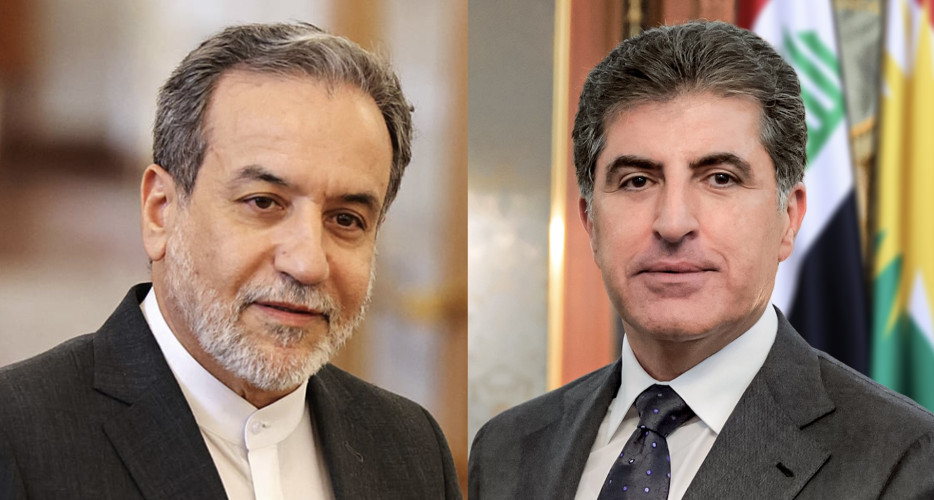
Peregraf — President Nechirvan Barzani of the Kurdistan Region held a telephone conversation today with Iranian Foreign Minister Sayyid Abbas Araghchi, in a discussion emphasizing the importance of regional stability and the protection of border security.
According to Kurdistan Region Presidency statement, both sides reaffirmed their commitment to safeguarding border areas to prevent any attempts to destabilize the region or exacerbate the ongoing crisis. President Barzani reiterated that the Kurdistan Region will not become a party to regional conflicts and stressed the region’s role as a stabilizing force. He highlighted the Kurdish leadership’s support for all diplomatic efforts aimed at de-escalating tensions and protecting civilians from the dangers of war.
The call comes amid a flurry of diplomatic activity in the region. Bafel Talabani, president of the Patriotic Union of Kurdistan (PUK), also spoke with Araghchi on Wednesday, discussing the broader conflict and emphasizing the need for dialogue and peaceful solutions. According to the PUK, Araghchi expressed appreciation for Kurdish efforts to maintain stability and pledged continued coordination.
Talabani additionally held discussions with U.S. President Donald Trump, who praised the Kurdish leadership’s influence in Iraq and outlined Washington’s objectives regarding the conflict involving Iran. These high-level contacts underscore the international attention on the Kurdistan Region, particularly along the Iran-Iraq border where Iranian Kurdish opposition groups operate.
Concerns over potential cross-border operations were also addressed in a separate call between Iraq’s National Security Adviser Qasim al-Araji and Ali Bagheri, deputy secretary of Iran’s Supreme National Security Council. The two officials discussed strengthening security measures along the border, including the deployment of additional Peshmerga forces in coordination with Kurdish authorities. “The Iraqi government is fully committed to preventing any hostile activity originating from our territory,” the national security adviser’s office said, stressing Baghdad’s adherence to security agreements with Tehran.
The recent diplomatic and security measures highlight the Kurdistan Region’s delicate position as a buffer zone between competing powers. Kurdish officials insist on maintaining neutrality, but military activity, foreign interest, and the presence of armed groups along the border have drawn the region closer to the conflict it seeks to avoid.
For now, leaders are relying on a combination of tightened border security, diplomatic engagement, and cautious public messaging to prevent further escalation. With both Washington and Tehran closely monitoring developments, Kurdish authorities face mounting pressure to balance regional stability with the safety and autonomy of their territory.
According to CNN, U.S. intelligence involvement in the region may already be deepening. The outlet reported that Central Intelligence Agency support for Iranian Kurdish groups began several months before the war, citing sources including a senior Kurdistan Regional Government official. Any effort to arm such groups would require cooperation from Iraqi Kurdish authorities, particularly to allow weapons transit and the use of Kurdistan Region territory as a launching ground.
“[It’s] very dangerous, but what can we do? We cannot stand against America,” the senior Kurdistan Regional Government official said. “We are very frightened.”
The official added that uncertainty in U.S. policy has compounded concerns. “One day Trump says we will overthrow the regime, the next day he says something different. The policy is not clear.”
“There is no doubt that the Kurdish people overwhelmingly oppose the regime of the Islamic Republic of Iran,” the official said. “They view it as oppressive and destabilizing, and they would welcome meaningful U.S. support aimed at ending its malign influence. Yet they also fear being abandoned once again.”