As U.S.–Israel War on Iran Enters Day 6, Barzani Says Kurdistan Will Stay Out of the Conflict
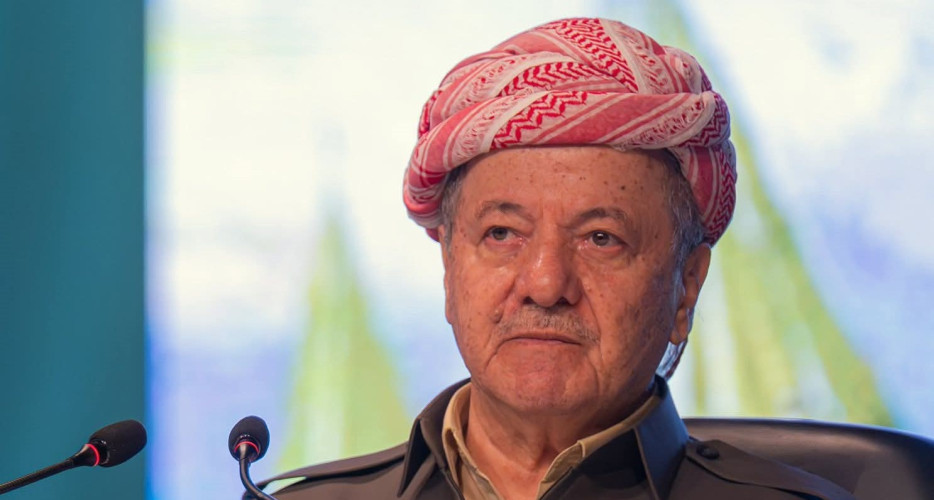
Peregraf — Masoud Barzani, President of the Kurdistan Democratic Party (KDP), said the Kurdistan Region will take every possible step to keep the region away from war and instability, as regional tensions continue to escalate.
In a message marking the 35th anniversary of the Kurdish Uprising (Raperîn), Barzani said the region is going through "a very complex and sensitive situation," expressing hope that the ongoing conflicts across the Middle East will be resolved through peaceful means.
"Our region is currently passing through a very complex and sensitive situation. We hope that all existing problems and conflicts in the region reach a conclusion and solution through peaceful means," Barzani said.
Barzani added that protecting the Kurdistan Region from the consequences of war remains a priority.
"We will do whatever is in our power to ensure that Kurdistan remains far from war, misery, and hardship, and stays protected," he said.
Barzani's remarks came as the U.S.–Israel military campaign against Iran entered its sixth day on Thursday, sharply raising tensions across the region.
In recent days, the Kurdistan Region has been directly affected by the escalating conflict. More than 100 drones and missiles have struck various areas of the region in attacks attributed to Iran and armed factions affiliated with the "Islamic Resistance" — a coalition of Iran-aligned groups operating in Iraq.
The repeated strikes have heightened concerns among Kurdish authorities about the possibility of the Kurdistan Region being drawn into a wider regional confrontation.
Recent diplomatic contacts and security measures reflect the Kurdistan Region's delicate position, caught between competing regional powers. Kurdish officials have repeatedly stated that the region is not a party to the conflict and intends to remain neutral.
However, ongoing military activity, growing foreign interest, and the presence of armed opposition groups along the Iran–Iraq border have brought the region closer to the geopolitical tensions it is seeking to avoid.
In response, Kurdish authorities have focused on tightening border security, increasing coordination with Baghdad, and pursuing diplomatic efforts aimed at preventing further escalation.
For now, Kurdish leaders appear to be relying on a combination of security measures, diplomatic engagement, and carefully calibrated public statements to insulate the region from the broader conflict.
At the same time, U.S. media reports indicate that Washington is closely monitoring Kurdish-controlled border areas and exploring potential support for Iranian Kurdish opposition forces based in the Kurdistan Region of Iraq — possibly with the aim of encouraging unrest inside Iranian Kurdistan.
Such reports have increased regional sensitivities, particularly in Tehran, which has long objected to the use of Iraqi Kurdistan as a base for cross-border activities against Iran.
With both Washington and Tehran closely watching developments, Kurdish authorities face growing pressure to balance regional stability against the security and autonomy interests of the Kurdistan Region.