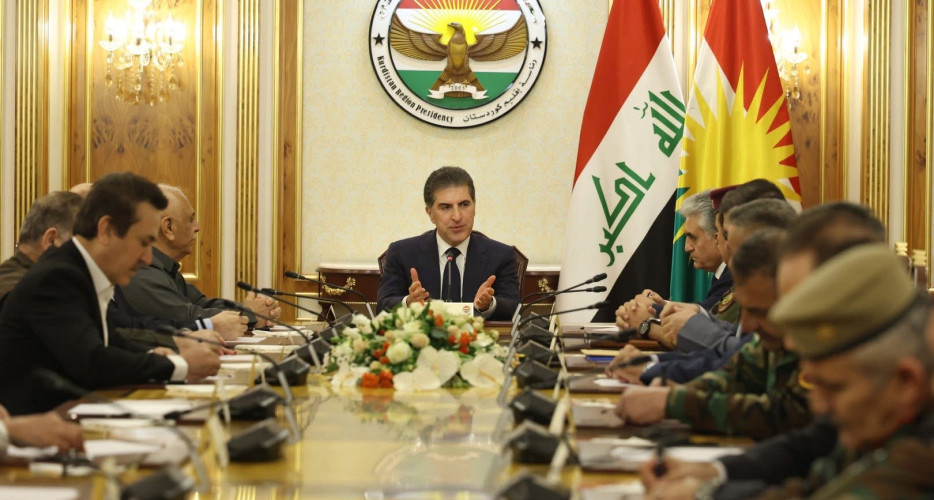
Peregraf — Nechirvan Barzani, the president of the Kurdistan Region of Iraq, said Tuesday that the territory of the autonomous region would not be allowed to become a source of threats against Iran or any neighboring country, as tensions and military activity escalate across the wider region.
Barzani made the remarks while chairing a high-level security meeting in Erbil with senior political and military officials, including the vice president, ministers responsible for security and the Peshmerga forces, and top commanders. According to a communiqué issued after the meeting, officials reviewed the latest security developments and the potential consequences of ongoing regional conflicts for the Kurdistan Region.
Barzani stressed that the Kurdistan Region would “in no way become part of wars and conflicts,” describing the preservation of stability and internal security as the government’s foremost priority. He said authorities would not permit the region’s territory to be used as a launching ground for threats against the Islamic Republic of Iran or other neighboring states.
The meeting also addressed a recent series of drone and missile attacks targeting the Kurdistan Region, which officials attributed to Iraqi armed groups operating outside state control. Participants condemned the strikes, which they said had caused casualties and damage to property.
Officials at the meeting said the federal government in Baghdad bears responsibility for preventing such attacks and for identifying and prosecuting those responsible. They described the assaults as violations of Iraq’s sovereignty and as threats to the country’s broader stability.
Participants also expressed condolences to the families of those killed and injured in the attacks. They praised the region’s security forces, including the Peshmerga and other agencies, for what they described as vigilance and continued efforts to protect the population and territory of Kurdistan.
The statement said additional directives were issued during the meeting aimed at strengthening security measures and coordinating how media organizations should report on sensitive developments amid the escalating regional situation.