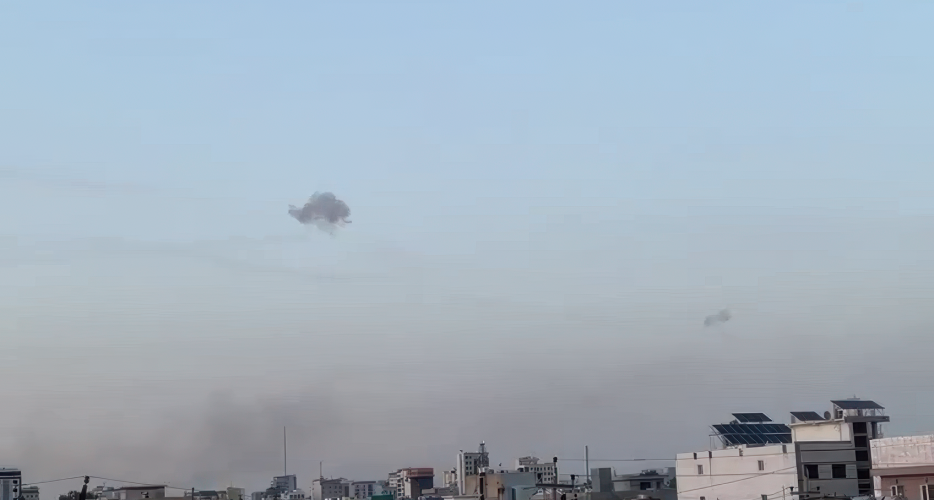
Peregraf — British forces based in Iraq shot down two Iranian drones overnight as a wave of drone and missile attacks continued to target military facilities in the Kurdistan Region, according to the United Kingdom's Defence Secretary.
UK Defence Secretary John Healey confirmed that British personnel stationed at the coalition base in Erbil intercepted two unmanned aerial vehicles attempting to strike the facility. Despite the interceptions, several other drones managed to impact the base, injuring a number of U.S. troops.
The base, located in the capital of the Kurdistan Region, is primarily controlled by the United States but also hosts coalition forces, including British troops.
Brigadier General Guy Foden said the Erbil facility and another coalition base in Baghdad were struck multiple times during the overnight assault.
"British forces shot down two UAVs coming out of the camp, but a number of UAVs did impact the camp," Foden said, adding that no British personnel were injured in the attack.
British troops stationed in Erbil are currently assisting in defending the base alongside U.S. forces.
Healey said British teams had been actively engaged in counter-drone operations since Iran began attacks across the region following U.S.-Israeli strikes on Iranian targets.
"We've had a team at the base in Erbil that's been pulling down drones, protecting themselves but also protecting the base and other service people that they serve with there," Healey said.
The Defence Secretary made the remarks during a visit to the UK's military headquarters in Northwood, where he received a briefing on the evolving security situation in the Middle East.
During the briefing, the UK's Chief of Joint Operations, Lieutenant General Nick Perry, said there were "definitive" signs linking Russian and Iranian drone warfare tactics.
Healey later told reporters that Iranian drone attacks carried similarities to the tactics used by Russia in its war against Ukraine, suggesting possible cooperation between Moscow and Tehran.
"No one will be surprised to believe that [Russian President] Vladimir Putin's hidden hand is behind some of the Iranian tactics," Healey said.
He added that Putin is likely benefiting from the escalating conflict in the Middle East due to rising oil prices, which he said could provide additional funding for Russia's war in Ukraine.
Meanwhile, the United Kingdom has expanded its regional military posture. British Royal Air Force jets conducted combat air patrols over Jordan and the United Arab Emirates overnight, while also flying sorties over Qatar and continuing air defence missions around Cyprus with European allies.
According to Healey, British pilots have accumulated more than 300 flying hours over the past 13 days as tensions across the region intensified.
A British Type 45 destroyer, HMS Dragon, which departed the UK earlier this week, is currently en route to the Mediterranean to reinforce regional security operations.
The drone attack on Erbil comes amid an intensifying wave of aerial assaults across the Kurdistan Region. Security sources say more than 100 drones and missiles have targeted various locations across the region over the past week.
Many of the attacks have been attributed either to Iran or to armed factions affiliated with the so-called "Islamic Resistance," a network of Iran-aligned groups operating inside Iraq. Several strikes have occurred near energy infrastructure and security installations, raising concerns about the safety of critical facilities in the autonomous region.
The escalation coincides with the ongoing U.S.-Israeli war on Iran, now in its 13th day, increasing fears that the Kurdistan Region could be further drawn into the widening regional confrontation.