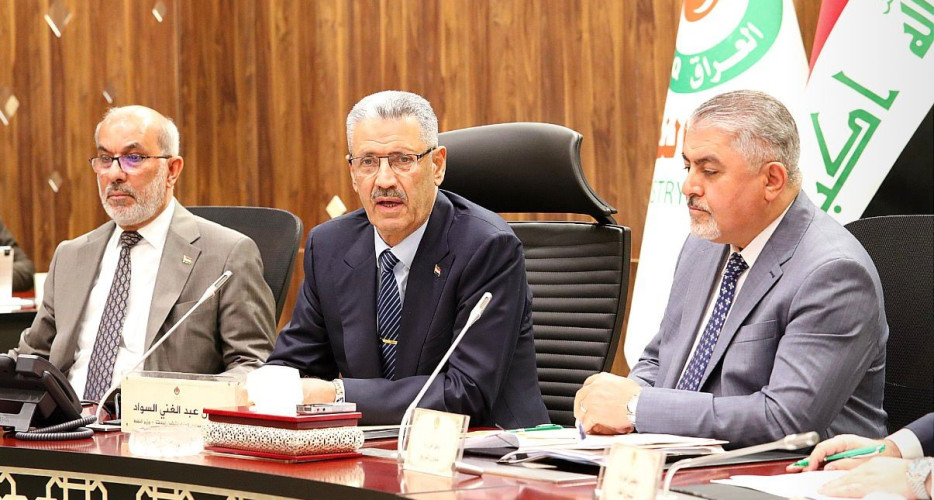
Peregraf — Iraq's Deputy Prime Minister for Energy Affairs and Minister of Oil, Hayan Abdul Ghani Al-Sawad, chaired an emergency committee session on Sunday to review the country's oil production and export operations amid growing regional instability. The meeting focused on securing alternative export routes, including the potential resumption of crude exports through the northern pipeline to the Turkish port of Ceyhan.
Officials discussed two main strategies: tanker shipments, backed by detailed feasibility studies, and the restart of northern pipeline exports, which Baghdad said could help offset losses caused by disruptions to southern routes. Minister Al-Sawad reaffirmed that Iraq's national refineries remain fully operational and that the production of fuel derivatives continues to meet domestic energy needs.
Despite Baghdad's repeated requests, Iraq's federal oil ministry said the Kurdistan Regional Government's Ministry of Natural Resources has refused to resume crude exports through the northern pipeline. In a statement responding to media inquiries, the ministry said it had been in continuous contact with Kurdish authorities since the start of the regional crisis.
Baghdad offered to export up to 300,000 barrels per day through the pipeline to Ceyhan, in addition to at least 200,000 barrels per day previously exported from the Kurdistan Region. The pipeline's total capacity is roughly 900,000 barrels per day.
However, the Kurdish ministry declined to restart shipments, attaching conditions that Baghdad described as unrelated to the immediate issue of crude exports. "The Ministry of Natural Resources confirmed its refusal to resume exports at this time and set several conditions not related to the crude oil export process," the statement said.
Iraqi officials said the disputed conditions could be addressed later, in parallel with resuming exports. They stressed that delays would deprive Iraq of urgently needed revenue, particularly as southern shipments through the Strait of Hormuz remain under pressure amid the ongoing U.S.–Israel war on Iran.
Restarting the northern pipeline, the ministry said, could partially compensate for losses caused by halted southern shipments, while also safeguarding the country's crude production and domestic fuel supply. Baghdad renewed its appeal to Kurdish authorities to reconsider their position and immediately resume exports through the Ceyhan route, citing the "supreme national interest" and the federal Budget Law.
The standoff highlights long-standing tensions between the federal government in Baghdad and the Kurdistan Regional Government over control of oil resources, export authority, and revenue sharing — disputes that have repeatedly disrupted production and exports in northern Iraq.
Economic Stakes
The disruption of northern and southern export routes could put Iraq under growing financial pressure. Mudher Muhammad Saleh, financial adviser to Prime Minister Mohammed Shia' al-Sudani, warned that Iraq may be forced to rely on domestic borrowing if exports through the Strait of Hormuz remain blocked.
Saleh said the financial effects would likely emerge after about two months, due to the lag between crude shipments and final pricing. He added that prolonged disruptions could necessitate austerity measures affecting salaries, pensions, and social welfare spending, though Iraq currently holds sufficient reserves to withstand several months of halted exports.
As regional tensions intensify on the 16th day of the U.S.–Israel war on Iran, Baghdad faces a delicate balancing act: securing revenue from crude exports while navigating Kurdish resistance and potential threats to the southern shipping route, one of the world's most critical oil corridors.