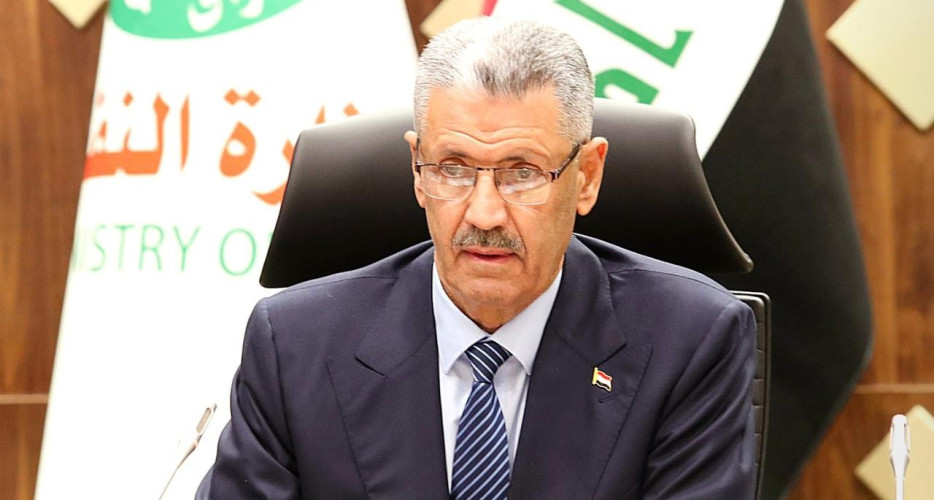
Peregraf — Iraq's Deputy Prime Minister for Energy Affairs and Minister of Oil, Hayan Abdul Ghani, said on Monday that Baghdad plans to begin exporting crude oil from the Kirkuk fields directly to the Turkish port of Ceyhan within a week, bypassing the Kurdistan Region, as the country seeks alternative export routes amid disruptions in the Gulf.
The minister said the pipeline route, which is currently undergoing final testing and rehabilitation, will have a capacity of 200,000 to 250,000 barrels per day. Once completed, it would allow Iraq to pump crude from the Kirkuk oil fields into the Iraq–Turkey pipeline without passing through infrastructure controlled by the Kurdistan Regional Government.
"We will pump crude oil from Kirkuk fields to Ceyhan without passing through the Kurdistan Region," Abdul Ghani said in remarks carried by the Iraqi News Agency.
The move comes as Iraq faces major export challenges following the disruption of shipments from its southern terminals. According to the minister, Iraq normally exports about 3.4 million barrels per day through ports near Basra. However, those shipments were halted just days after the outbreak of regional hostilities and the closure of the strategic Strait of Hormuz.
Iraq's total crude production currently stands at around 4.4 million barrels per day, in line with its OPEC quota. But with exports disrupted, the Ministry of Oil has sharply reduced production to roughly 1.5 to 1.6 million barrels per day to match domestic needs.
Much of the remaining production is being directed to refineries operated by the South, Central, and North refinery companies, which together process around 1.1 to 1.2 million barrels per day to supply the domestic market with gasoline, diesel, kerosene, and liquefied petroleum gas (LPG).
Officials said the government is prioritizing oil fields with higher gas content to support electricity generation, as associated gas is used to fuel power plants across the country.
Abdul Ghani also said Iraq has maintained emergency reserves of energy supplies, including a strategic underground stockpile of roughly 50,000 tons of LPG, while daily domestic demand for cooking gas stands at about 6,000 tons.
Several major oil fields have halted or reduced production due to the export disruptions, including West Qurna 1 and 2, Majnoon, and fields in Maysan province such as Halfaya and Buzurgan. Meanwhile, production from the Kirkuk fields has continued at higher levels to supply northern refineries.
Part of Wider Oil Dispute
The plan to bypass the Kurdistan Region comes amid a widening dispute between the federal government in Baghdad and the Kurdistan Regional Government over control of oil exports through the northern pipeline to Ceyhan.
On Sunday, Abdul Ghani chaired an emergency meeting to review Iraq's export options, including the potential restart of pipeline shipments through the Kurdistan Region. Baghdad has proposed exporting up to 300,000 barrels per day through Kurdish territory, in addition to roughly 200,000 barrels per day previously produced in the region.
However, Iraq's federal oil ministry said the Kurdistan Regional Government's Ministry of Natural Resources had refused to resume exports for the time being, citing conditions that Baghdad described as unrelated to crude shipments.
Kurdish authorities have rejected that claim, accusing Baghdad of "distorting facts" and arguing that repeated attacks on energy infrastructure and economic pressure from the federal government have disrupted oil production in the region.
The dispute has taken on new urgency as Iraq struggles to maintain oil revenues during the ongoing U.S.-Israel war on Iran — now in its 17th day — which has raised fears about prolonged disruptions to shipments through the Strait of Hormuz, one of the world's most critical oil transit chokepoints.
For Iraq, whose state budget relies heavily on oil exports, the ability to reopen alternative routes such as the pipeline to Ceyhan could prove crucial in sustaining government finances and maintaining energy supplies in the months ahead.