Iraqi Speaker Warns Delay in Electing President 'No Longer Acceptable' as 220+ MPs Back Vote
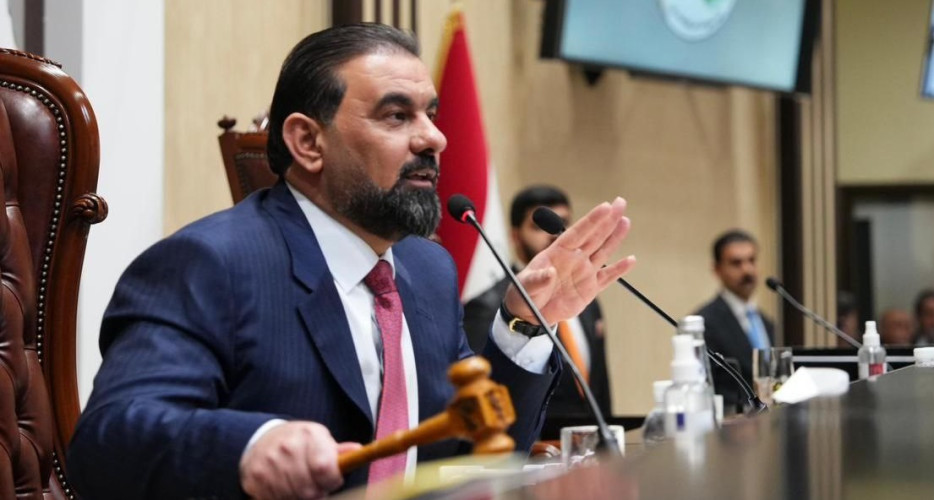
Peregraf — Haibat al-Halbousi, Speaker of Council of Representatives of Iraq, has warned that continued delays in electing a new president are “no longer acceptable,” urging lawmakers to act swiftly to resolve one of the country’s most critical constitutional impasses.
“The delay in electing the President of the Republic is no longer acceptable, given its direct impact on the stability of the state and the regular functioning of its institutions,” Halbousi said, adding that Iraqis are increasingly expecting a resolution to the prolonged stalemate.
He stressed that sufficient time had already been given for political factions to reach consensus on a candidate, but the ongoing deadlock has exceeded “acceptable limits.” As a result, he said parliament will move to fulfill its constitutional duty to elect a president.
“We face a clear national responsibility: to conclude this milestone in accordance with the Constitution, and to choose a figure who represents everyone and restores stability to state institutions,” he added.
Halbousi’s remarks come as Iraq’s stalled political process shows renewed urgency, with more than 220 lawmakers signing a petition to hold a parliamentary session on March 30 to elect a president — a key step toward forming a new government.
According to Dilan Ghafour of the Patriotic Union of Kurdistan, all Kurdish factions backed the petition except the Kurdistan Democratic Party, highlighting continued divisions within the Kurdish bloc.
Under Iraq’s parliamentary rules, while only 50 signatures are required to place the vote on the agenda, a two-thirds quorum of 166 lawmakers is needed to hold the session, and at least 220 votes are required to elect a president — thresholds that have repeatedly derailed previous attempts.
“The situation in Iraq and the wars and tensions in the region necessitate the election of a new president,” Ghafour said, noting that the move would allow the president to designate a prime minister tasked with forming a new cabinet.
The political gridlock has been further complicated by divisions among Shiite factions over the next Iraqi prime minister. Disagreements intensified after Donald Trump rejected the candidacy of Nouri al-Maliki, citing concerns over his ties to Iran — a stance that has deepened fractures within the Coordination Framework.
Meanwhile, the presidency — traditionally held by a Kurdish figure under Iraq’s post-2003 power-sharing arrangement — has become another arena of rivalry. The incumbent, Latif Rashid, is seeking a second term. The Patriotic Union of Kurdistan has nominated Nizar Amedi, while the Kurdistan Democratic Party has put forward Fuad Hussein.
Parliament had been constitutionally required to elect a president by February 1, but repeated sessions have failed due to lack of quorum. Shiite blocs have warned they may boycott future sessions if Kurdish factions do the same, raising the risk of continued paralysis.
The deadlock has effectively frozen Iraq’s political system. Without a president, a prime minister cannot be formally appointed, leaving the formation of a new government — and key policy decisions — in limbo.
As pressure mounts, al-Halbousi’s warning underscores growing concern that failure to act could further destabilize Iraq at a time of heightened regional tensions and internal divisions.