Shiite Blocs Set April 8 Deadline for Kurdish Parties to Agree on Iraqi Presidential Candidate
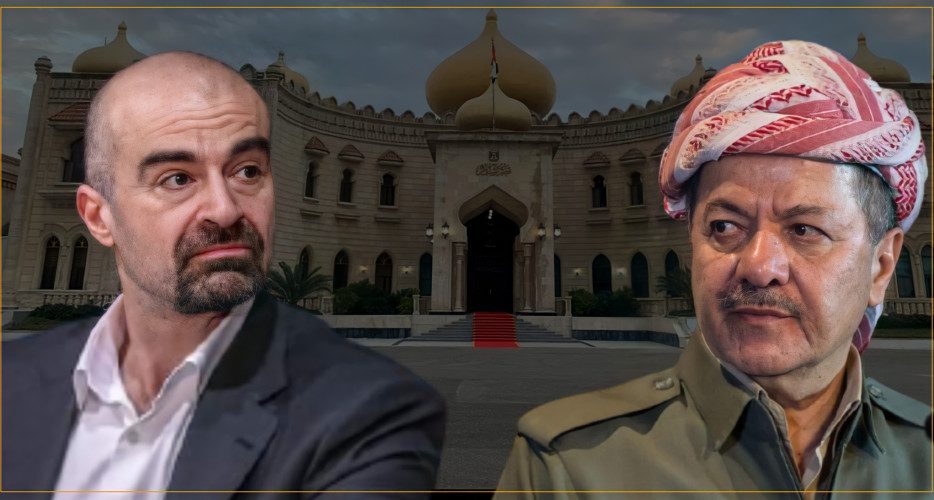
Peregraf – Iraqi Shiite political forces have set April 8 as the final deadline for the Patriotic Union of Kurdistan (PUK) and the Kurdistan Democratic Party (KDP) to agree on a joint candidate for the presidency of Iraq, in a renewed push to break months of political deadlock.
Bahaa al-Araji, the head of the parliamentary bloc for the Reconstruction and Development Coalition—which is aligned with Prime Minister Mohammed Shia' al-Sudani—stated that the deadline reflects intensified efforts to resolve stalled constitutional milestones and move toward forming a fully empowered government.
"With firm resolve and sincere parliamentary efforts, we have today reaped the fruits of our tireless work by setting April 8 as the final deadline," Al-Araji said, emphasizing that the move aims to end paralysis and confront Iraq’s mounting challenges.
Barzani Rejects Pressure to Rush Vote
However, Masoud Barzani, the President of the KDP, has strongly opposed holding a parliamentary session to elect a president under current conditions, warning that forcing the process could deepen divisions.
In a letter sent on March 28 to Shiite and Sunni leaders in Baghdad, Barzani cautioned that "haste or imposition will lead to opposite results and deeper division." He called instead for broader consultation and consensus among political forces.
Barzani stressed that Kurdish factions have yet to agree on a unified nominee, arguing that such a decision must first be resolved internally. He urged political actors to prioritize dialogue and temporarily set aside contentious issues until constitutional agreements are reached based on "partnership, balance, and national consensus."
Growing Parliamentary Pressure
Barzani’s stance comes as pressure intensifies within the Council of Representatives to move forward. More than 220 lawmakers have signed a petition to convene a session to elect a president, signaling frustration with the prolonged stalemate.
Haibat al-Halbousi, the Speaker of the Council of Representatives, has backed the push, warning that delays are "no longer acceptable" due to their impact on state stability and government functionality.
"We face a clear national responsibility to conclude this milestone and choose a figure who represents everyone," Al-Halbousi said, noting rising public concerns.
Despite this momentum, divisions remain pronounced—particularly among Kurdish parties. According to MP Dilan Ghafour, all Kurdish factions except the KDP have supported the parliamentary petition, highlighting the lack of unity within the Kurdish bloc.
Constitutional Hurdles Persist
Under Iraq’s political system, electing a president requires a two-thirds quorum—220 out of 329 lawmakers—a threshold that has repeatedly blocked previous attempts.
The presidency, traditionally held by a Kurdish figure, has become a focal point of competition. Incumbent Abdul Latif Rashid is seeking a second term, while the PUK has nominated Nizar Amedi and the KDP has put forward Fuad Hussein.
The failure to elect a president has effectively frozen the political process, as the head of state must formally designate a prime minister to form a new government.
Broader Political and Regional Pressures
The crisis is further complicated by divisions within Shiite factions over the premiership, as well as escalating regional tensions linked to the 31st day of the US-Israel War on Iran and the activities of the Islamic Resistance in Iraq.
Shiite blocs have warned they may boycott future parliamentary sessions if Kurdish factions continue to abstain, raising concerns over a prolonged institutional crisis.
As the April 8 deadline approaches, Iraq faces a critical choice: push ahead with a vote to end the stalemate, or pursue a slower consensus-driven process—an approach Barzani maintains is necessary to preserve political stability.