KDP Delegation Engages Baghdad Amid Presidential Election Deadlock and Kurdish Divisions
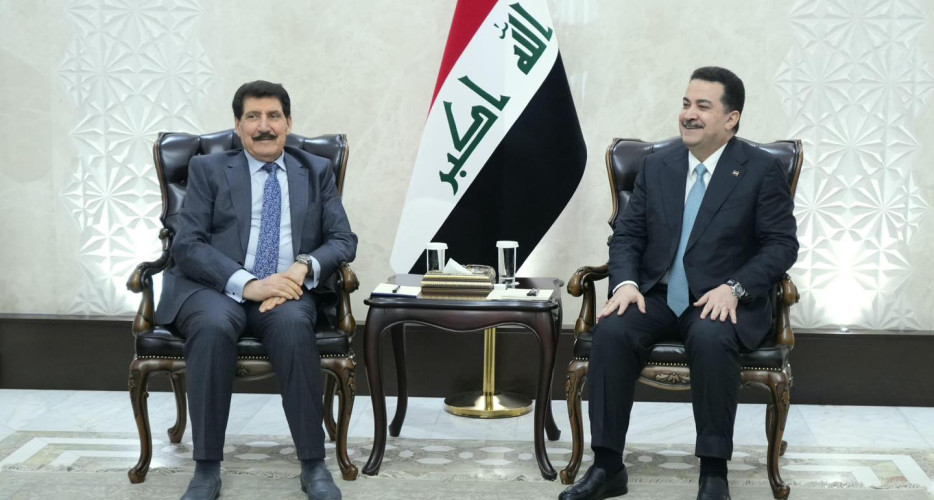
Peregraf - A delegation from the Kurdistan Democratic Party (KDP) has been in Baghdad for two days, conducting meetings with Shiite political leaders and Prime Minister Mohammed Shia’ al-Sudani, as efforts intensify to resolve a deadlock over Iraq’s presidency ahead of a looming parliamentary vote.
The discussions occur as Iraq’s Council of Representatives prepares for a decisive session scheduled for April 11 to elect a new president, following months of political paralysis. The presidency, traditionally allocated to Kurdish parties, remains contested amidst ongoing disagreements between the KDP and the Patriotic Union of Kurdistan (PUK) over a unified candidate.
On Wednesday, Prime Minister al-Sudani met with the KDP delegation in the presence of the head of the Reconstruction and Development Coalition’s parliamentary bloc and several of its members. According to a statement from the Prime Minister’s Media Office, discussions focused on the broader political situation and the need for coordination among national forces.
“The meeting addressed the general situation in the country and emphasized the importance of maintaining coordination and cooperation among all national political forces to unify positions in addressing current challenges, in light of the rapid developments in the region,” the statement said.
It added that the participants reviewed the internal political landscape and stressed the importance of continued consultations to fulfill constitutional obligations, particularly the election of a president. “Efforts must be intensified to complete constitutional entitlements, especially the session dedicated to electing the President of the Republic, in a manner that meets the aspirations of our people across the country,” the statement noted.
The renewed push toward a vote follows an expanded meeting held on March 30 by the Presidency of Parliament with leaders of major blocs to review legislative priorities and finalize committee appointments. Central to those discussions was the long-delayed presidential election, seen as a key step to restoring momentum to governance amidst mounting economic and security challenges.
Shiite political forces have increased pressure on Kurdish parties to resolve their differences and agree on a single nominee, setting April 8 as a deadline for a compromise. Bahaa al-Araji, head of the Reconstruction and Development Coalition parliamentary bloc, described the move as part of intensified efforts to break the impasse.
“With firm resolve and sincere parliamentary efforts, we have today reaped the fruits of our tireless work,” al-Araji said, framing the initiative as essential to confronting Iraq’s growing political and economic difficulties.
However, the accelerated timeline has drawn resistance from Kurdistan Democratic Party leader Masoud Barzani, who has warned against imposing a solution without Kurdish consensus. In a letter sent to Shiite and Sunni leaders on March 28, Barzani cautioned that “haste or imposition will lead to opposite results and deeper division.”
He emphasized that Kurdish factions have yet to reach agreement on a joint candidate and called for resolving the issue internally before proceeding to a parliamentary vote. Barzani also urged political actors to adhere to principles of “partnership, balance, and national consensus,” signaling opposition to what he views as a rushed process.
Despite these objections, momentum within parliament appears to be building. More than 220 lawmakers—the minimum quorum required to elect a president—have signed a petition demanding that the vote proceed. Speaker Haibat al-Halbousi has supported the initiative, warning that continued delays risk undermining state stability.
“We face a clear national responsibility to conclude this milestone and choose a figure who represents everyone,” al-Halbousi said.
Divisions remain particularly sharp within the Kurdish bloc. Kurdish lawmaker Dilan Ghafour, a member of the Patriotic Union of Kurdistan, said that all Kurdish factions except the KDP have backed the parliamentary push, highlighting the lack of unity that has repeatedly stalled progress.
Under Iraq’s constitution, electing a president requires a two-thirds majority—220 out of 329 lawmakers—a threshold that has proven difficult to achieve in the country’s fragmented political landscape.
The presidency has become the focal point of intra-Kurdish rivalry. Incumbent President Abdul Latif Rashid is seeking a second term, while the PUK has nominated Nizar Amedi and the KDP has put forward Fuad Hussein. The two parties have yet to agree on a joint candidate, despite mounting external pressure.
Failure to elect a president has effectively frozen key elements of the political process, as the office is responsible for formally designating a prime minister to form a government.
The impasse unfolds amidst heightened regional tensions and internal political strains, adding urgency to efforts to resolve the crisis. Shiite blocs have warned they may boycott future sessions if Kurdish factions continue to abstain, raising the risk of a deeper institutional crisis. The US-Israel War on Iran, which began on February 28, 2026, and is now in its 33rd day, further exacerbates regional instability.
As the April deadlines approach, Iraq faces a critical choice: proceed with a high-stakes vote that could deepen divisions, or delay again in pursuit of a fragile political compromise—prolonging uncertainty at a pivotal moment for the country.