Iran Urges Iraq and Kurdistan Region to Expel Kurdish Opposition Parties After Washington–Tehran Ceasefire
Peregraf - Iran has called on Iraqi authorities and the Kurdistan Region to expel Iranian Kurdish opposition parties, accusing them of cooperating with the United States and Israel, just hours after a two-week ceasefire was announced between Tehran and its adversaries.
In a statement issued Wednesday, the Iranian Consulate General in Erbil alleged that "Kurdish opposition groups had been working with U.S. and Israeli military and intelligence agencies against Iran". The statement cited recent remarks by U.S. President Donald Trump as evidence of what it described as "secret cooperation" between these groups and foreign powers.
Tehran urged both Baghdad and Erbil to take immediate action, saying it was "the appropriate time" to prosecute and remove the groups, which it accused of espionage.
The demand comes despite a prior security agreement reached between Iran, Iraq, and the Kurdistan Region following the 2022 anti-government protests in Iran. Under that deal, Kurdish opposition factions were to be disarmed, relocated away from border areas, and restricted in their activities.
Before the recent conflict escalated on February 28, Iran’s Islamic Revolutionary Guard Corps (IRGC) had already carried out repeated drone and missile strikes against Kurdish opposition bases in the Kurdistan Region. Those attacks intensified during the broader confrontation involving Iran, the United States, and Israel.
According to data compiled by Peregraf Media, more than 650 drones and missiles have struck locations across the Kurdistan Region since the conflict began. At least 16 people — including Iranian Kurdish opposition fighters, Kurdistan Region Peshmerga, and security personnel — have been killed, while around 70 others have been wounded.
One of the deadliest incidents occurred on March 24, when Iranian ballistic missiles hit KRG military positions in two waves. Targets included headquarters of the 7th Infantry Division and a unit of the 5th Infantry Division. At least seven Peshmerga fighters were killed and around 30 wounded in that attack alone.
Despite expectations early in the conflict that Kurdish opposition groups might open a new front against Tehran, those plans were reportedly halted following U.S. intervention. The groups were instructed to stand down, and Kurdish leadership in the Kurdistan Region was consulted to secure their cooperation.
Kurdish officials on Wednesday welcomed the ceasefire, expressing hope that it would also bring an end to repeated drone and missile attacks on the region.
However, Iran’s latest statement signals a more assertive posture following the ceasefire. Tehran is widely expected to intensify pressure on opposition groups both inside Iran and across its borders. Since the start of the conflict, thousands of people have reportedly been detained inside Iran as part of a broader crackdown on dissent.
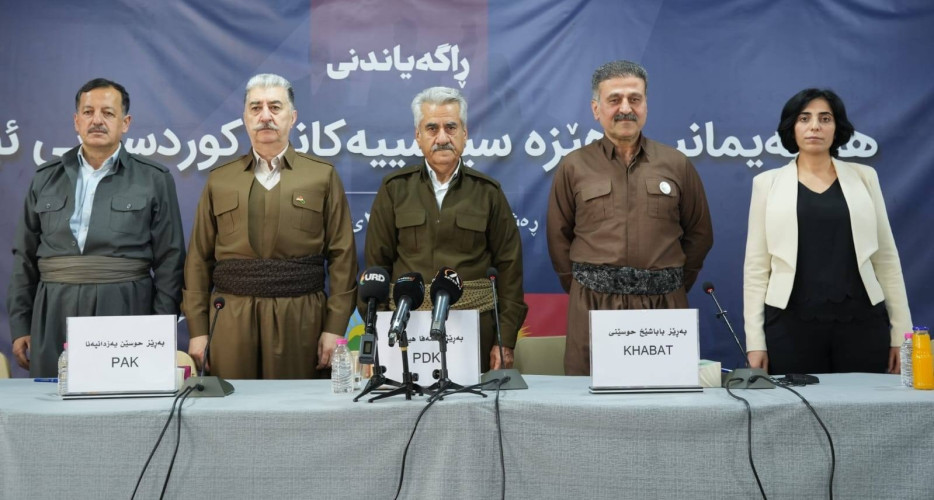
Iranian Kurdish opposition parties have denied any ties to foreign governments, emphasizing that their activities are aimed at securing rights for Kurds in Iran and advancing self-determination. Ahead of the conflict, several factions announced a new political alliance to unify their efforts.
Nevertheless, Iran and allied armed groups in Iraq have continued targeting these factions, launching hundreds of drone and missile attacks on their positions in the Kurdistan Region.
The ceasefire, announced on April 8 — the 40th day of a conflict that has spanned multiple countries — has paused large-scale hostilities between Iran, the United States, and Israel. But tensions remain high, with Tehran signaling that it may escalate actions against those it considers internal and external enemies.