Peregraf — The United Arab Emirates (UAE) has delivered a strongly worded protest to Iraq regarding attacks launched from its territory by Iran-aligned armed groups, warning that continued incidents could severely strain relations between the two nations.
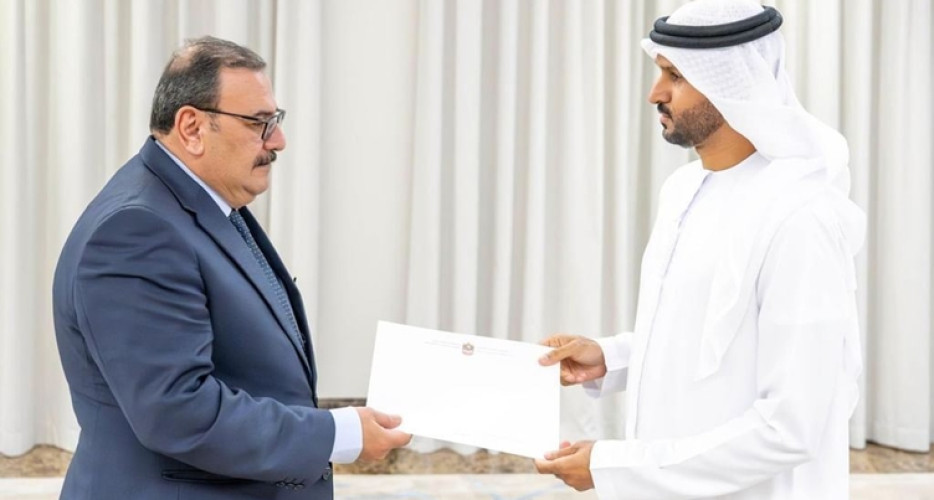
On Wednesday, April 15, 2026, the UAE Ministry of Foreign Affairs (MoFA) summoned Omar Abdulmajid Al-Obaidi, the Chargé d'Affaires at the Iraqi embassy in Abu Dhabi. During the meeting, officials conveyed what was described as the “strongest condemnation” of attacks targeting Gulf states. These incidents have persisted despite the ongoing two-week ceasefire in the US-Israel War on Iran.
In a formal statement, the Emirati foreign ministry said it “absolutely rejects” the continued strikes carried out by “factions, militias, and terrorist armed groups loyal to the Islamic Republic of Iran” operating from Iraqi soil. The ministry noted that these attacks targeted vital infrastructure across Gulf Cooperation Council (GCC) countries—including Bahrain, Kuwait, Oman, Qatar, Saudi Arabia, and the UAE—describing the acts as a violation of sovereignty, airspace, and international law.
The protest note warned that a continuation of these activities would place bilateral relations with Baghdad “under highly sensitive strain” and could negatively impact future cooperation between Iraq and the Gulf states.
Regional Conflict Context
The warning follows a six-week high-intensity phase of the US-Israel War on Iran, which began on February 28, 2026. The conflict entered a fragile two-week ceasefire on April 8, 2026, brokered by Pakistan.
During the active war, the US Central Command (CENTCOM) reported conducting strikes on more than 13,000 targets across Iran, while Israel reported hitting over 10,000 additional locations. Iran responded by launching thousands of drones and missiles across the Middle East. While Tehran claimed to target U.S. and Israeli assets, many strikes impacted neighboring countries.
Significant portions of these operations were executed by groups aligned with Iran’s “Axis of Resistance,” including armed factions in Iraq operating under the “Islamic Resistance in Iraq” label.
Pressure on Baghdad
Abu Dhabi urged the Iraqi government to take “immediate and decisive steps” to prevent any further attacks originating from its territory. The UAE reminded Baghdad of its responsibility to ensure its land is not used as a launchpad against neighboring states, citing UN Security Council Resolution 2817 (2026), which calls for an end to provocations by proxy groups.
The UAE further emphasized the necessity for Iraq to strengthen its role as a “responsible partner” and to uphold regional security and stability.
According to data compiled during the conflict, Iran and its allies launched at least 6,400 missiles and drones. While many were intercepted, several strikes were directed at the UAE, Kuwait, and Saudi Arabia. Iraqi armed groups claimed responsibility for several of these launches, asserting they were targeting U.S. interests throughout the region.