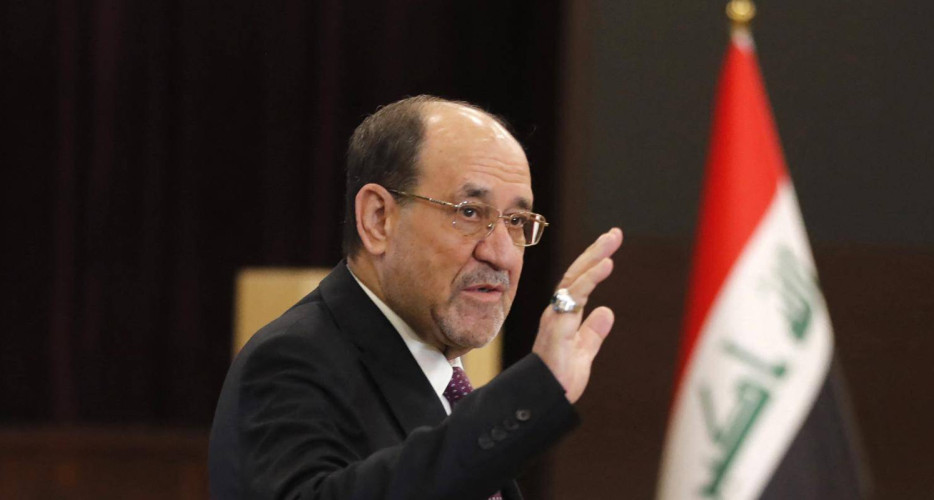
Peregraf — The media office director of Nouri al-Maliki has signaled that his nomination for prime minister could be withdrawn, even as the State of Law Coalition (SLC) maintains he remains its official candidate.
Husham al-Rikabi, director of the media office of SLC president Nouri al-Maliki, said on Sunday that the Coordination Framework's candidate for prime minister "remains the one officially announced and has not been replaced."
However, al-Rikabi also dismissed claims that Saturday's scheduled meeting was postponed due to difficulty in reaching al-Maliki, calling such claims "false and not reflective of the actual situation."
He further acknowledged that the same majority mechanism used to nominate al-Maliki could be used to withdraw his candidacy.
"Just as the nomination was made by a majority, it can be withdrawn through the same mechanism," al-Rikabi wrote in a post on X, adding that Iraq must move toward "a new nomination without further prolongation."
He stressed that the current political stage "cannot tolerate any more delays," as pressure mounts to complete government formation within constitutional deadlines.
Under Iraq's political framework, the Shia-led Coordination Framework is expected to present its candidate for prime minister following the election of Nizar Amedi as president on April 11.
The remarks come amid growing pressure from Washington over al-Maliki's possible return to office.
US President Donald Trump publicly warned against reinstating al-Maliki, saying Iraq would be making "a very bad choice" and claiming that during his previous tenure the country descended into "poverty and total chaos."
Trump warned that if al-Maliki returned as prime minister, the United States would withdraw its support, leaving Iraq with "zero chance of success, prosperity, or freedom."
The Coordination Framework formally announced al-Maliki as its candidate during a meeting on January 24, citing a majority vote and his political experience.
Replacing him, however, risks a backlash from his supporters, who may view such a move as yielding Iraqi decision-making to foreign pressure. At the same time, maintaining his candidacy could strain relations with Washington and expose Iraq to potential economic and diplomatic consequences.
Al-Maliki served as prime minister from 2006 to 2014, a period that critics associate with deep sectarian tensions, mass protests, and security deterioration, including the rise of the Islamic State (ISIS).
With Iraq's oil revenues heavily tied to the US financial system, a number of political leaders have expressed concern that a direct confrontation with Washington could carry significant economic consequences.