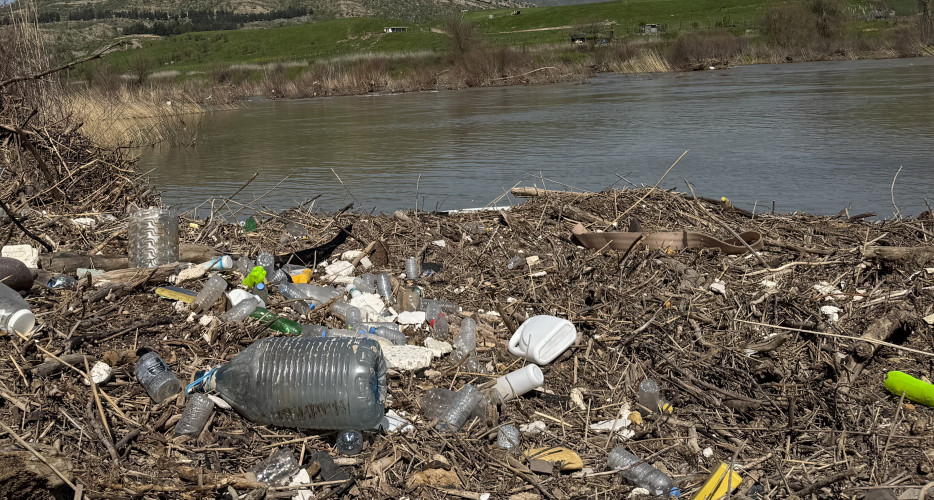
Peregraf — The Ministry of Interior of the Kurdistan Regional Government (KRG) has warned that anyone who litters or pollutes the environment in the Kurdistan Region will face fines ranging from 100,000 to 10 million Iraqi dinars (IQD).
In a statement issued under official document No. 11255, dated April 23, 2026, and signed by Interior Minister Reber Ahmed Khalid, the ministry announced new measures it described as practical steps to protect the Kurdistan Region's environment and natural sites.
The ministry said the decision follows directives from Prime Minister Masrour Barzani to prioritize environmental protection and preserve the natural landscape of the Kurdistan Region, particularly during the spring tourism season.
The ministry instructed all provinces, police forces, civil defense units, forest and environmental police, traffic police, and relevant departments to coordinate with the Environmental Protection and Improvement Board to enforce environmental laws and impose legal penalties on violators.
Fines for Littering
The ministry said citizens must treat the Kurdistan Region's nature "as they would their own home," especially during trips and picnics, and avoid leaving waste in tourist areas, mountains, forests, ponds, dams, and streams.
Anyone found littering or causing pollution will face legal action under Article 42, Clause 3 of the Environmental Protection and Improvement Law No. 8 of 2008, according to the ministry.
The law sets fines of no less than 100,000 IQD and no more than 10 million IQD. Police forces were instructed to assist in enforcing these penalties.
Public Reporting and Business Monitoring
The ministry also called on citizens to report environmental violations by recording videos of people polluting public areas and submitting them to the Environmental Protection Board, the Ministry of Interior, or police departments.
Project owners and businesses covered under Environmental Violations Regulation No. 2 of 2023 were also warned to comply with environmental standards or face monitoring and penalties.
Local environmental councils and committees in provinces and independent administrations were assigned responsibility for implementing the directive.
"A National, Religious, and Humanitarian Duty"
The ministry concluded by framing the protection of the Kurdistan Region's nature as a national responsibility.
"The beautiful nature and environment of Kurdistan are the public wealth of the country and its citizens. Protecting them is a national, religious, and humanitarian duty," the statement said.
"No one has the right to pollute it and escape accountability."