Iran Executes Second Kurdish Political Prisoner in Two Days Amid Rising International Concern
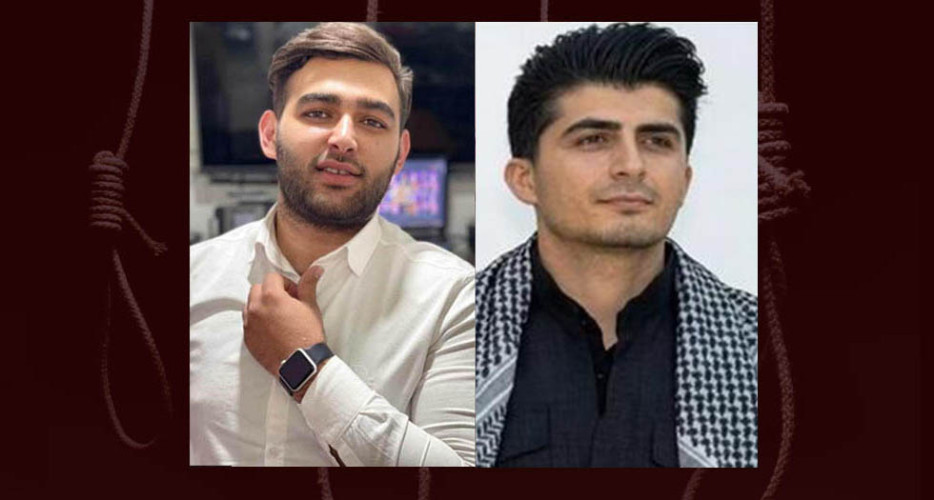
Peregraf — Iranian authorities have executed another Kurdish political prisoner, marking the second such execution in two days, as international rights groups warn of a sharp escalation in capital punishment.
According to Iran's judiciary-affiliated Mizan Online, Mehrab Abdollahzadeh's death sentence was carried out on Sunday after completing what authorities described as "legal formalities." The judiciary said Abdollahzadeh was arrested at the scene of street protests in the northwestern city of Urmia, where it claimed a farmer "was severely beaten by rioters and tragically martyred" — a farmer who, according to Mizan, had been attending the protests "as a volunteer force to ensure the security of the people."
Abdollahzadeh worked as a barber prior to his arrest. The Basij is a paramilitary force affiliated with the Islamic Revolutionary Guard Corps (IRGC), which plays a central role in internal security operations.
Allegations of Torture and Forced Confession
According to the Paris-based Kurdistan Human Rights Network (KHRN), Abdollahzadeh was arrested on October 22, 2022, during the nationwide "Woman, Life, Freedom" protests. He was subjected to physical and psychological torture to extract forced confessions. According to his lawyer, Sidad Shirzad, Abdollahzadeh consistently denied the charges and stated in court that his confession had been obtained under duress, but the judge dismissed his claims. The lawyer emphasized that no valid legal confession was ever made before an investigator or judge, and that the credible statements of other defendants, witnesses, and individuals present at the scene contained no mention of Abdollahzadeh.
Second Execution in Two Days
The execution follows the reported executions of two other prisoners on May 2 at an unspecified location, after they were transferred from Urmia Central Prison:
Naser Bakrzadeh, a 26-year-old Kurdish prisoner from Urmia, was sentenced to death by Branch 2 of the Revolutionary Court on charges of "spying for Israel." Bakrzadeh reportedly released a final letter from prison shortly before his execution in which he maintained his innocence and claimed he was being targeted due to his Kurdish and Sunni identity.
Yaghoub Karimpour, a graduate in public law from Miandoab, a Turkish man and follower of the Yarsan faith, was arrested during the 12-day Iran–Israel war in June 2025. He was sentenced to death on charges of "corruption on earth" through "spying for Israel." He suffered from physical disabilities and was subjected to severe physical and psychological torture during his detention. Interrogators reportedly extracted forced confessions from him by falsely promising that admitting to the charges would save his life.
Rights groups said both were denied access to legal counsel of their choosing and did not receive fair trials.
Surge in Executions
Since the US-Israel war on Iran began on February 28, Iranian authorities have announced the executions of at least 13 political prisoners, with rights observers describing the pace as an "alarming surge."
According to the Human Rights Activists News Agency (HRANA), Iran recorded 2,063 executions in 2025, the highest annual figure over the past eleven years.
International Reaction
Amnesty International condemned the executions and called for urgent international action. The organization warned that many detainees remain at risk of execution, urging coordinated diplomatic pressure to halt the practice.
2022 Protests
The cases stem from the 2022 protests in Iran. On September 16, 2022, Mahsa Amini — also known by her Kurdish name Jina Amini — died in a hospital in Tehran after being arrested by the Guidance Patrol, Iran's morality police, for allegedly not wearing the hijab in accordance with government standards. Eyewitnesses, including women who were detained with Amini, reported that she was severely beaten and died as a result of police brutality, which Iranian authorities denied.
Iranian authorities responded to the resulting protests with unlawful force, including by firing live ammunition, metal pellets, and tear gas into crowds, killing hundreds of protesters and injuring thousands more, with thousands also arrested.