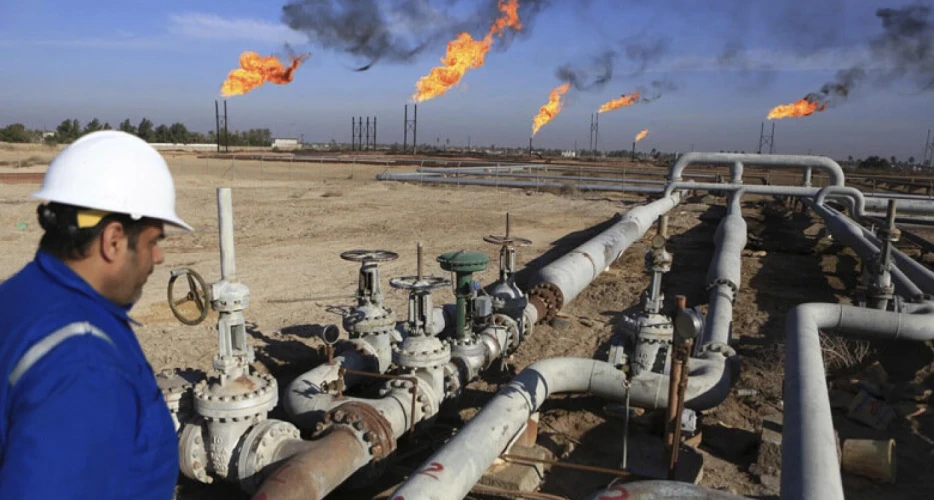
Peregraf- Iraq’s Ministry of Oil announced today that the Kirkuk–Nineveh crude oil export pipeline to Turkey’s port of Ceyhan is expected to become operational within one month as Baghdad seeks alternative export flexibility amid regional instability.
Basim Mohammed Khudair said the ministry is finalizing work on the pipeline, which lies outside the Kurdistan Region and was designed to export up to 350,000 barrels per day.
However, he noted that current export capacity remains limited due to restrictions in the carrier pipeline connecting Basra and Kirkuk.
Khudair said the future strategic Basra–Haditha pipeline project would provide the long-term technical solution for expanding export capabilities.
Hormuz Contingency Plans
The ministry also said Iraq is prepared to quickly restore normal export levels if the Strait of Hormuz reopens fully following disruptions linked to the regional conflict involving Iran, the United States, and Israel.
According to Khudair, Iraq exported around 3.4 million barrels per day before the recent escalation, while total production stands at approximately 4.2 million barrels daily.
"Should the Strait of Hormuz reopen, the Ministry is capable of returning export rates to previous levels within one week," he said.
He added that logistical preparations are ongoing, with two crude oil tankers already prepared and two more expected.
Sharp Decline in Iraqi Oil Exports
Official figures from Iraq’s Ministry of Oil and SOMO showed Iraqi oil exports fell sharply in March amid regional tensions and disruptions to energy flows.
Total crude exports dropped from nearly 99.9 million barrels in February to 18.6 million barrels in March — a decline of approximately 81.4%.
Oil revenues also fell from more than $6.8 billion in February to around $1.95 billion in March.
Exports from the Kurdistan Region through Turkey’s Ceyhan port declined from 5.55 million barrels in February to 1.27 million barrels in March.
Additional Kirkuk exports through Ceyhan reached 2.77 million barrels during March.
The decline came amid the broader regional conflict and concerns surrounding the Strait of Hormuz, through which Iraq exports most of its crude oil.