Masrour Barzani Calls for End to 18-Month Political Deadlock, Says Parliament Must Be Reactivated
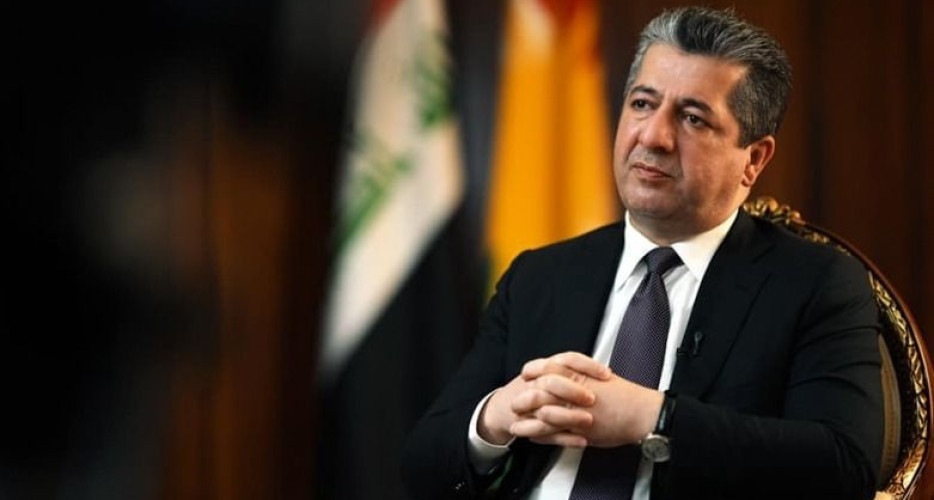
Peregraf — Kurdistan Regional Government (KRG) Prime Minister and Kurdistan Democratic Party (KDP) Vice President Masrour Barzani called for an end to the Kurdistan Region's prolonged political deadlock, urging political parties to put national interests ahead of partisan considerations and reactivate parliament more than 18 months after the last elections.
Speaking to journalists, Barzani said the Kurdistan Parliament must resume its work and stressed that it does not belong to any single political party.
"The Kurdistan Parliament must be reactivated; the parliament is not the property of any single political party," he said.
"Representatives must be honest with the votes of their constituents, return, and reactivate the parliament."
No Date Set for KDP-PUK Talks
Barzani said he had not yet been informed of any date for a new round of talks between the Kurdistan Democratic Party (KDP) and the Patriotic Union of Kurdistan (PUK).
"Up until now, I have not heard of any date being set for a meeting between the KDP and the PUK," he said.
His remarks come as formal negotiations between the two parties remain suspended after nearly six months without direct talks.
Response to Bafel Talabani's Seat-Count Claim
The comments follow recent statements by PUK President Bafel Talabani, who claimed that a planned alliance between the PUK and the New Generation Movement would place the two sides on equal footing with the KDP in parliament.
"We are 39 to 39, and we demand half of the government," Talabani said during the PUK's 51st anniversary celebrations.
However, according to the final certified results of the October 2024 elections, the PUK won 23 seats and the New Generation Movement 15 seats, for a combined total of 38 — not 39. The KDP holds 39 seats.
The statement has intensified debate over power-sharing arrangements as parties prepare for possible renewed negotiations on forming the KRG's 10th cabinet.
Barzani said Kurdish parties must adopt a more responsible approach to resolving the crisis.
"The parties need to think more wisely, and everyone should consider the country's interests and set aside their personal interests," he said.
"I believe irresponsible rhetoric will no longer solve the problems of these people."
He added that all political forces should respect the will of voters and implement the results of the October 2024 elections.
"We held an election, and after 18 months, we have been unable to implement the results of that election as they should be."
Oil Companies Seeking Guarantees
Barzani also addressed ongoing negotiations involving international oil companies operating in the Kurdistan Region.
He said companies are seeking guarantees before resuming production and increasing exports.
"Companies are demanding guarantees so they can resume their production and increase oil exports through the Kurdistan Region. We agreed with this viewpoint," he said.
According to Barzani, KRG officials and oil company representatives are currently holding discussions in Baghdad and are expected to continue talks early next week.
Salaries and Relations with Baghdad
Barzani said he had received assurances from Iraqi Prime Minister Ali Falah al-Zaidi that salary payments to Kurdistan Region employees would not be linked to political disputes.
"We have received promises from the Iraqi Prime Minister that the issue of salaries will not be mixed with any other political matters and will be paid on time," Barzani said.
He acknowledged, however, that Iraq itself is facing economic challenges.
18 Months of Institutional Paralysis
The Kurdistan Region has remained without a new government and an active parliament since elections were held on October 20, 2024.
Although parliament convened for its inaugural session on December 2, 2024, lawmakers have not reconvened since.
Disputes between the KDP and PUK over power-sharing, parliamentary leadership positions, and cabinet formation have prevented the establishment of the KRG's 10th cabinet, delayed passage of a budget, and fueled growing public criticism of the region's political institutions.