Qubad Talabani Urges Economic Diversification, Calls for Stronger Erbil-Baghdad Partnership
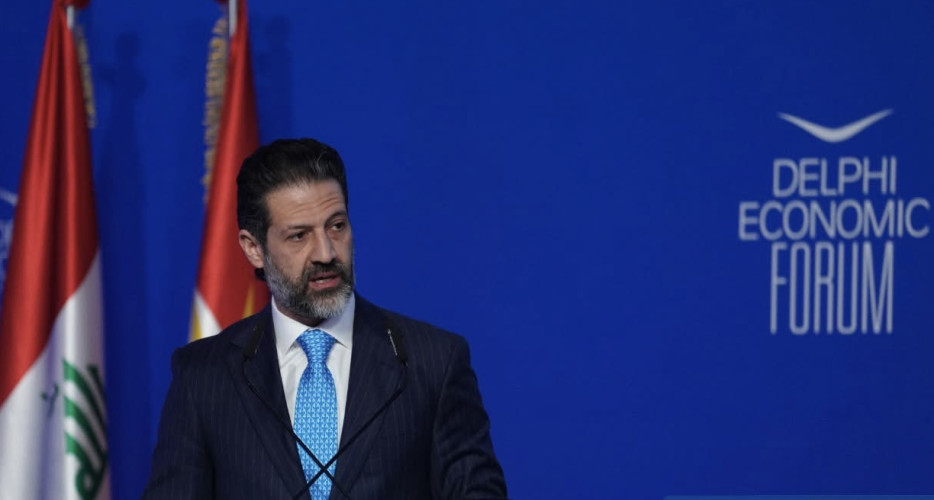
Peregraf — Qubad Talabani, deputy prime minister of the Kurdistan Regional Government (KRG) and a senior leader of the Patriotic Union of Kurdistan (PUK), called on the region to reduce its dependence on oil revenues and invest in sectors such as tourism, culture, and human capital, arguing that long-term prosperity will depend on a more diversified economy.
Speaking on the second day of the Delphi Economic Forum in Sulaymaniyah on Sunday, Talabani said the discussions taking place at the gathering should lead to tangible results rather than remain theoretical debates.
"The discussions here are not just words," he said. "They aim to be materialized in the future."
His remarks come as the Kurdistan Region continues to face recurring economic challenges linked to disputes with Baghdad over oil exports and revenue sharing. The suspension and uncertainty surrounding Kurdish oil exports in recent years have intensified calls for economic reforms and the development of alternative sources of income.
Talabani said the Kurdistan Region must seize opportunities in a range of sectors, particularly tourism, which he described as an area with significant potential. He highlighted Sulaymaniyah's cultural and artistic heritage as an example of how local strengths can contribute to economic growth.
He also stressed the importance of ensuring that development reaches all parts of the Kurdistan Region rather than being concentrated in major urban centers.
"Success should not come only from the capital," Talabani said, adding that all regions must have equal opportunities to benefit from economic progress.
Addressing social and economic participation, Talabani said women must play a larger role in the workforce, arguing that sustainable growth cannot be achieved without broader inclusion.
On relations between the KRG and Iraq's federal government, Talabani emphasized the interconnected nature of their futures, saying the prosperity of Kurdistan and Iraq depends on cooperation rather than confrontation.
"The success of Kurdistan and Iraq are linked," he said. "The relationship between Erbil and Baghdad must be based on mutual success."
Relations between Erbil and Baghdad have long been shaped by disputes over oil exports, budget transfers, constitutional authorities, and the status of disputed territories. Despite periodic tensions, leaders on both sides have increasingly emphasized cooperation as Iraq seeks political and economic stability.
Talabani argued that Iraq can no longer afford the costs of political conflict and instability, saying the country should focus on creating opportunities for peace and development.
He described the current federal government as an opportunity to build a stronger and more stable Iraq, while pledging that the KRG would work actively to transform economic opportunities into lasting achievements.
"We will not be mere spectators," Talabani said. "We will work for balance in Iraq and a better future for our people, because success is not just growth, but continuity."
The Delphi Economic Forum, held for the second consecutive year in Sulaymaniyah, has brought together senior officials, diplomats, policymakers, and business leaders from across the Middle East and Europe to discuss economic development, regional security, and geopolitical trends.
Participants include Iraqi President Nizar Amedi, former Turkish Prime Minister Ahmet Davutoğlu, who currently leads Turkey's Future Party, Greek Foreign Minister Georgios Gerapetritis, and senior government officials from several European countries.
Organizers say this year's discussions are focused on energy security, investment opportunities, governance reforms, and regional stability amid ongoing political and economic challenges across the Middle East.