KRG Proposes Permanent Joint Ministerial Committee With Baghdad to Resolve Longstanding Disputes
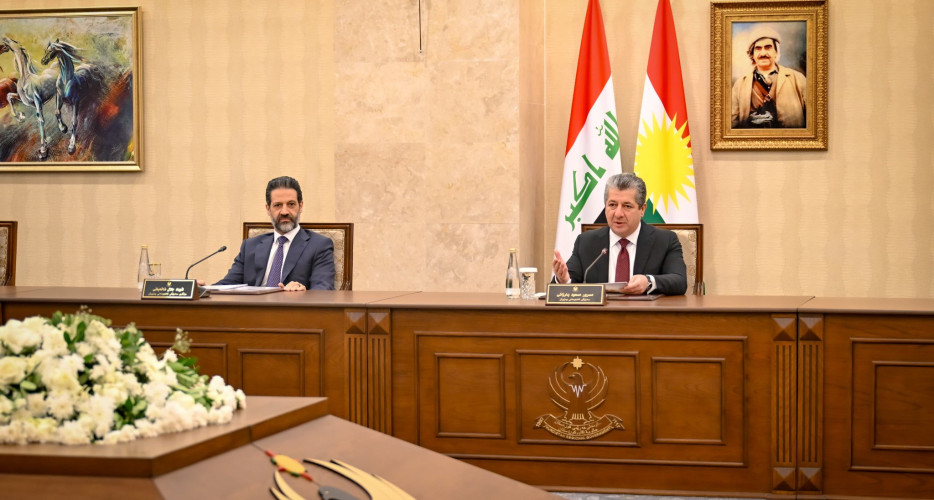
Peregraf- The Kurdistan Regional Government (KRG) has approved a proposal to establish a permanent joint high-level ministerial committee with Iraq's federal government. Officials say the body is intended to institutionalize negotiations and provide a lasting mechanism for resolving disputes between Erbil and Baghdad.
The proposal was endorsed during a meeting of the KRG's Council of Ministers on Wednesday, chaired by Prime Minister Masrour Barzani of the Kurdistan Democratic Party (KDP) and attended by Deputy Prime Minister Qubad Talabani of the Patriotic Union of Kurdistan (PUK).
According to a KRG statement, Barzani proposed the formation of a permanent Joint High Ministerial Committee composed of relevant ministers and senior officials from both governments. The proposal received the support of Talabani and was unanimously approved by the cabinet before being forwarded to Baghdad for consideration.
The initiative comes at a time when relations between the Kurdistan Region and Iraq's federal government are being shaped by negotiations over oil exports, budget transfers, customs revenues, and other unresolved constitutional and financial issues.
During the meeting, Barzani said the committee would build on discussions held during his recent visit to Baghdad and called for a clear roadmap to continue negotiations on outstanding disputes.
Talabani said the proposed committee would help transform what he described as the often ad hoc nature of negotiations into a more structured and institutional process.
"This is a step toward institutionalizing the resolution process for issues between the Kurdistan Region and the federal government," he said, according to the KRG statement.
The cabinet agreed that a permanent mechanism could help reduce recurring political tensions and facilitate more consistent coordination between the two governments.
Oil Exports and Energy Security
The Council of Ministers also reviewed the latest developments in negotiations over the Kurdistan Region's oil sector, including recent discussions involving KRG officials, representatives of international oil companies, Iraqi Prime Minister Ali al-Zaidi, and federal authorities.
The cabinet reaffirmed its stated support for Baghdad's efforts to address the economic pressures facing Iraq amid ongoing regional instability and instructed the Ministry of Natural Resources and the KRG negotiating team to accelerate efforts aimed at resuming oil exports through the Kurdistan Region's pipeline network.
Oil exports from the Kurdistan Region have remained largely suspended since 2023, when a legal dispute halted shipments through Türkiye. The shutdown has deprived both Baghdad and Erbil of billions of dollars in revenue and has become one of the most contentious issues between the two governments.
According to the KRG statement, the Kurdistan Regional Government wants exports to resume as quickly as possible so that revenues can once again flow to Iraq's federal treasury.
The cabinet also said oil companies operating in the region bear responsibility for restoring and increasing production in the coming days. The statement cited assurances from Iraqi Prime Minister al-Zaidi that the federal government would protect the region's energy infrastructure and compensate companies for damages resulting from attacks on oil and gas facilities.
Revenue Dispute and ASYCUDA
The cabinet's final discussion focused on local revenues and the implementation of ASYCUDA — the Automated System for Customs Data — which Baghdad and Erbil have been negotiating as part of broader efforts to improve transparency and coordination at border crossings.
Finance and Economy Minister Awat Sheikh Janab of the Gorran Movement presented a report showing that public revenues in the Kurdistan Region declined sharply during the first five months of 2026 compared with the same period last year.
According to the KRG, the decline was driven by regional instability, disruptions linked to ongoing conflicts in the Middle East, and delays in implementing ASYCUDA at border crossings.
The cabinet said the region's monthly revenues have fallen by more than 70 percent, prompting calls for Baghdad to review the fixed amount of 120 billion Iraqi dinars that the Kurdistan Region is required to transfer monthly to the federal treasury under current agreements.
Officials argued that the existing arrangement no longer reflects current economic conditions and should be reassessed in light of the reported reduction in revenues.
The cabinet also urged Iraq's Ministerial Council for Economy to formally approve a preliminary understanding reached between Baghdad and Erbil in April regarding ASYCUDA implementation.
According to the KRG, completing the agreement would improve customs administration, increase border-crossing revenues, stimulate trade, and strengthen economic activity across Iraq.