PM Al-Zaidi and Tom Barrack Reaffirm Commitment to Bringing All Weapons Under State Authority
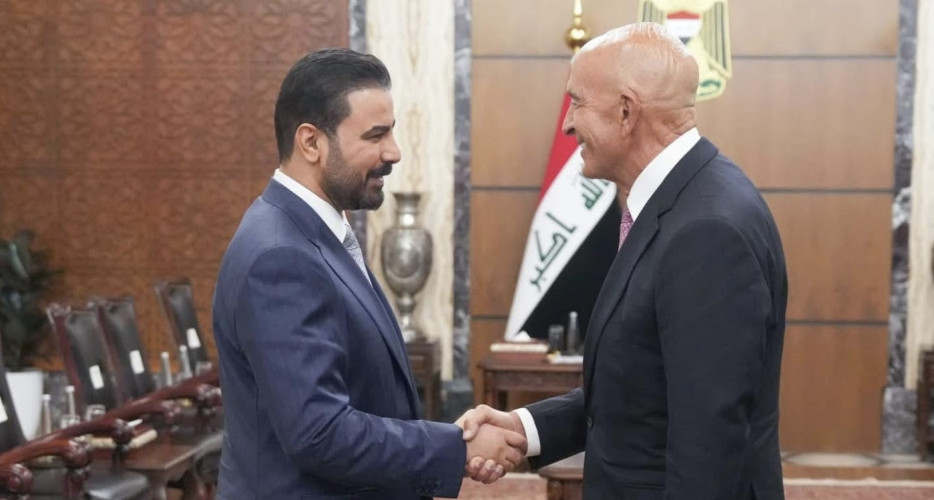
Peregraf — Iraq and the United States have reaffirmed their commitment to disarming and dismantling armed groups operating outside state authority, placing the issue at the center of a broader vision for Iraq’s security, sovereignty, and economic development.
The pledge came in a joint statement issued following a meeting on June 15 between Iraqi Prime Minister Ali al-Zaidi and Tom Barrack, U.S. President Donald Trump’s special presidential envoy.
According to the statement, both sides emphasized the need to complete Iraqi plans aimed at “the complete disarmament and disbandment of all armed groups and formations operating outside the authority and control of the Iraqi state” and to ensure that weapons are confined exclusively to state institutions.
The two officials said such measures are essential for strengthening Iraqi sovereignty, preventing the country from becoming a battleground for regional conflicts, and ensuring Iraqi territory is not used to threaten neighboring states.
“Prime Minister Al-Zaidi and Special Presidential Envoy Barrack underscored the urgency in full completion of these efforts,” the statement said.
The issue remains one of the most sensitive challenges facing Iraq, where a range of armed groups operate alongside official security forces. Successive Iraqi governments have pledged to strengthen state authority and bring all weapons under government control, though implementation has often faced political and security obstacles.
White House Visit Planned
Barrack also conveyed that President Trump looks forward to hosting al-Zaidi at the White House in mid-July to discuss the future of U.S.-Iraq relations and explore ways to deepen cooperation between the two countries.
The statement described the partnership as one aimed at helping Iraq achieve a “sovereign, secure, and prosperous future” while delivering benefits to both Iraqis and Americans.
Focus on Energy and Investment
Alongside security issues, the two sides highlighted several economic initiatives designed to expand trade, investment, and energy cooperation.
The statement welcomed Iraq’s decision to finalize an operating license for Starlink, allowing the satellite internet provider to enter the Iraqi market.
Officials also announced plans to begin negotiations with Chevron regarding the development of the West Qurna-2 and Nasiriyah oil fields, two of Iraq’s major energy assets.
In addition, Baghdad said it would facilitate the return of U.S. energy companies HKN, WesternZagros, and Hunt Oil to operations under full security guarantees.
The two sides also discussed a proposed memorandum of understanding with TI Capital to rehabilitate the Kirkuk-Baniyas pipeline, a strategic export route that historically linked Iraqi oil fields to Syria’s Mediterranean coast.
On electricity and energy infrastructure, Washington and Baghdad reaffirmed support for increased commercial cooperation, including an integrated liquefied natural gas (LNG) import terminal project being developed by Excelerate Energy at Khor al-Zubair in southern Iraq.
Support for a Unified Iraq
The statement concluded by emphasizing support for “a strong, sovereign, and united federal democratic Iraq” built on constitutional institutions and equal rights for all citizens.
Both governments said strengthening democratic governance, national unity, and economic prosperity remains central to the future of the bilateral relationship.
The meeting comes as Iraq seeks to balance competing regional pressures while pursuing economic reforms, attracting foreign investment, and reinforcing state authority over security affairs.