Öcalan Delegate Warns Delays Threaten Kurdish Peace Process, Says Peace Bill Could Pass Before Recess
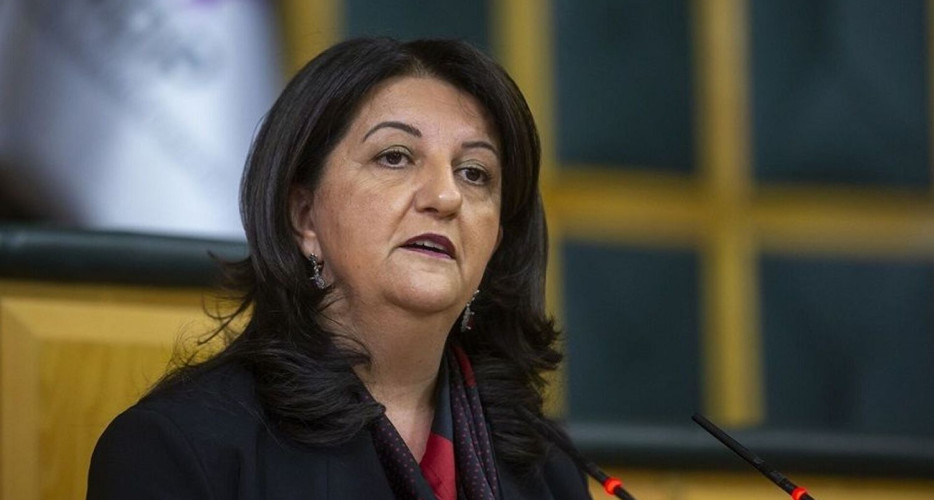
Peregraf — A member of the delegation that regularly meets imprisoned Kurdistan Workers' Party (PKK) founder Abdullah Öcalan said a legislative package related to Turkey's Kurdish peace process could be approved before parliament enters its summer recess, warning that continued delays could jeopardize the initiative.
Pervin Buldan, a senior figure in the Peoples' Equality and Democracy Party (DEM Party) and a member of the İmralı delegation, said discussions are underway to secure parliamentary approval for a bill aimed at advancing the process before lawmakers suspend regular sessions next month.
The Turkish parliament is expected to begin its summer recess in mid-July, with the new legislative session scheduled to open in October.
Speaking on Friday, Buldan said she recently met with Parliament Speaker Numan Kurtulmuş and emphasized the importance of passing the legislation before the recess begins.
"We discussed how passing the law before the recess would accelerate the process and benefit Turkey," Buldan said. "We are talking about a bill consisting of seven to eight articles. If the parliamentary committees work on it for two days and it is then brought to the General Assembly, it could be finalized in five days, provided there is political will."
Buldan argued that prolonged delays increase the risk of setbacks.
"As the process is prolonged and time is wasted, the risks increase," she said. "The atmosphere of war in the Middle East persists. Within Turkey, there are also those who do not want the process to reach a conclusion and may attempt to sabotage it."
Link Between Legislation and Disarmament
Buldan's remarks come as the PKK continues a process of dissolution and disarmament initiated following calls by Öcalan to end armed struggle and pursue a political solution.
She said PKK officials have indicated that future steps will remain tied to guidance from Öcalan.
"PKK officials have announced that their steps are tied to the decisions and actions of Öcalan," Buldan said. "I do not believe a problem will arise there. However, for there to be progress in the disarmament process, legislation must be passed, and the roadmap must be determined accordingly."
Her comments highlight a key issue in the ongoing peace effort: the relationship between legal reforms in Turkey and the implementation of disarmament measures by Kurdish militants.
Karayılan Warned Process Was Stalled
Buldan's optimism contrasts with concerns expressed earlier by senior PKK commander Murat Karayılan, who in May argued that the peace process had effectively stalled due to the absence of legal guarantees from Ankara.
In an interview with media outlets affiliated with the group, Karayılan said Kurdish forces had already taken significant steps but claimed the Turkish government had failed to establish the legal framework necessary to move negotiations forward.
"Currently, the peace process is suspended and halted," Karayılan said on May 1.
He argued that judicial reforms and implementation of rulings by the European Court of Human Rights would be necessary to build confidence between the parties.
Karayılan also rejected demands that the PKK fully disarm before legal and political guarantees are provided.
"Our guarantee is our forces, our weapons, and our security system," he said.
Öcalan's Call for a Political Settlement
The debate comes against the backdrop of a major strategic shift announced by Öcalan over the past year.
On Feb. 27, 2025, Öcalan called for the dissolution and disarmament of the PKK as part of a renewed peace initiative. In July 2025, a group of PKK fighters held a symbolic ceremony in Sulaymaniyah during which weapons were burned.
In a subsequent message issued on March 31, 2026, Öcalan declared that "the era of armed struggle has ended" and urged Kurdish political actors to pursue democratic participation through legal and political channels.
He also called for Turkey's parliament to establish a legal and institutional framework addressing identity rights, political participation, and democratic reforms.
Uncertain Outlook
Despite growing momentum around the peace initiative, significant challenges remain.
The collapse of the previous peace process in 2015 continues to shape perceptions on both sides, contributing to deep mistrust between Turkish authorities and elements of the PKK leadership.
Whether the current process succeeds is likely to depend on Ankara's willingness to advance legal reforms and on the continued implementation of de-escalation and disarmament measures by Kurdish armed groups.
With parliament's summer recess approaching, supporters of the initiative increasingly view the coming weeks as a critical test of whether both sides are prepared to translate political commitments into concrete action.