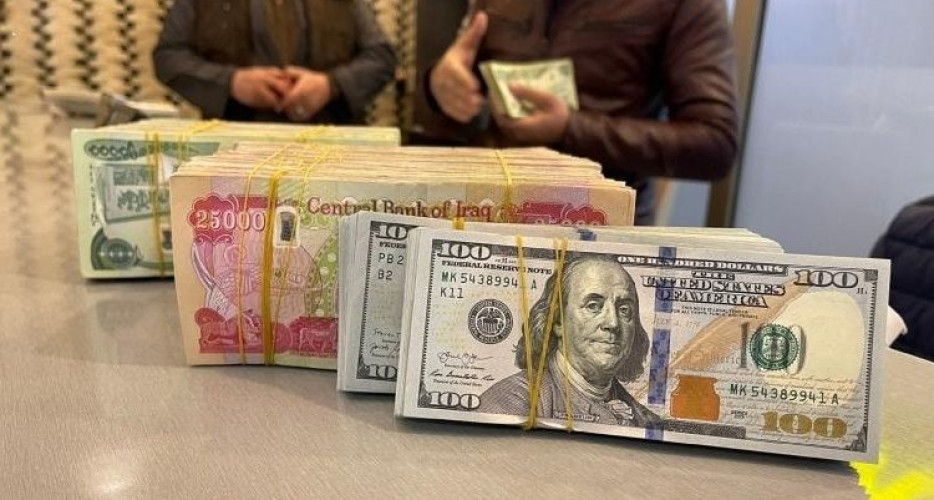
Peregraf — The Iraqi dinar fell to its weakest level of the year against the U.S. dollar on Monday, with the exchange rate in parallel currency markets reaching 157,500 dinars per $100, fueling concern among traders and the public.
The latest decline marks the highest dollar rate recorded in Iraq and the Kurdistan Region so far in 2026 and comes amid growing uncertainty in local currency markets.
The widening gap between the official and market exchange rates has intensified speculation about the future of Iraq’s currency policy, despite repeated assurances from the Central Bank of Iraq that no devaluation is under consideration.
The official exchange rate remains fixed at 1,320 dinars per U.S. dollar, equivalent to 132,000 dinars per $100.
At the current market rate, the difference between the official and parallel-market value has exceeded 25,000 dinars per $100.
Central Bank Rejects Devaluation Rumors
The latest market turbulence comes days after the Central Bank of Iraq denied reports that authorities were considering changing the official exchange rate.
On June 17, the bank said it “categorically denies” claims that the government plans to adjust the value of the dinar.
The statement was issued in response to a document circulating on social media that purported to show a request from the Prime Minister’s Office to parliament’s Finance Committee proposing a new exchange rate of 1,600 dinars per dollar.
The Central Bank described the document as forged and urged media organizations and the public to rely exclusively on official statements.
“The Central Bank warns against engaging with misleading news,” the statement said.
Market Pressures Continue
Despite the denial, pressure on the dinar has continued to mount in the parallel market.
Economists and traders point to several factors behind the depreciation, including fluctuations in dollar supply, U.S. banking restrictions affecting international transfers, increased demand for imported goods, and broader regional instability.
The recent escalation of tensions in the Middle East and concerns about disruptions to regional trade and energy markets have also contributed to uncertainty among currency traders.
The growing disparity between the official and unofficial exchange rates has become a major economic issue in Iraq, affecting consumer prices, import costs, and public confidence in the currency.
Public Concern Grows
The latest decline has triggered concern among businesses and consumers, many of whom fear further increases in the prices of imported goods and basic commodities.
Currency traders reported heightened demand for dollars throughout the day as the exchange rate continued to rise.
While the Central Bank maintains that the official exchange rate remains unchanged, market participants are closely watching developments amid continued volatility in the currency market.
For now, Iraqi monetary authorities insist that reports of an imminent devaluation are unfounded, even as the dinar continues to weaken in unofficial trading.