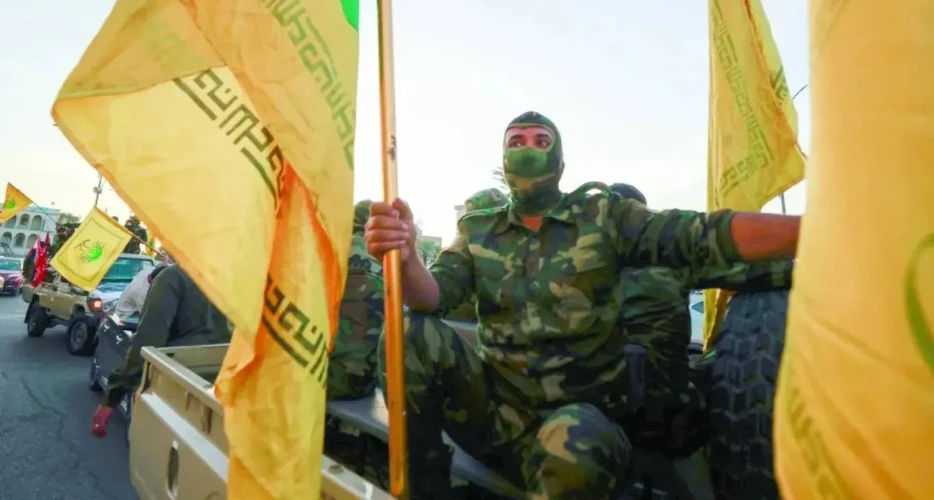
Peregraf- Iran's ambassador to Iraq, Mohammad Kazem Al-Sadeq, said Tehran respects Baghdad's efforts to restrict weapons to state control, describing the issue as an internal Iraqi matter while urging authorities to address the concerns of armed groups affected by the process.
In an interview with the Iraqi News Agency (INA), Al-Sadeq said Iran would not interfere in decisions taken by the Iraqi government regarding the future of armed factions.
"We respect any decision the Iraqi government takes in this regard," the ambassador said.
At the same time, he argued that officials should engage with armed groups and consider the reasons some factions remain reluctant to surrender their weapons.
"We believe attention should be paid to the reasons driving armed factions in Iraq to want to retain their weapons, and that their voices should be heard and their concerns and fears addressed," he said.
Iraq Accelerates Weapons Restriction Plan
The comments come as the Iraqi government moves forward with one of its most ambitious efforts in recent years to place all armed groups under direct state authority.
On June 5, Iraqi officials announced that implementation of a plan to integrate armed factions into state institutions and restrict weapons to official security forces had formally begun.
Sabah al-Numan, spokesperson for Iraq's commander-in-chief of the armed forces, said a Diwani Order established a supreme committee responsible for collecting unauthorized weapons, ending armed activity outside state institutions, and eliminating political affiliations within military formations.
"The committee has commenced its sovereign duties by establishing binding military mechanisms and frameworks to end armed presence and collect weapons," al-Numan said.
Major Factions Begin Integration
The most advanced stage of the initiative has involved Saraya al-Salam, the armed wing of cleric Muqtada al-Sadr's National Shiite Movement.
The group's leadership announced in May that it would separate from the movement and integrate into Iraq's official security institutions.
Lieutenant General Qais al-Muhammadawi, deputy commander of the Joint Operations Command, said authorities had received detailed personnel and weapons records from the group and begun formal integration procedures.
The process has also expanded to include Asa'ib Ahl al-Haq, one of Iraq's most influential armed factions.
Its leader, Qais al-Khazali, recently announced the formation of a committee to inventory the group's personnel, weapons, vehicles, and military equipment as part of plans to separate organizationally from the Popular Mobilization Forces (PMF).
Prime Minister Ali al-Zaidi has also held meetings with representatives of Asa'ib Ahl al-Haq and the Imam Ali Brigades to establish mechanisms for implementing the transition.
Push for State Monopoly on Arms
Iraqi officials say the initiative is designed to place operational control of all armed formations under the authority of the commander-in-chief through official state institutions.
The government argues that restricting weapons to state control is essential for strengthening sovereignty, reducing the political influence of armed groups, and improving long-term security and stability.
The issue has gained additional attention following recent discussions between Prime Minister Ali al-Zaidi and U.S. Special Presidential Envoy Tom Barrack, who jointly emphasized the importance of disarming armed groups operating outside state authority.
If fully implemented, the initiative would represent one of the most significant transformations of Iraq's security landscape since the defeat of ISIS and the expansion of the Popular Mobilization Forces.