Bafel Talabani and Shaswar Abdulwahid Sign PUK–New Generation Alliance to Press for Equal Share in KRG
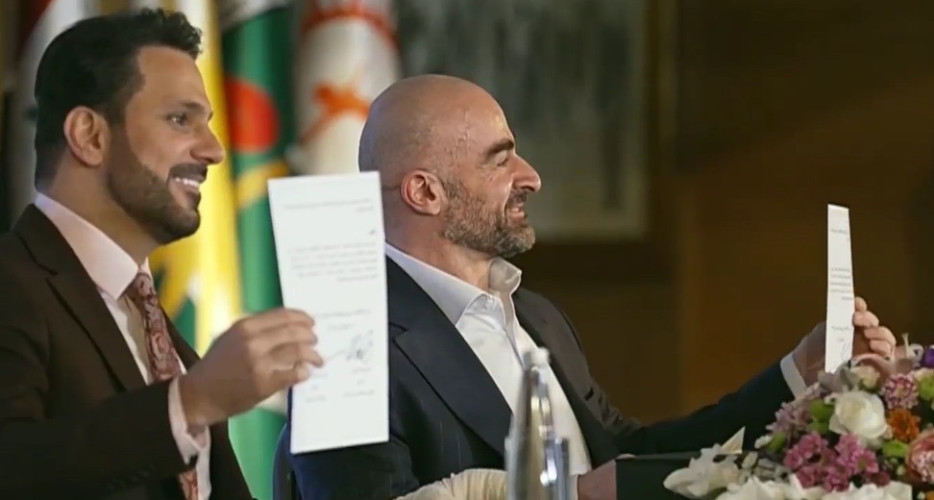
Peregraf — Patriotic Union of Kurdistan (PUK) President Bafel Talabani and Shaswar Abdulwahid, leader of the New Generation Movement, signed an agreement in Sulaymaniyah on Thursday establishing a new political alliance named the “Alliance for Balance and Revitalization.”
According to the two parties, the alliance aims to reform governance in the Kurdistan Region, restore what they describe as the balance of political power, and coordinate their position in negotiations to form the Kurdistan Regional Government’s (KRG) long-delayed 10th cabinet.
The alliance comes after months of political coordination between the PUK and New Generation following Abdulwahid’s release on bail in January 2026 after spending approximately five months in detention.
The PUK currently holds 23 seats in the Kurdistan Parliament, while New Generation controls 15 seats, giving the alliance a combined 38 seats. The Kurdistan Democratic Party (KDP), the largest bloc, holds 39 seats.
The PUK and New Generation argue that, with the support of political allies and minority representatives, their parliamentary strength is effectively equal to that of the KDP. Based on that calculation, they are demanding 50% of senior government positions in the next cabinet and insist that the new government be formed through what they describe as a “true partnership.”
The KDP, however, does not recognize the new alliance as a negotiating bloc and has rejected dealing with it as such.
The agreement comes amid a prolonged political deadlock following the Oct. 20, 2024 parliamentary elections. Although the newly elected parliament held its inaugural session on Dec. 2, 2024, lawmakers have not reconvened since, leaving parliament effectively inactive.
Negotiations between the KDP and PUK over power sharing, cabinet posts, and parliamentary leadership have stalled after roughly 20 rounds of talks failed to produce an agreement. As a result, the Kurdistan Region has remained without a new government for more than a year and a half, drawing growing criticism from political observers and international partners who have urged Kurdish parties to end the impasse and restore the functioning of the region’s institutions.