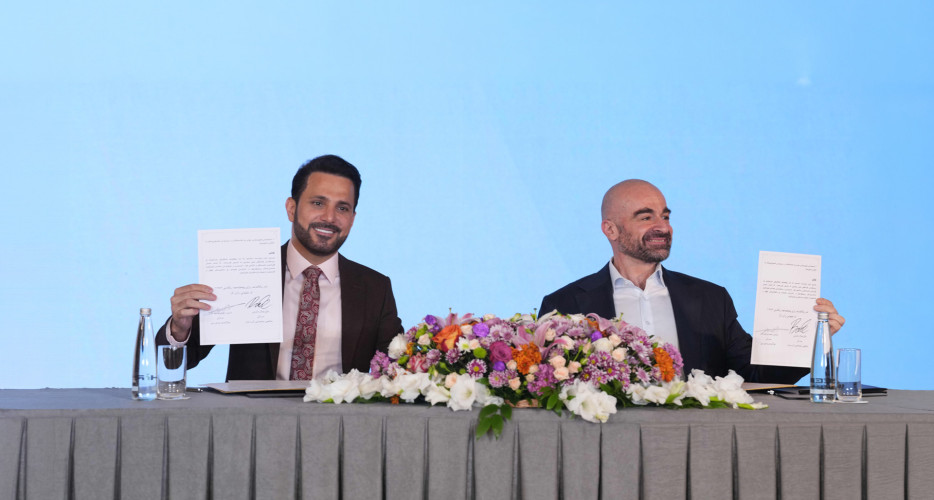
Peregraf — The Patriotic Union of Kurdistan (PUK) and the New Generation Movement (NGM) have published the full text of their agreement, signed Thursday in Sulaymaniyah by PUK President Bafel Jalal Talabani and New Generation Movement President Shaswar Abdulwahid. The agreement is titled the "Alliance for Balance and Revitalization."
According to the text, the agreement is presented as a response to the current political and economic difficulties facing the Kurdistan Region and Iraq, and as an attempt to build a new model of governance based on justice, institutional balance, and transparency in managing financial revenue.
The agreement states that the two parties are signing a strategic political agreement aimed at restoring balance and reorganizing the balance of power in the Kurdistan Region's political landscape, strengthening national partnership in a way that serves citizens' interests without discrimination, and ensuring fair, transparent management of public resources.
Goals of the Agreement
The agreement lists five core goals:
* Restoring the balance of political power in the Kurdistan Region through cooperation among governing, parliamentary, and political bodies, and forming a single political bloc for the current phase.
* Strengthening joint work to build official institutions on the basis of the agreement and political balance.
* Establishing the principles of justice and transparency in managing resources and financial revenue — most importantly, passing a Kurdistan Region budget law.
* Developing an institutional system of governance that limits and prevents the concentration of power, and strengthens oversight and accountability.
* Establishing the separation of legislative, oversight, executive, and judicial powers from one another, and respecting the independence and impartiality of the judiciary.
Cooperation in the Kurdistan Parliament
The agreement calls for coordinated positions inside the Kurdistan Parliament and the Iraqi Council of Representatives in support of political and institutional reform and joint legislative projects. The parties pledged to:
* Support laws that increase financial transparency and oversight of public revenue.
* Form a joint committee to oversee the implementation of reforms and evaluate performance.
* Strengthen the Kurdistan Parliament's oversight and legislative role.
* Agree on drafting and passing legislation through parliament and other legislative bodies.
* Work to review and amend laws that need amending, along with decisions issued outside parliamentary process that have harmed different segments of citizens.
* Prepare and pass legislation to improve citizens' standard of living, particularly in health, education, public services, and taxes and fees.
Priorities for the Next KRG Cabinet
The agreement states that, as part of the next Kurdistan Regional Government, the alliance will work to:
* Restore part of the withheld savings and salary deductions taken from public employees, and open bank accounts for them.
* Provide marriage loans to young people.
* Reduce electricity prices and other service costs.
* Reduce taxes and fees on business owners.
* Create employment opportunities for university and institute graduates, and establish an institution dedicated to employment services.
* Resolve the situation of teachers and temporary and contract employees.
Cooperation in the Iraqi Council of Representatives
At the federal level, the agreement calls for:
* Unifying political positions within the Iraqi Council of Representatives on matters affecting the Kurdistan Region, particularly the budget and the financial rights and entitlements of its citizens, the disputed territories, and the Peshmerga.
* Joint work to protect the Kurdistan Region's constitutional rights within Iraq's federal system.
Principles for Forming the Next KRG
On cabinet formation, the agreement calls for:
* A government based on the balance of power, political balance, and genuine partnership.
* Distribution of government posts on the basis of fairness.
* Full transparency in managing and collecting oil and non-oil revenue.
* An independent financial oversight mechanism.
* A stronger role for oversight, judicial, and integrity institutions, free from partisan interference.
* A Kurdistan Region budget law passed by parliament and implemented by the KRG under parliamentary oversight, provided it ensures fairness across all areas.
General Principles
The agreement also sets out seven broader principles:
* Joint work to reorganize the direction of governance in the Kurdistan Region in a way that strengthens democracy and institutional balance.
* A comprehensive reform program to reorganize government and parliamentary decision-making mechanisms transparently, including clearly defining the powers of the head of government, the deputy, and ministers.
* Strengthening the independence of the legislative and judicial authorities and ensuring separation between powers.
* Working with all political parties and relevant institutions to prepare and pass a constitution for the Kurdistan Region that protects citizens' rights and entitlements and guarantees the democratic process and civil rights.
* Reviewing financial and administrative policies to ensure fair revenue management and a balanced distribution among institutions and regions.
* Applying good-governance standards when appointing senior officials.
* Opening the door for political and social forces to take part in the reform process to help ensure political continuity and institutional stability.
Implementation Mechanism
The agreement calls for forming a joint committee from both parties to oversee implementation, and for holding periodic meetings to evaluate progress and identify any shortcomings.
The agreement concludes by stating that both parties consider it a strategic step toward a new political phase in the Kurdistan Region, built on restoring the balance of power, justice, and public trust in institutions.
Political Context
The agreement comes amid a prolonged political deadlock following the October 20, 2024 parliamentary elections. Although the newly elected Kurdistan Parliament held its inaugural session on December 2, 2024, lawmakers have not held another session since, while negotiations between the Kurdistan Democratic Party (KDP) and the PUK over power sharing and cabinet formation have remained stalled after numerous rounds of talks.
The PUK, which holds 23 seats, and the New Generation Movement, with 15 seats, argue that together with allies they represent a political force capable of demanding 50% of senior government positions in the next cabinet. The KDP, which won 39 seats, has rejected recognizing the alliance as a separate negotiating bloc.