Iraqi Judiciary Says Returning Stolen Funds Could Reduce Sentences in Corruption Cases
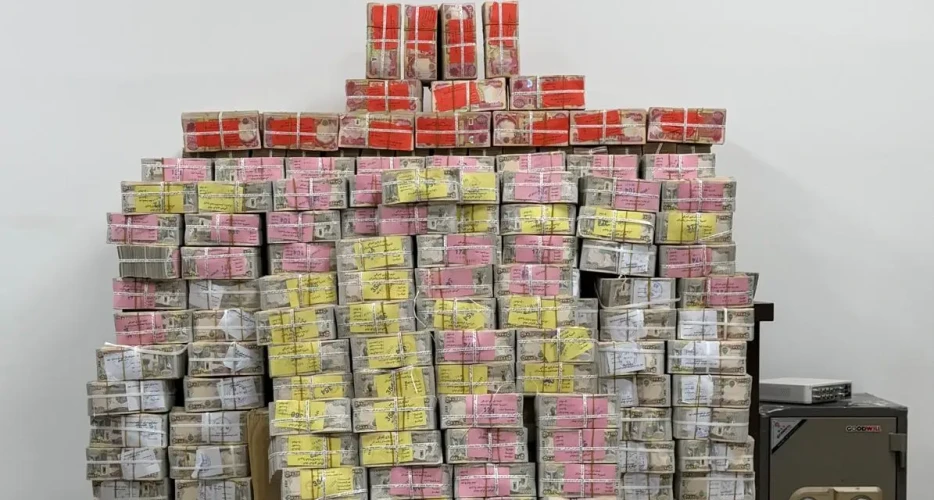
Peregraf- Iraq's Supreme Judicial Council said Friday that its anti-corruption courts pursue two connected goals: holding those responsible for financial and administrative corruption accountable, and recovering stolen state funds. The council said Iraqi law allows legal procedures or sentences to be reduced for defendants who voluntarily return misappropriated public money, within constitutional and legal limits.
The council said this approach was first applied in what is widely known as the "Tax Deposits" case. According to the statement, foreign companies operating in Iraq are required to deposit funds equal to 5 percent of a project's value with the General Commission for Taxes as a completion guarantee, which they can withdraw within five years of finishing the work. The council said intermediary companies handling these withdrawals — including two firms tied to convicted businessman Noor Zuhair Jassim, named Al-Qant and Al-Mubdaun — used improper procedures to withdraw the deposits, prompting legal action against the company owners and the employees who assisted them.
The statement said an agreement was reached between the head of the Judicial Council and the prime minister in office at the time, after the investigating judge's approval, to release Zuhair on bail in exchange for repaying the withdrawn funds in installments and reducing his sentence. The council said 365 billion Iraqi dinars were recovered out of roughly 1.618 trillion dinars owed by his two companies — part of a total of about 3.831 trillion dinars withdrawn from Rafidain Bank by all the companies involved in the scheme.
Repayments stopped after Zuhair left Iraq, the council said. He was referred to the Central Anti-Corruption Felonies Court, under the Baghdad/Karkh Court of Appeal, which sentenced him in absentia on Nov. 25, 2024, to 10 years in prison under Article 444 of Iraq's Penal Code No. 111 of 1969, as amended. Court documents reviewed by Peregraf show the court also ordered his arrest, authorized a search of his home and known locations, upheld the seizure of his assets, and ordered the ruling published in two local newspapers. The council said authorities opened a recovery file and notified Iraq's Arab and International Police Directorate — which coordinates with Interpol — to secure his return; a follow-up letter dated April 2025 confirms this process was still underway months after sentencing.
After parliament's Second Amendment to the General Amnesty Law No. 27 of 2016 was passed, Zuhair's lawyer requested that he be covered by the law in exchange for repaying the remaining amount owed. The council said the Ministry of Finance, as the injured party, was asked to weigh in on a repayment mechanism, but no response had been received. Court correspondence dated Feb. 16, 2025, and Oct. 19, 2025, shows judges repeatedly pressed the ministry for an answer; as of the more recent letter, the request remained unresolved.
The council said 12 Tax Commission employees who helped Zuhair carry out the withdrawals were convicted in person and are currently serving their sentences, with the possibility of amnesty if they repay the compensation set by the Finance Ministry. It said the prime minister's office director at the time and several advisers were sentenced in absentia, with recovery files opened to pursue their return from the countries where they now live, and that arrest warrants were issued for others involved — all of whom, the council said, could also qualify for amnesty if they repay what they owe. Separately, the council said individuals outside government who used personal ties to the finance minister in office at the time to help facilitate the withdrawals were convicted in person, and their movable and immovable assets were confiscated. The council added that real estate and other assets belonging to several of the convicted individuals were also seized in Iraq and in Kuwait.
The statement said investigators also examined the role of the prime minister in office when the scheme took place, but that the case against him was closed for lack of sufficient evidence.
The Supreme Judicial Council said the same framework could apply to the expanding investigation into the Northern Refineries Company, involving detained former Deputy Oil Minister for Refining Affairs Adnan al-Jumaili and several members of parliament — provided the alleged offenses were committed before the amended Amnesty Law took effect, and the defendants repay the funds owed to the affected ministry. Offenses committed after the law took effect, the council said, would not be eligible for amnesty and would be handled through separate legal proceedings.
The council said it is coordinating with Prime Minister Ali al-Zaidi to establish a roadmap, consistent with constitutional and legal mechanisms, for recovering state funds while reducing legal measures against those who return stolen money voluntarily.
Iraqi authorities continue a broader anti-corruption campaign centered on al-Jumaili's case, which has expanded to include numerous members of parliament and senior officials. That investigation has already led to the arrest of dozens of MPs and senior government officials in operations launched June 28 and in the days that followed, with judicial authorities saying further arrests and legal measures are expected as the probe continues.