Iraq Seeks 750,000 Barrels-Per-Day Through Iraq-Turkey Pipeline Under Interim Deal, Energy Minister Says
Peregraf - Turkish Energy and Natural Resources Minister Alparslan Bayraktar said Iraq has requested a throughput of 750,000 barrels per day under an interim one-year deal meant to keep the Iraq-Turkey Crude Oil Pipeline flowing past its July 27 expiration date, a volume well within the line's overall capacity, while a broader renegotiation continues. Bayraktar spoke to reporters ahead of a Cabinet meeting at the Presidential Complex in Ankara.
According to Bayraktar, the current pipeline agreement, signed in 2010 for 15 years, will not be renewed in its existing form. He said Turkey informed Iraq roughly a year ago that it did not intend to extend the deal, citing the arbitration dispute the agreement had produced. "This agreement isn't working. It left us tied up in arbitration," Bayraktar said, adding that Ankara sent Baghdad a draft for a new, broader agreement.
Bayraktar said negotiations on a comprehensive new deal, which he referred to as a new Iraq-Turkey Crude Oil Pipeline Agreement (ITP), could not realistically be completed before the July 27 deadline, partly because Iraq's government was only recently formed following this year's elections. As an interim step, he said, Turkey proposed that its state pipeline operator, BOTAŞ, carry Iraqi oil under a one-year transport arrangement while talks on a permanent deal continue.
Bayraktar said Iraqi officials told him they would need a throughput of 750,000 barrels per day, compared with the roughly 180,000–200,000 barrels per day currently flowing through the line. He said Turkey agreed to accommodate that volume. The Kirkuk-Ceyhan pipeline's total designed capacity is estimated at approximately 1.4 to 1.6 million barrels per day, meaning the requested 750,000 bpd falls well inside the line's existing engineering capacity rather than requiring any expansion.
On separately extending the pipeline south to Basra, Bayraktar said he had discussed the idea with Iraqi Prime Minister Ali al-Zaidi, who took office in May 2026 as the nominee of the Coordination Framework, an alliance of Shia political parties. Bayraktar said the two sides discussed raising the pipeline's capacity to 2.5 million barrels per day, a figure that would require physical expansion of the line, with Kuwait and other Gulf states able to route their own oil through it if they chose to.
Bayraktar also said Turkey and Iraq discussed building a parallel natural gas pipeline along the same route, which he said could eventually carry gas from Qatar or other sources. He described the plan as being at an early conceptual stage, and no timeline, cost estimate, or formal agreement on the gas project has been announced by either government.
On the underlying legal dispute, Bayraktar said arbitration proceedings covering the 2014–2018 period are now in an enforcement phase in Washington, where he said a tribunal would calculate mutual claims and interest before determining which side is owed money. He said Turkey had appealed an earlier ruling in Paris. A separate arbitration case covering the period after 2018 is still ongoing, according to Bayraktar.
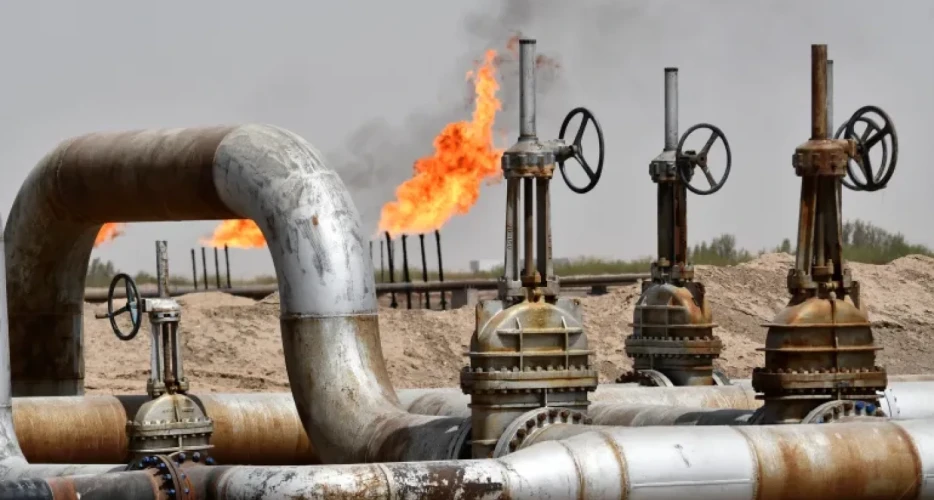
The Iraq-Turkey Crude Oil Pipeline runs from the Kirkuk fields in northern Iraq to Turkey's Mediterranean port of Ceyhan. It has been closed to independent exports from the Kurdistan Region since March 2023, after a Paris-based arbitration tribunal ruled that Turkey had allowed unauthorized exports by the Kurdistan Regional Government between 2014 and 2018 without Baghdad's approval, ordering Turkey to pay Iraq 1.5 billion dollars in damages. Flows resumed toward the end of 2025 under Baghdad's exclusive control, and any decision on the pipeline's future capacity or Kurdistan Region access would depend on further agreement between Baghdad, Erbil, and Ankara.
Bayraktar's remarks represent the Turkish government's account of the negotiations. Iraq's Oil Ministry, led by Minister Basim Mohammed Khudair, has not published its own detailed account of the capacity figures or the Basra extension plan discussed by Bayraktar, and the Kurdistan Regional Government has not issued a public statement on the talks.