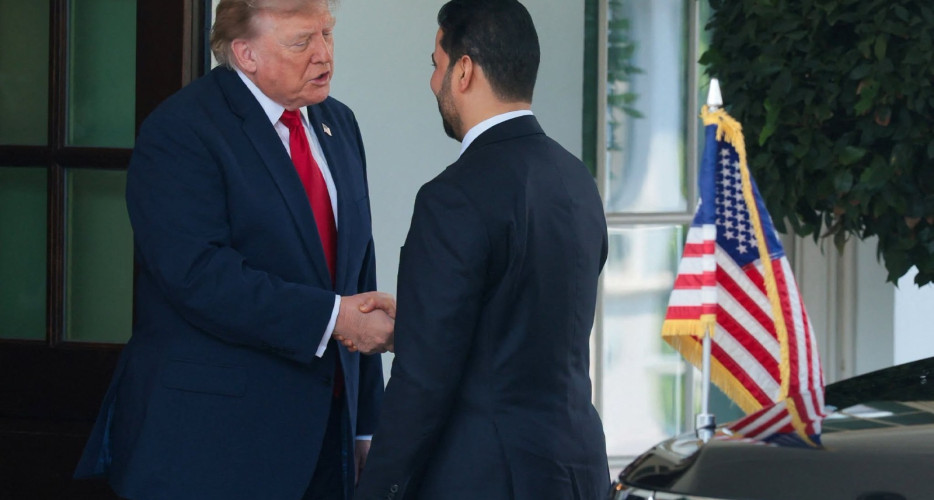
Peregraf- US President Donald Trump and Iraqi Prime Minister Ali al-Zaidi presented a new phase in relations between Washington and Baghdad during a White House meeting, with both leaders emphasising energy investment, economic cooperation, Iraqi sovereignty and the planned withdrawal of American forces.
Trump opened the meeting by praising the Iraqi prime minister’s election victory and leadership. He said al-Zaidi had won a highly competitive election despite not initially being considered the favourite and claimed that his own endorsement had played a role in the result.
Trump described the prime minister as a “great leader,” a fighter and a supporter of the United States. He predicted that al-Zaidi would remain in office for a long time and eventually become an influential leader across the wider Middle East.
The US president also highlighted Iraq’s extensive oil reserves, potential wealth and improving relationship with Washington. He said major oil partnerships had recently begun to take shape and suggested that some of the agreements, which he described as among the largest of their kind, would soon be announced.
US forces to leave as American companies enter Iraq
Al-Zaidi said his visit was his first to the United States and described it as more than an ordinary diplomatic trip.
“This visit was not just like any visit,” he said, calling it an announcement of a new economic partnership.
The prime minister said US forces would be out of Iraq on September 30, while American companies would remain and expand their activities inside the country. He characterised the future relationship as one based more on economics than on military cooperation.
Al-Zaidi said he was bringing greetings from what he described as the world’s oldest civilisation to its largest economic and technological centre.
Trump confirmed that he did not believe a continued US military presence in Iraq would be necessary. He said American forces were there to help and protect Iraq if required, but added that such protection might no longer be needed.
The president connected this assessment to the weakening of Iran, which he described as a former burden on Iraq and the “bully of the Middle East.” According to Trump, Iran’s military power had been reduced to a small fraction of what it had been several months earlier.
He argued that Iran’s reduced influence had given Iraq greater freedom to make its own decisions and was one reason American oil companies were entering Iraq at levels not previously seen.
Baghdad-Erbil relations and Kurdistan energy deals
A reporter raised reported energy agreements worth approximately $110 billion signed in Washington by the Kurdistan Regional Government and American companies.
The reporter asked whether greater cooperation between Baghdad and Erbil could allow those investments to grow further.
Trump welcomed the question and said Baghdad, Iraq and the United States could “make some tremendous music together.”
He said Washington had not engaged extensively with Iraq during the previous four or five years but argued that the country possessed enormous economic potential, particularly because of its oil.
Trump predicted that the United States and Iraq would conclude many agreements, create jobs in both countries and extract substantial quantities of Iraqi oil.
He said the work would be carried out mainly by American companies and claimed that Iraq’s new leadership preferred to conduct business with the United States rather than other countries.
Asked directly about his relationship with the Kurdistan Regional Government, al-Zaidi said he regarded Iraq as a single body.
“Each part of Iraq is part of my own body,” he said.
The prime minister said he would not distinguish between different Iraqi regions in a dispute or remove any part from the country’s national body.
He described the Kurdistan Region as an important part of Iraq and said it was no different in its national status from Basra or other Iraqi provinces.
Iraqi Government pledges state monopoly over weapons
Responding to questions about armed factions, al-Zaidi said one of his government’s fundamental objectives was to restrict the possession of weapons exclusively to the Iraqi state.
He described this policy as a binding decision rather than an optional goal.
The prime minister said his government had already received weapons from several factions. Armed groups that surrendered their weapons, he said, would be permitted to transform into civilian political organisations and cooperate with the state through the political process.
Al-Zaidi declared that there would be no justification for the continued existence of armed factions after the September 30 departure of US forces.
“Factions are a need; they are not a profession,” he said, according to the transcript.
He said his government hoped to make a major announcement by the end of the year or the beginning of the following year concerning Iraqi sovereignty. The transcript renders this as the planned announcement of a “sovereignty conference,” although the precise wording may have been affected by transcription errors.
Al-Zaidi stressed that Iraqi decisions must be made exclusively by Iraqis and said the country’s security forces were capable of protecting its borders.
After September 30, he added, the government would not accept any organisation carrying weapons outside state control.
Later in the meeting, Trump was asked how his administration would support al-Zaidi’s campaign to bring militia weapons under state authority. Trump again focused on Iran, saying its ability to intimidate Iraq and other neighbouring countries had been severely weakened.
The prime minister added that Iran could no longer play the role of bullying its neighbours.
A reporter also asked whether the withdrawal of US troops would proceed according to schedule. Trump’s response was not detailed, but he said he believed the matter would “work out very well.”
Iraq demands a fairer OPEC production share
Asked whether Iraq was considering leaving the Organization of the Petroleum Exporting Countries, al-Zaidi did not indicate that Baghdad intended to withdraw.
Instead, he emphasised that Iraq was one of OPEC’s founding countries and said it required a fairer production share within the organisation.
The prime minister linked the demand directly to the financial and physical destruction caused by Iraq’s war against the Islamic State group and terrorism.
He said Iraq had fought the Islamic State in support of the United States and that the conflict had consumed enormous amounts of money while severely damaging the country’s infrastructure.
According to al-Zaidi, the damage inflicted on Iraq exceeded $400 billion.
He said some Iraqi cities remained completely destroyed and that displaced residents were still living in camps because they could not return to their homes.
The prime minister said he had prepared a plan to return displaced Iraqis to their communities and rebuild their homes, but Iraq needed a fairer OPEC allocation to help finance the programme.
Trump said decisions concerning Iraq’s OPEC membership and production policy belonged to the Iraqi prime minister.
The US president then recalled his opposition to the 2003 invasion, saying that even before entering politics he had warned against attacking Iraq. Trump said the United States had attacked the wrong country and caused extensive damage.
Trump raises Soleimani strike and death of Iraqi figure
During a discussion concerning Iran, Trump referred to the killing of Iranian commander Qassem Soleimani during his first administration.
Trump accused Soleimani of responsibility for roadside bomb attacks that killed or severely wounded American soldiers, including personnel who lost arms, legs or suffered facial injuries.
He said Soleimani had exercised significant power and suggested that even Iran’s leaders had feared him.
Trump then noted that an unnamed Iraqi figure had also been killed in the same airport strike. He described the Iraqi as a “very bad person” and asked al-Zaidi whether the strike had done Iraq a favour.
The prime minister declined to assess the incident, saying he had not been involved in politics at the time. He added that the purpose of his visit was to discuss the future rather than past events.
United States chosen as Iraq’s strategic partner
Al-Zaidi was also asked why he had selected the United States for his first foreign visit and what measures he would take to implement the agreements reached in Washington.
The prime minister said he had inherited a heavy burden and had used his background in finance to analyse Iraq’s economic condition.
He concluded that Iraq required a strategic partner capable of helping the country overcome that burden.
Al-Zaidi described the United States as the most important potential strategic partner in the world.
He said the decision to visit Washington was not emotional but was based on a calculated assessment of Iraq’s national and economic interests.
Trump concluded the meeting by saying relations between the two countries had changed from “not so good” to “outstanding.”
He promised a long-term US relationship with Iraq and with its new prime minister.
Trump said Iraq was potentially a great country, reiterated that the United States wanted to assist it and described al-Zaidi as strong, intelligent and widely respected.
He again predicted that the prime minister’s future influence would spread beyond Iraq and throughout the Middle East.