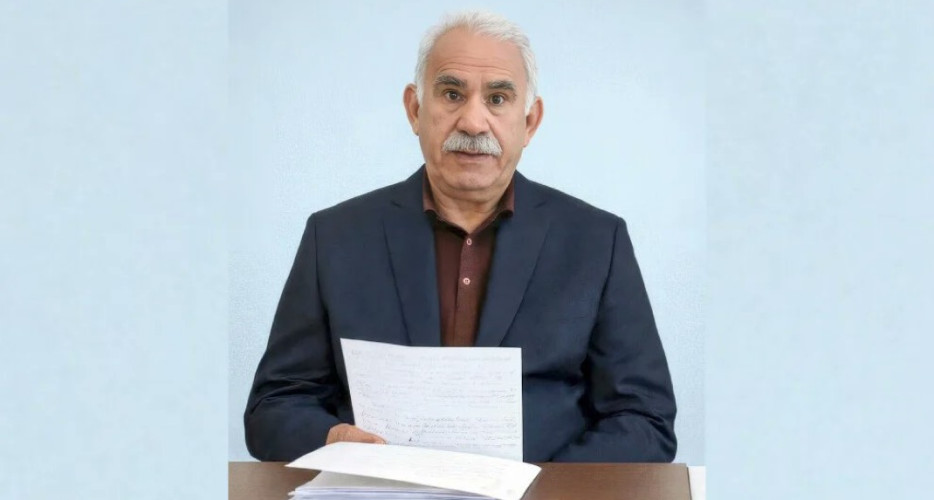
Peregraf — Abdullah Öcalan, the imprisoned founder and leader of the Kurdistan Workers' Party (PKK), called for the establishment of a legal framework to end the conflict between the PKK and the Turkish state, according to a statement released Tuesday by the İmralı delegation of the Peoples' Equality and Democracy Party (DEM Party).
The delegation said it held an extensive meeting with Öcalan on Monday on İmralı Island, where he is imprisoned. It said the discussion covered political developments in the region, what it called the building of a "democratic society," the stage reached in the peace process, and how a legal framework for it should be shaped.
According to the delegation, Öcalan said his commitment to resolving the issue "within the framework of fraternal law," in line with the spirit of his February 27, 2025, call, remained unchanged. He said Turkey stood "on the threshold" of turning what he described as a historic Kurdish-Turkish alliance into a legal foundation, arguing that the shared existence of Kurds and Turks required developing equal rights under law.
He said the time had come to create a legal foundation that accounts for mutual sensitivities, and called for abandoning what he characterized as narrow approaches that do not serve the future. He said that, in line with the framework outlined in a report by the Turkish Grand National Assembly's National Solidarity, Brotherhood and Democracy Commission, all sides should work to begin the legal process, fully remove weapons from the conflict, and open what he called "a brand-new page."
He described the Kurdish-Turkish alliance as "the cornerstone of Anatolia's shared future," saying legal arrangements could secure it permanently and allow equal and free coexistence within what he termed a democratic republic. He added that what he called "negative law" needed to be transformed into "positive law."
In its own statement, the DEM Party's İmralı delegation described Öcalan's remarks as a "historic call" and said it remained committed to pursuing dialogue with the Turkish Grand National Assembly and other institutions, advancing the process, and reaching what it called a "permanent solution" based on fraternal law.