Iraq, Turkey to Sign Tripartite Deal Setting 750,000 Barrel-Per-Day Ceyhan Export Capacity
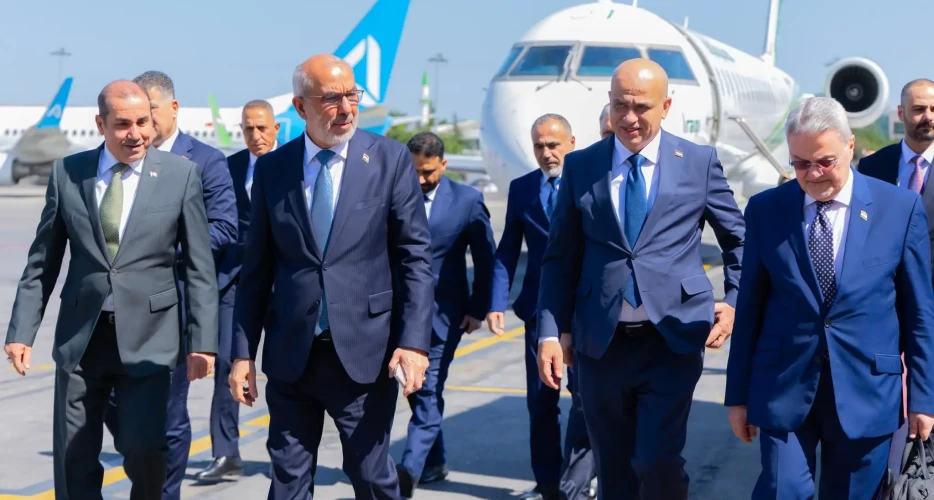
Peregraf - Iraq's Oil Ministry said Saturday that a high-level Iraqi delegation, led by Deputy Prime Minister for Energy Affairs and Oil Minister Basim Mohammed Khudair, has traveled to Turkey to sign a one-year interim agreement setting Iraqi crude export capacity through the Ceyhan pipeline at 750,000 barrels per day, describing the deal as a first step toward a broader long-term energy partnership with Ankara.
Ministry spokesperson Saleem al-Rikabi told the Iraqi News Agency that the delegation's goal is to finalize the interim agreement ahead of a comprehensive, long-term deal with Turkey that would extend into energy sector projects more broadly.
Al-Rikabi said the agreement is tripartite in structure, bringing together Iraq's State Oil Marketing Organization (SOMO) and the North Oil Company on the Iraqi side, and Turkey's state pipeline operator, BOTAŞ, on the Turkish side. Its central aim, he said, is to sustain the export of Iraqi crude through Turkey's Ceyhan port.
According to al-Rikabi, the agreement sets a defined export capacity of 750,000 barrels per day, though he cautioned that reaching that volume in practice depends on several factors: improved security conditions in the Kurdistan Region, the return of foreign oil companies to operations there, the resumption of production in the region, and the transport of oil from fields in southern Iraq north to the pipeline.
Al-Rikabi described the interim deal as a prelude to a more comprehensive agreement that would eventually push Iraq's export capacity through the corridor to more than 1 million barrels per day, a target he tied to the completion of a new pipeline running from Basra through Haditha and Kirkuk to Ceyhan.
The 750,000 bpd figure matches what Turkish Energy and Natural Resources Minister Alparslan Bayraktar had previously described as Iraq's request for the interim arrangement. It falls short, however, of the up to 1 million barrels per day that Prime Minister Ali Faleh al-Zaidi told Turkish President Recep Tayyip Erdoğan Iraq was prepared to supply, during a July 28 summit in Ankara at which the pipeline agreement itself was not finalized. Saturday's trip by Khudair appears to be the formal signing of the interim deal that both sides had been negotiating since at least early July, when Turkey and Iraq first agreed in principle, through a temporary protocol announced by the Kurdistan Region Council of Ministers, to keep exports flowing while a permanent framework is negotiated within a year.
The legal basis for Iraqi crude exports via Ceyhan had lapsed on July 27, when the 2010 agreement governing the pipeline — itself a 15-year renewal of an original 1973 pact — formally expired. Turkey had told Baghdad roughly a year earlier that it did not intend to renew the deal in its existing form, citing an unresolved arbitration dispute over past unauthorized exports from the Kurdistan Region.