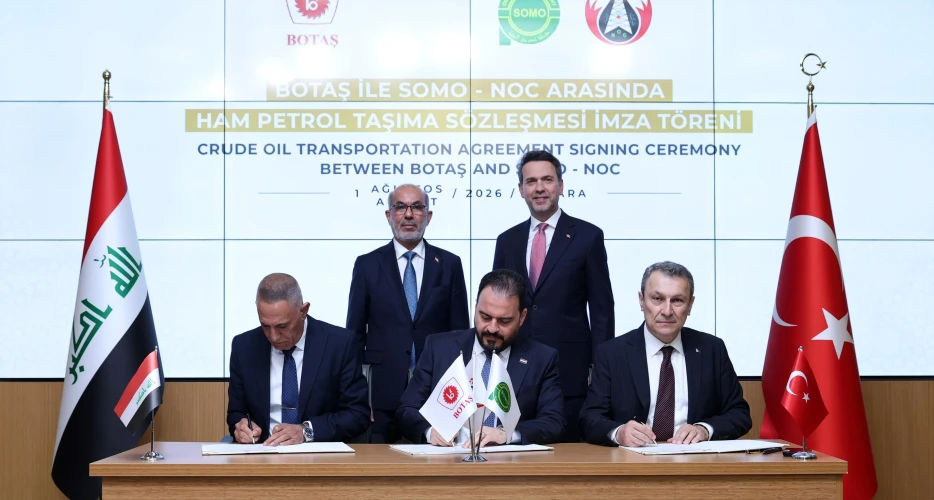
Peregraf- Turkey and Iraq signed a one-year agreement governing use of the Iraq-Turkey Crude Oil Pipeline on Saturday, Turkish Energy and Natural Resources Minister Alparslan Bayraktar said, following talks in Ankara with Iraqi Oil Minister Basim Mohammed Khudair and his accompanying delegation.
In a statement posted to his social media account, Bayraktar said the agreement was signed between Turkey's state pipeline operator, BOTAŞ, and Iraq's state oil companies, SOMO and the North Oil Company, and is intended to ensure the effective operation of the pipeline while the two countries continue working toward a new, long-term agreement.
Bayraktar described the pipeline as a strategic energy corridor that has served both countries for nearly half a century, and said the newly signed transitional arrangement covers an export capacity of 750,000 barrels per day. He said the corridor, which carries Iraqi crude safely and without interruption to world markets via Ceyhan, holds a more strategic position than ever for regional and global energy supply security, citing recent developments in global oil markets.
Looking ahead, Bayraktar said Turkey's goal is to make full use of the pipeline's infrastructure, eventually carrying not only Iraqi oil but energy resources from across the region to world markets through Ceyhan, as part of what he described as a comprehensive, long-term partnership opening a new chapter in Turkish-Iraqi energy cooperation.
The signing follows a Saturday statement from Iraq's Oil Ministry, which said the delegation led by Khudair, who also serves as Iraq's Deputy Prime Minister for Energy Affairs, had traveled to Turkey to finalize the interim deal ahead of a broader agreement expected to eventually raise Iraq's export capacity through the corridor to more than 1 million barrels per day, tied to completion of a planned pipeline running from Basra through Haditha and Kirkuk to Ceyhan.
It closes out a deal that had been under negotiation since at least early July, when Turkey and Iraq first agreed in principle, through a temporary protocol announced by the Kurdistan Region Council of Ministers, to keep exports flowing while a permanent framework is negotiated within a year. The signing also comes five days after the previous legal framework governing the pipeline, a 2010 agreement renewing a 1973 pact, formally expired on July 27.