Yazidi Leader Urges Iraq to Officially Recognize ISIS Atrocities as Genocide on 12th Anniversary
Peregraf — Yazidi spiritual leader Mir Hazim Tahsin Beg on Monday called on Iraq’s parliament to officially recognize the ISIS atrocities against the Yazidi community as genocide, saying Baghdad has yet to do so despite recognition by 13 countries.
Speaking during a ceremony in Erbil marking the 12th anniversary of the ISIS assault on Sinjar, Mir Hazim said Iraq has failed to take a step already adopted by numerous countries around the world.
“Unfortunately, the Iraqi Parliament has not yet recognized the Yazidi genocide,” he said.
The Yazidi leader also called for compensation for victims, the reconstruction and normalization of Sinjar, a durable solution for displaced Yazidis, and full implementation of the 2020 Sinjar Agreementbetween Baghdad and the Kurdistan Regional Government (KRG), which was intended to restore security and local administration in the district.
KRG Prime Minister Masrour Barzani, who also addressed the ceremony, urged the Iraqi government to accelerate the reconstruction of Sinjar and work with the KRG to implement the Sinjar Agreement.
Iraqi Prime Minister Ali al-Zaidi said in a statement marking the anniversary that honoring the victims requires “delivering justice, uncovering the fate of the missing, supporting survivors, rebuilding Sinjar, and ensuring the voluntary, safe, and dignified return of the displaced.”
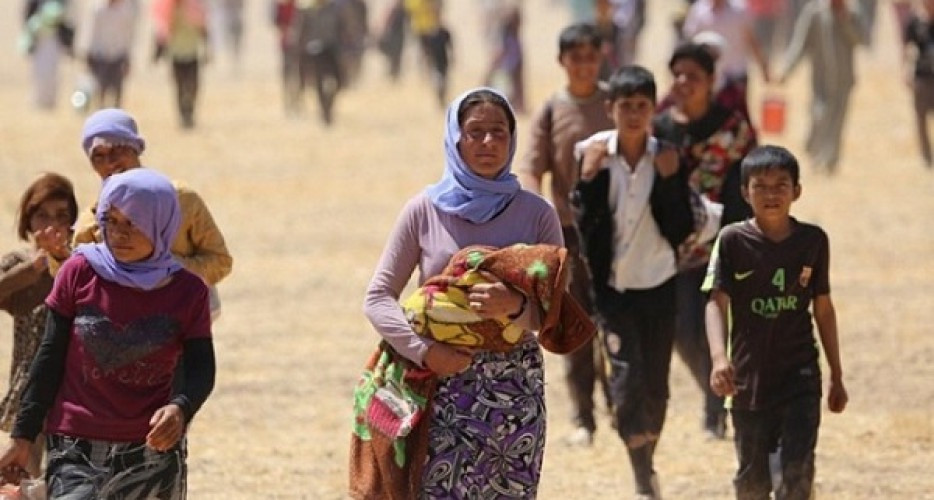
Twelve years ago, ISIS militants swept across northern Iraq after capturing Mosul in June 2014. On August 3, 2014, they overran Sinjar, carrying out what has become one of the group’s most notorious atrocities.
According to widely cited estimates, up to 5,000 Yazidis were killed, 6,400 were kidnapped, around 2,600 remain missing, and approximately 350,000 were displaced. Twelve years later, tens of thousands of Yazidi internally displaced persons (IDPs) continue to live in camps across the Kurdistan Region.
Signed in October 2020, the Sinjar Agreement aimed to establish a new local administration, remove unauthorized armed groups, and create a unified security structure. However, implementation has remained largely stalled, with many Yazidis criticizing the process for excluding local voices.