Iraq's Ruling Coalition Sets Post-September Deadline for Disarmament, as Judiciary Meets New Security Chiefs
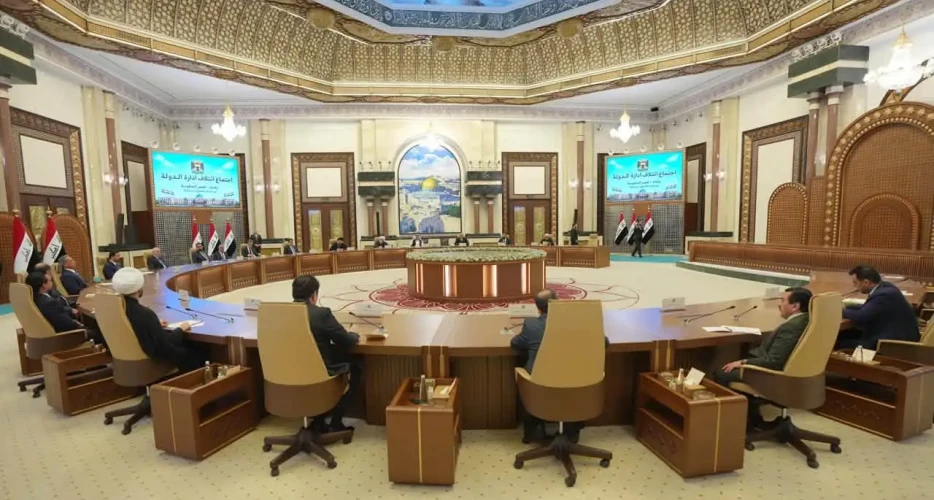
Peregraf — Iraq's ruling State Administration Coalition has reaffirmed that armed actors operating outside state control will be treated as outlaws once a September 30 deadline for confining weapons to the state passes, as the country's top judicial authority separately met this week with the newly appointed heads of the Counter-Terrorism Service and the Office of the Commander-in-Chief of the Armed Forces.
Prime Minister Ali al-Zaidi hosted the coalition's 37th periodic meeting on the night of Wednesday, August 5, with President Nizar Amidi, Speaker of the Council of Representatives Haibat al-Halbousi, Supreme Judicial Council chief Faiq Zaidan, Kurdistan Region President Nechirvan Barzani, and leaders of the coalition's Iraqi national forces in attendance. The gathering reviewed the country's political, security, economic, and service conditions, as well as regional developments and their implications for Iraq.
Al-Zaidi opened the session by outlining government efforts to strengthen security and stability, improve services, implement the ministerial program, and confront economic and financial challenges, saying the government places the protection of citizens' interests at the top of its priorities.
The coalition affirmed its support for continued efforts to preserve security and stability and to confine weapons to the hands of the state, in line with the ministerial program that parliament approved and that has since become law. It also called for preventing the use of Iraqi territory as a launchpad for attacks on neighboring countries or for dragging Iraq into conflicts that do not serve its people's interests.
The coalition said anyone who engages in such conduct is committing a crime that threatens the country's security and will be treated as an outlaw, in accordance with constitutional provisions that prohibit the use of weapons outside the will of the state or the formation of any armed organization outside the official armed forces.
While condemning recent attacks on Iraqi armed forces units that killed a number of personnel, the coalition called for adherence to the timeline for confining weapons after September 30, 2026, after which any armed activity outside the framework of the state will be handled under counterterrorism law.
The meeting also addressed economic and financial conditions, the need to ensure the continuity of essential services and projects, diversifying oil export outlets, boosting non-oil revenue, and combating waste, smuggling, and corruption. On the regional front, participants affirmed Iraq's support for de-escalation and dialogue in the region, its rejection of the use of force to settle disputes, and its readiness to play a positive role in narrowing the gap between parties to regional conflicts. They also discussed developments in neighboring countries and stressed the importance of strengthening border security and combating terrorism, drug trafficking, and organized crime. The coalition closed by calling for accelerating the formation of the government and sending the government program to parliament for discussion and approval.
The coalition's emphasis on enforcing the state's monopoly on weapons came the same week Zaidan, the Supreme Judicial Council chief, met separately with two officials newly appointed to key security posts as part of a broader leadership reshuffle under al-Zaidi.
On Thursday, August 6, Zaidan received Lieutenant General Zaid Hoshi al-Moussawi, who was named commander of the Counter-Terrorism Service in late July, replacing General Karim al-Tamimi. Zaidan congratulated him on assuming the post and discussed cooperation and coordination between the judiciary and the Counter-Terrorism Service in service of the rule of law.
Zaidan also met the same day with Lieutenant General Abdulamir al-Shammari, the newly appointed director of the Office of the Commander-in-Chief of the Armed Forces, an office al-Zaidi revived as part of the same reshuffle. Zaidan congratulated al-Shammari on his appointment, and the two discussed legal procedures to ensure the rule of law and support security stability in the country.