Two Rival Petitions, One Crisis: Kurdish MPs Split Over How to Fix the Gasoline Shortage
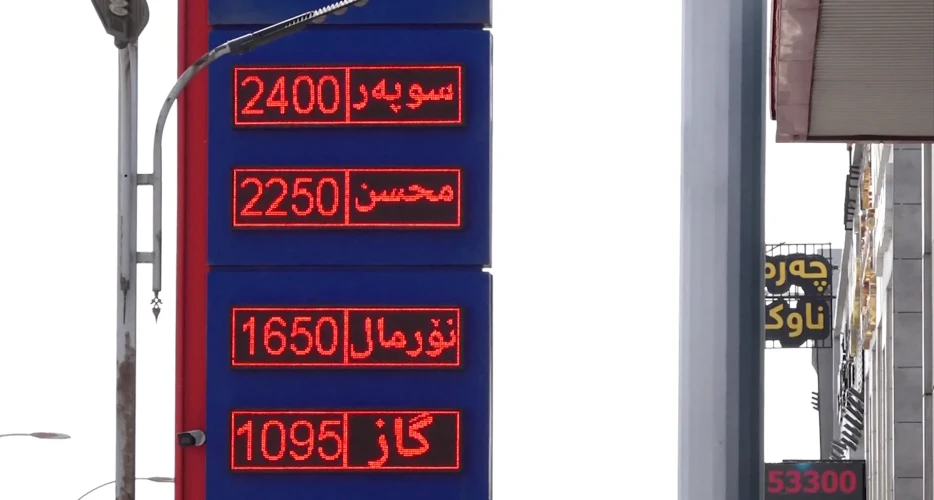
Peregraf - At a fuel station in Erbil today, the digital price board tells its own story: Super gasoline at 2,400 Iraqi dinars a liter (about $1.60), "Mohsin" grade at 2,250 ($1.50), Normal at 1,650 ($1.10), and gas oil at 1,095 ($0.73). Those prices are legal now, but only because the Kurdistan Regional Government (KRG) has already abandoned the price ceiling it announced less than two weeks ago.
On 5 August, the Ministry of Natural Resources had ordered stations to sell government-supplied regular gasoline at 750 dinars ($0.50) and capped commercially sold regular gasoline at 850 dinars ($0.57), warning of legal action for violators. Fuel traders in Erbil and Duhok pushed back almost immediately, arguing the mandated price forced them to sell at a loss, and many stations simply went dry rather than comply. Facing that backlash, the KRG quietly reversed course, effectively letting stations set their own prices again as long as they do not "exploit" consumers — without ever defining what that means or reinstating a ceiling.
For an average Kurdistan family living on roughly $400 a month, with the dinar trading at 1,500 to the dollar, the gap between the official cap and the street price is not an abstraction. A full 40-liter tank of Super at today's Erbil price runs close to 96,000 dinars — about $64, or one-sixth of a month's household income — for a fuel that Baghdad sells its own citizens at 450 dinars a liter ($0.30), government-subsidized.
How the crisis started
The shortage traces back to mid-July, when Pearl Petroleum — the Dana Gas and Crescent Petroleum-led consortium that operates the Khor Mor gas field — suspended production after repeated drone attacks tied to the wider Iran war spillover into Kurdish territory. Khor Mor supplies the gas that keeps much of the Kurdistan Region's power plants running; its shutdown squeezed electricity output and rippled into the fuel market, pushing commercial gasoline prices sharply higher through late July.
The KRG responded on 5 August with a new pricing order from the Ministry of Natural Resources, instructing stations to sell government-supplied regular gasoline at 750 dinars and commercial regular gasoline at no more than 850, under threat of legal action for violators.
In practice, enforcement has been split down the middle of the Region: in Erbil and Duhok, where authorities have pushed stations to comply, many outlets have simply gone dry rather than sell at a loss, leaving drivers queuing for hours at the handful of stations still stocked. In Sulaymaniyah and Halabja, the caps have gone largely unenforced — fuel is available, but at prices far above the official ceiling, much as today's Erbil board shows.
Two petitions, two different fixes
The dispute has now moved squarely into parliament, with two competing proposals circulating this week among MPs in Baghdad — one from the Kurdistan Democratic Party (KDP), the other from the opposition New Generation Movement (NGM).
The first, led by KDP lawmaker Sipan Sherwani, a member of the Iraqi Council of Representatives' Oil and Gas Committee, gathered signatures from more than 166 MPs — a majority of the 329-seat federal parliament — on a letter addressed directly to Prime Minister Ali al-Zaidi, urging him to move quickly on the Region's fuel crisis. It asks Baghdad to raise the Kurdistan Region's share of crude oil allocated for domestic refining from 50,000 to 140,000 barrels a day, arguing the current quota does not reflect the Region's roughly 14 percent share of Iraq's population.
Where a full increase isn't possible, the letter asks for the shortfall to be made up in finished gasoline instead. Sherwani has separately argued that the underlying problem is structural: under the existing Erbil-Baghdad arrangement, the Region receives only 50,000 of the more than one million barrels distributed daily for domestic consumption nationwide.
The second petition, dated today and submitted by New Generation MP Kawa Abdulqadir Hassan, a member of the parliamentary Committee on Oil, Gas and Natural Resources, takes a different approach entirely. Rather than asking for a bigger crude quota to be refined inside the Region, it asks the federal Oil Ministry to bypass that system altogether — supplying already-refined gasoline, diesel, and kerosene directly to Kurdistan's governorates at the same official price sold everywhere else in Iraq, instead of the current 50,000-barrel crude allocation.
The letter, addressed to the Speaker of the Council of Representatives, invokes constitutional provisions on equal treatment of citizens and calls for gasoline to reach Kurdistani consumers at 450 dinars a liter ($0.30) — the same rate as in the rest of the country. As of this week, Abdulqadir's draft had gathered around 101 supporting signatures.
The difference between the two proposals is more than technical. Sherwani's plan would still route fuel through the Region's own refining and distribution system, simply with more crude oil to work with. Abdulqadir's plan would have Baghdad deliver finished fuel straight to Kurdistan's market, sidestepping that system entirely — an approach opposition figures frame as a way of guaranteeing the federal price actually reaches consumers, rather than depending on how crude is refined and distributed once it arrives in the Region.
A crisis with more than one front
The gasoline dispute has also exposed disagreement between Erbil and Baghdad over who is to blame. Harem Kamal Agha, head of the Patriotic Union of Kurdistan (PUK) bloc in the federal parliament, has described the shortage as a "man-made" crisis rooted in the Region's own internal management rather than in Baghdad's allocation policy — and said Iraq's Oil Ministry is prepared to supply gasoline at the federal rate of 450 dinars ($0.30) if refining authority is transferred to Baghdad's control, a proposal that would strip the KRG of its refining role altogether.
For now, neither petition has been voted on, and the price boards across the Region — capped on paper, uncapped in practice — show a market that has moved on without the caps taking hold. Whether Baghdad and Erbil settle on a bigger crude quota, a direct product-supply arrangement, or some combination of the two, the immediate reality for drivers from Erbil to Sulaymaniyah remains the same: paying two to three times the government's own price ceiling for a liter of gasoline.