Bafel Talabani Receives Call From Iran’s Foreign Minister, Invited to Tehran Amid U.S.-Iran War
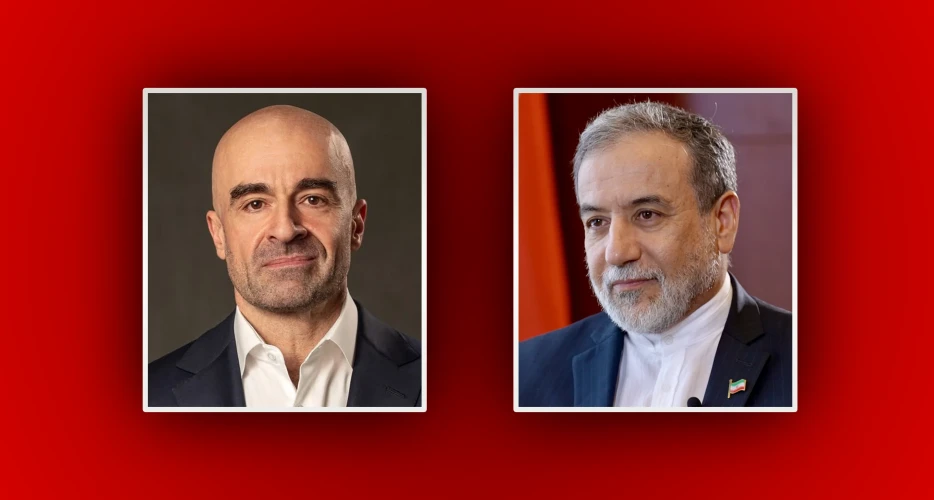
Peregraf — Patriotic Union of Kurdistan (PUK) President Bafel Talabani received a telephone call from Iranian Foreign Minister Abbas Araghchi on Tuesday, according to a statement issued by Talabani’s office.
The two discussed recent security, political and economic developments in the region, as well as possible ways to address the current crisis, according to the statement. They also emphasized the importance of maintaining peace and stability and strengthening cooperation in dealing with common challenges.
Talabani stressed the importance of continued dialogue and diplomatic engagement, describing them as the most effective means of reducing tensions, restoring stability and protecting the interests of the peoples of the region.
He also commended Araghchi for what the statement described as his continued diplomatic efforts and constructive role in seeking peaceful solutions to the war.
The conversation comes as the United States and Iran remain engaged in an ongoing war, while diplomatic efforts involving regional intermediaries are continuing in parallel.
Araghchi invites Talabani to Tehran
During the telephone conversation, Araghchi invited Talabani to visit Tehran for further discussions on the security and economic consequences of the war at the regional and international levels.
Talabani's office did not announce a date for the proposed visit or say whether the PUK president had formally accepted the invitation.
The invitation comes as Iran and the United States continue to communicate indirectly through intermediaries. Iranian Foreign Minister Araghchi said on August 9 that Tehran and Washington were not directly negotiating, although messages were continuing to pass between the two sides through intermediaries.
The PUK statement did not say that Talabani's proposed visit would constitute part of U.S.-Iran negotiations. Rather, it described the planned discussions in terms of the regional and international security and economic consequences of the war.
PUK-Iran relations also discussed
The two sides also discussed the longstanding relationship between the PUK and the Islamic Republic of Iran.
According to Talabani's statement, both sides reaffirmed their commitment to strengthening bilateral relations and cooperation based on what they described as mutual interests, good-neighbourly relations and regional stability.
The PUK has maintained longstanding political and security ties with Tehran, particularly because of its geographical position in the Kurdistan Region and its historical relations with Iranian Kurdish political movements and Iran itself.
The latest call, however, comes after a period in which Talabani has publicly criticized Iranian military action in the Kurdistan Region.
Call follows Talabani's condemnation of Iranian attacks
On July 18, Talabani condemned Iranian missile strikes in the Kurdistan Region, saying that a ballistic missile launched from Iran had targeted the region and its security forces.
He described the attacks as a serious violation of security and sovereignty and called for an immediate end to what he described as hostile actions. Talabani also said the PUK did not seek further escalation or instability but that restraint should not be interpreted as a lack of resolve.
The statement followed Iranian strikes reported in and around Erbil and Sulaymaniyah. The attacks included strikes against positions of the Iranian Kurdish opposition group Komala in the Sulaymaniyah area, which killed members of the group.
The July attacks were also connected to a series of incidents in the Sulaymaniyah area, including the incident at a weapons depot in Tasluja. Talabani's statement did not specifically identify the Tasluja depot by name, but his condemnation came in the immediate aftermath of the broader Iranian strikes in the region.
That distinction is important: Talabani publicly attributed the ballistic-missile attack to Iran, but his statement did not explicitly say that the Tasluja weapons-depot incident itself was carried out by Iran.
His July position therefore combined condemnation of the Iranian strikes with a call for restraint, diplomacy and a coordinated response.
The wider U.S.-Iran war
Talabani's latest conversation with Araghchi takes place against the backdrop of the continuing U.S.-Iran war, which began in February and has since gone through periods of fighting, ceasefire arrangements and renewed hostilities.
The war has had consequences well beyond Iran's borders, particularly because of attacks and military activity affecting shipping routes and regional infrastructure.
A central issue in the current phase of the war is the Strait of Hormuz, through which a substantial share of global oil shipments normally passes.
On August 11, Iran said the Strait would remain closed unless the United States changed its position and met Iranian conditions. Iranian officials have linked reopening the waterway to issues including an end to the war and the release of frozen Iranian assets.
The restrictions have sharply reduced shipping through the waterway and contributed to higher global energy prices. Reuters reported Tuesday that oil markets remained elevated amid uncertainty surrounding the negotiations and the continuing disruption to shipping.
Diplomatic efforts continue
Despite the continuation of military pressure, diplomatic efforts have not completely stopped.
Iran has said it is not currently holding direct negotiations with Washington, but messages are being exchanged through intermediaries. Oman has been involved in discussions concerning the Strait of Hormuz, while other regional countries have also attempted to facilitate communication between Washington and Tehran.
On August 11, Qatar said negotiations involving Oman and Iran over the Strait of Hormuz had reached an advanced stage, while Pakistan said Washington and Tehran appeared to be moving toward some form of agreement.
At the same time, significant disagreements remain. Iran has demanded changes to the U.S. approach to the war and sanctions, while Washington has continued to press Tehran over the terms of any broader settlement. U.S. President Donald Trump has also introduced compensation demands as part of his latest position, further complicating efforts to reach an agreement.
What the Talabani-Araghchi call means
The latest conversation does not, by itself, indicate a change in the PUK's formal position toward either the war or Iran.
Talabani's statements in July and August have emphasized two themes that can exist simultaneously: opposition to attacks affecting the Kurdistan Region and support for diplomatic engagement as a means of reducing regional tensions.
His July condemnation came after Iranian strikes in the Kurdistan Region, while his latest conversation with Araghchi focused on diplomacy, regional stability and the economic and security consequences of the wider war.
The proposed visit to Tehran could provide an opportunity for further discussions between Talabani and Iranian officials, particularly regarding the war's impact on Iraq and the Kurdistan Region. However, no date for the visit, new agreement, or specific outcome from the proposed talks has been announced.
For now, the publicly stated outcome of the August 11 call is limited to the exchange of views, reaffirmation of PUK-Iran relations, Talabani's emphasis on diplomacy and Araghchi's invitation for Talabani to visit Tehran.