Al-Zaidi Tells CENTCOM Commander Iraq Will Be Free of Foreign Military Presence by October 1
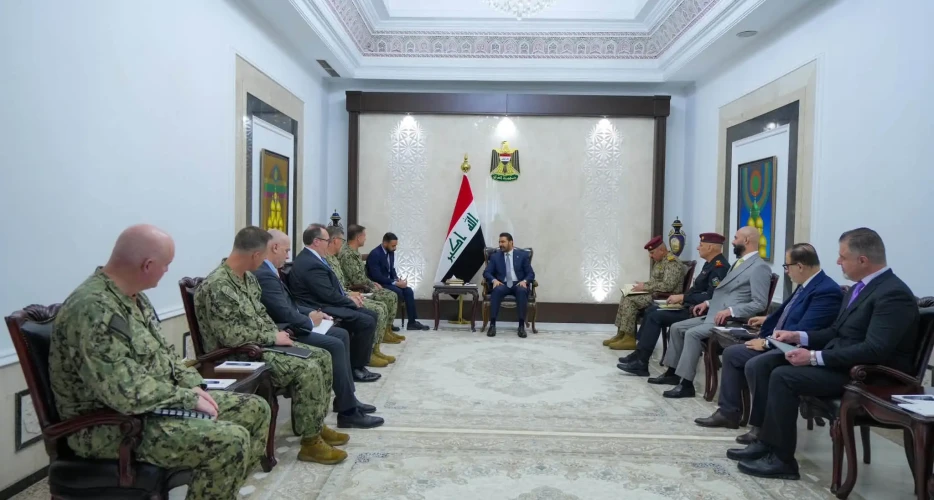
Peregraf - Iraqi Prime Minister Ali Faleh al-Zaidi said Wednesday that October 1 will mark a new chapter for the Iraqi state, with the country free of any foreign military presence and all weapons confined to state control, during a meeting in Baghdad with the commander of U.S. Central Command, Admiral Brad Cooper.
According to a statement from the Prime Minister's Media Office, al-Zaidi affirmed during the meeting Iraq's commitment to the agreed timelines under which September 30 remains a fixed and final date for ending the international coalition's military mission in the country and completing the withdrawal of its forces.
Al-Zaidi said October 1 would represent a new milestone in the trajectory of the Iraqi state, with the country's national sovereignty over its territory fully restored and no foreign military presence remaining, as Iraq continues building up its own security and military capabilities to independently safeguard its security and stability.
In that context, al-Zaidi called for adherence to constitutional principles and the foundational pillars of the state, preserving its higher interests, and channeling the energies of the Iraqi people toward reconstruction and development. He said Iraq today needs the collective effort of all its citizens to build a strong economy, a stable state, and a better future for coming generations.
Al-Zaidi emphasized that confining weapons to the hands of the state, in accordance with the law, protects everyone, strengthens state authority and sovereignty, ensures security and stability, and represents a basic precondition for moving Iraq into a new phase of development and prosperity.
The two sides affirmed full and final agreement on ending the international coalition's military mission, in line with what was agreed during al-Zaidi's visit to Washington in mid-July. They stressed that Iraqi-American relations will shift toward cooperation and partnership in economic, developmental and security fields, based on mutual respect for sovereignty and the shared interests of both countries.
The September 30 deadline traces back to a September 2024 agreement between Baghdad and Washington, reached under the previous Iraqi government, to end the international coalition's military mission in Iraq in two phases. The first phase concluded the coalition's combat and advisory mission and closed a number of longstanding bases by September 2025. The second phase allowed a reduced coalition presence to continue operating from the Kurdistan Region, mainly to support counter-ISIS operations in Syria, through September 2026.
Over the course of 2025 and into this year, coalition forces withdrew from bases across central and southern Iraq, consolidating what remained of their presence in Kurdistan Region sites including Erbil Air Base, the Erbil Diplomatic Support Center, Harir Air Base and Camp Duhok. By this month, only a small contingent of advisers remained, and Iraqi officials said coordination was underway to inventory coalition sites and hand them over to Iraqi forces ahead of the deadline.
The timeline was reaffirmed during al-Zaidi's visit to Washington in mid-July, where he met U.S. officials including Defense Secretary Pete Hegseth. Hegseth said at the time that Iraq needed to assert its sovereignty and rein in armed groups responsible for hundreds of attacks on American forces in Iraq in recent years.
The push to confine weapons to state control comes as Baghdad navigates competing pressures at home and from its neighbors. Iraqi officials have spent recent months working to advance a weapons-registration process covering armed factions operating outside the state's formal command structure. According to media reports, a recent visit to Baghdad by Ismail Qaani, commander of Iran's Islamic Revolutionary Guard Corps Quds Force, saw Tehran urge Iraqi authorities to delay enforcement of that policy, warning of broader regional implications for Iran-aligned factions. The reports could not be independently verified.
The withdrawal also unfolds against the backdrop of a new Iraqi government under al-Zaidi, which took office earlier this year following the country's parliamentary elections, and which has framed the coalition mission's end as a step toward full Iraqi sovereignty over security matters, alongside a broader push to move relations with Washington toward economic and developmental cooperation.