Kurdistan's Gasoline Crisis: KRG Says It Never Chose the 50,000-Barrel Deal — Baghdad's Account Says Otherwise
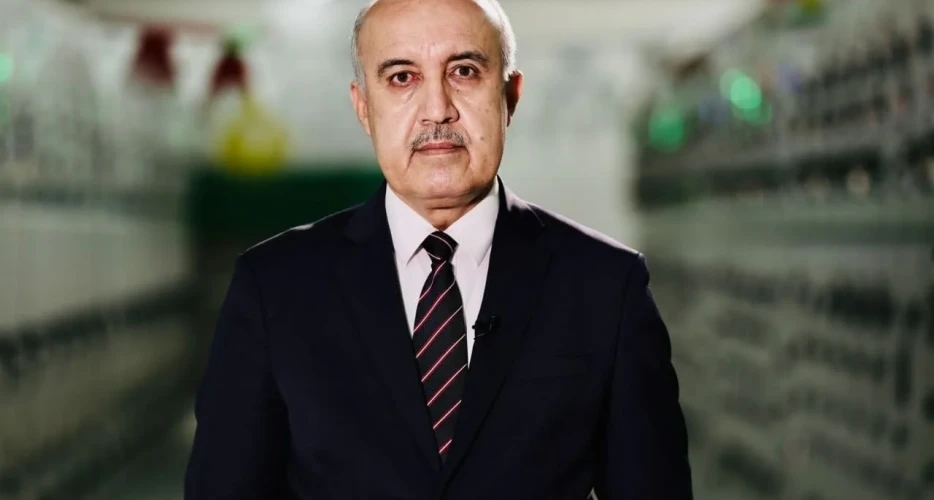
Peregraf - The Kurdistan Regional Government (KRG)'s Acting Minister of Natural Resources, Kamal Mohammed Salih, issued a statement today rejecting Iraqi Oil Minister Bassim Mohammed Khudhair al-Abadi's account of how the Kurdistan Region ended up limited to a 50,000-barrel-per-day crude allocation — an allocation now at the center of the region's gasoline shortage. Salih's version of events conflicts directly with al-Abadi's more detailed public account from four days earlier, and drew an immediate, pointed response from a Kurdish opposition lawmaker the same day.
In his statement, Salih said the KRG has always demanded fairness in the distribution of Iraq's oil products, and that by any reasonable standard, the region's share of crude for domestic use should be more than double the current 50,000 barrels. He described the 50,000-barrel figure as the result of a "temporary arrangement" that was not the KRG's own choice, and said the region is ready to negotiate a population-based, subsidized supply of all fuel types — while preserving the region's constitutional rights — so long as Baghdad is willing to discuss it. He closed by praising federal lawmakers who have pushed for a larger crude allocation for the region.
Ghalib Muhammad Ali, a member of the Iraqi Parliament representing the Halwest (Stance) Movement, responded to Salih's statement directly in a video message the same day. Opening by paraphrasing the ministry's clarification back at it — "we are not satisfied with 50,000 barrels; it must become 120,000, and we will not provide it at a subsidized price either" — Ali asked why he should work to secure a larger allocation only to see it benefit Arin, the son of KRG Prime Minister Masrour Barzani, along with the Lanaz and Kalak refineries, rather than the public. He said he had spent six months forming a parliamentary investigative committee specifically aimed at securing 450-dinar gasoline for Kurdistan Region residents, and argued the ministry should either put the existing 50,000 barrels directly at the service of the public or hand the allocation to the federal government, which he said would supply the region at 450 dinars instead. He said the ministry and KDP members were working to increase the allocation for their own financial benefit rather than the public's. In the same video post, Ali's written caption went further, addressing the KRG as "this gang authority" and writing that even a million liters of gasoline a day "wouldn't satisfy your theft," because officials "only work for the family's companies" and do not see ordinary citizens. He said he and his allies "will keep going" until they put a stop to what he called the ministry's thefts.
Salih's statement does not address al-Abadi's specific claim from four days earlier — that the KRG requested the 50,000-barrel figure in the first place — nor does it explain what, if anything, has changed since. Al-Abadi told reporters in Baghdad on Aug. 8 that the 50,000-barrel arrangement traces to a tripartite agreement between the federal Ministry of Oil, the KRG, and oil companies operating in the Kurdistan Region, and that it was the KRG itself that requested the allocation — because the region operates its own refineries — in exchange for taking on responsibility for supplying gasoline and other products to its own citizens. He said the ministry told KRG officials directly that the 50,000 barrels were oil the federal government would otherwise export, and described the current arrangement as, in his words, "decisively and exclusively" the Kurdistan Region's own decision. Al-Abadi did not dispute that the arrangement could be renegotiated, and said he expects a resolution "in the coming days." Peregraf has not seen any KRG document, from Salih's ministry or otherwise, contradicting al-Abadi's account of the original request.
A second Kurdish opposition lawmaker has separately raised more pointed doubts about the ministry's public math. In a Facebook post published Aug. 11, Kawa Ali Kareem, a member of the Kurdistan Parliament from the Kurdistan Islamic Union, argued that the ministry's own figures would actually require Iraq to supply 130,000 barrels a day — not simply a larger share of the existing 50,000 — plus $1.56 million in disputed extraction-cost reimbursement, before gasoline could reach 450 dinars regionally, because the ministry calculates extraction costs at $16 a barrel rather than the $4 he says is realistic. He also noted the ministry's plan says nothing about diesel or kerosene pricing. As an alternative, Kareem suggested the KRG simply stop returning the contested 50,000 barrels to Baghdad and see whether that alone resolves the shortage, arguing officials have not tried it. He alleged the deeper obstacle is that refinery, company, and fuel-trader profits are being placed above the public interest, and cited specific figures: of the 50,000 barrels a day, he said 40,000 go to the Lanaz refinery and 10,000 to the KAR refinery, and he disputed the ministry's stated processing capacity for KAR — 70,000 barrels a day, he said, versus the 175,000 barrels a day the company itself claims. These figures are Kareem's own and have not been independently verified by Peregraf.
The dispute over who is responsible for the 50,000-barrel limit comes as gasoline prices in Erbil have kept climbing well past any price the government has proposed. At the Aug. 8 press conference, a reporter told al-Abadi that Kurdistan Region prices had reached 1,500 dinars a liter in some areas — a figure a local Erbil station had already exceeded that same day, listing Super at 2,390 dinars, Muhassan at 2,190, Normal at 1,695, and diesel at 1,390, against 450 dinars for Normal-grade and 850 for Muhassan under the federally subsidized rate elsewhere in Iraq. By Aug. 11, prices at one Erbil station had climbed further still — Super at 2,400 dinars ($1.60), Muhassan at 2,250 ($1.50), Normal at 1,650 ($1.10), and gas oil at 1,095 ($0.73) — prices that are legal only because the KRG has already abandoned the price ceiling it introduced on Aug. 5. That order had instructed stations to sell government-supplied regular gasoline at 750 dinars and capped commercial regular gasoline at 850, under threat of legal action for violators; fuel traders in Erbil and Duhok pushed back almost immediately, arguing the mandated price forced them to sell at a loss, and many stations simply went dry rather than comply. Facing that backlash, the KRG quietly reversed course, letting stations set their own prices again as long as they do not "exploit" consumers, without ever defining what that means or reinstating a ceiling.
The underlying shortage began abruptly in mid-July, when gasoline prices across the Kurdistan Region spiked sharply. Peregraf has not identified a specific incident that accounts for the timing of that increase. The rise accelerated further once the Aug. 5 price ceiling was abandoned days later, arriving just as the KRG has pressed Baghdad publicly for a larger crude allocation — timing that has raised questions among observers about whether the pace of the increase reflects market conditions alone or serves the government's negotiating position.
The crude allocation dispute has also moved into the federal parliament, where two competing proposals are circulating. One, led by KDP lawmaker Sipan Sherwani of the Council of Representatives' Oil and Gas Committee, has gathered more than 166 signatures — a majority of the 329-seat parliament — on a letter to Prime Minister Ali al-Zaidi asking Baghdad to raise the region's crude allocation from 50,000 to 140,000 barrels a day, or, failing that, to make up the shortfall in finished gasoline. The other, submitted by New Generation Movement MP Kawa Abdulqadir Hassan of the parliamentary Committee on Oil, Gas and Natural Resources, asks the federal Oil Ministry to bypass regional refining altogether and supply already-refined gasoline, diesel, and kerosene directly to Kurdistan's governorates at the same 450-dinar price sold elsewhere in Iraq. That petition had gathered around 101 signatures as of this week.
For now, the KRG's account of how it ended up with the 50,000-barrel allocation stands uncorroborated against a more detailed federal version of events and two Kurdish lawmakers' own figures and allegations suggesting the gap between official statements and the region's actual refining and allocation arithmetic — and the interests behind it — runs deeper than the KRG has acknowledged.