Iraq’s Four Presidencies Reaffirm State Control Over Weapons Ahead of Coalition Withdrawal
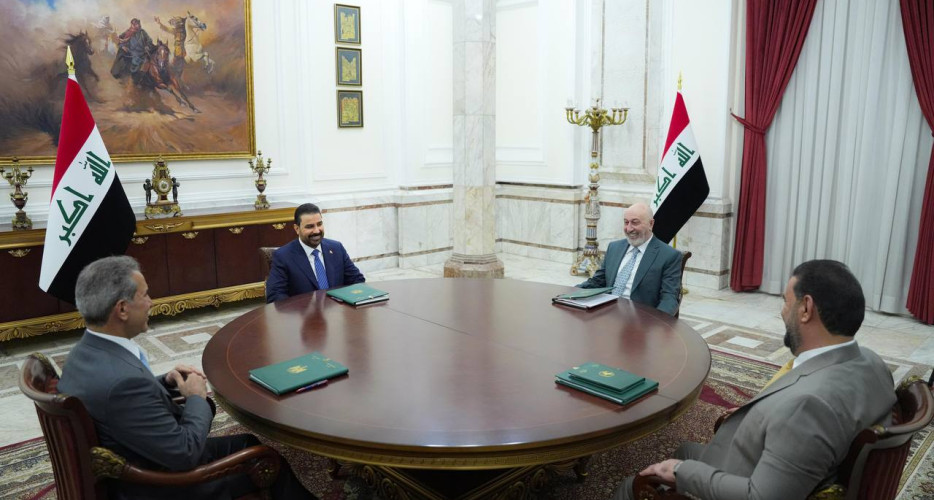
Peregraf- Iraq’s four Presidencies reaffirmed Monday that all weapons in the country must remain under state authority, linking the principle to the strengthening of state institutions and the rule of law as the U.S.-led Global Coalition prepares to complete its military mission in Iraq by September 30.
The statement followed a meeting in Baghdad attended by President Nizar Amidi, Prime Minister Ali Faleh Al-Zaidi, Parliament Speaker Haibet Al-Halbousi and Supreme Judicial Council President Faiq Zidan.
The Presidencies described state control over weapons as a fundamental pillar for consolidating state authority and the rule of law. The emphasis comes as Iraq enters a new security phase following the planned end of the Global Coalition’s military mission against ISIS on September 30. The withdrawal is part of a transition agreed by Baghdad and Washington toward a bilateral security relationship.
The issue of weapons outside state institutions has become increasingly prominent as the withdrawal date approaches. The Iraqi government has previously set September 30 as the deadline for armed groups to bring their weapons under state control, with officials warning that weapons remaining outside the state framework after the deadline would be subject to legal measures.
The four Presidencies also stressed that the end of the coalition’s military mission requires Iraq to further strengthen the capabilities of its own security institutions. They called for developing the Iraqi Armed Forces across all formations so they can independently fulfill their responsibilities to protect Iraq, safeguard its sovereignty and ensure the security of its citizens.
The meeting’s emphasis on strengthening Iraqi forces also reflects the broader transition from an international military mission to a bilateral security relationship. U.S. officials have said Iraqi Security Forces, including the Peshmerga and other security forces in the Kurdistan Region, will take the lead in combating ISIS in Iraq following the end of the coalition mission.
The Presidencies stressed that strengthening the armed forces and ensuring that weapons remain under state authority are essential to consolidating Iraq’s sovereignty and preventing the country from becoming an arena for regional conflicts.
The meeting comes as Iraq prepares for a significant change in its security architecture, with the September 30 deadline expected to mark the end of the coalition’s military mission and a greater reliance on Iraqi security institutions to maintain the country’s security.